
Brown University Digital Publications has launched Advancing HBCU Scholarship, Diversifying Digital Publishing, a multi-year training and support program that focuses on library professionals and builds expertise in born-digital content development.
This expansive approach will develop capacity at HBCU libraries while providing extended author support over the full lifecycle of the digital projects. In addition, students involved in the development of digital publications will gain experience and training relevant for a wide range of careers where knowledge and skills with digital media are central. In sum, this multi-pronged intervention addresses equity issues endemic to academic publishing by establishing models for enhanced support for HBCU staff, faculty, and students to enrich and expand scholarly discourse through their contributions.
The University of Michigan Press is collaborating with Brown University Library to mentor the cohort. The Press, with its demonstrated commitment to issues of equity, diversity, and social justice, publishes in a wide range of humanities and social science disciplines and boasts a global distribution program. It has demonstrated capabilities for supporting born-digital multimedia works using the publishing platform Fulcrum, which, supported by a generous grant from the Mellon Foundation, presents the full richness of authors’ research in a durable, discoverable, accessible, and flexible form.
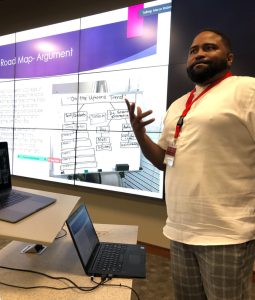
Training takes place virtually via highly structured synchronous and asynchronous modules and in-person via annual site visits. Topics include but are not limited to the following:
- Identifying genre and audience
- Crafting argument, amplifying relevance
- Readability (writing for specialist and non-specialist audiences)
- Scoping an enhanced digital publication
- Establishing workflow
- Perfecting project management skills
- The importance of documentation
- Setting and managing budgets
- Training and mentoring students
- Preparing embedded resources (non-text resources such as images, audio, video, visualizations, etc.)
- Getting it right: Fair use and rights management
- Presenting primary sources (from historical documents to ephemera)
- Understanding user experience and agency
- Meeting accessibility standards
- Mastering metadata
- Keeping authors on track
- Offering constructive feedback
- Navigating peer review
- Embracing collaboration and community-building
- Time management and self-care
Modules will be combined with required and recommended readings, assignments, and opportunities for networking and community-building.