Digital Production Services Homepage Brown University Library Homepage Brown University Homepage

c u r i o

Imaging rare, unusual, and intriguing objects at the Brown University Library

When Digitization and Ancestry Collide

February 7, 2013 by | 1 Comment

There are generally few personal revelations in the review and exportation of digital files. Once a group of materials has been scanned, I export the folder of digitized images into Adobe Lightroom, click through each image, checking that it is properly cropped, aligned, and does not contain any artifacts. It is fairly fast paced work, and does not allow for much reflection on subject matter. However, I did take notice during the review process of a box of Harris Broadsides. I was reviewing digitized images from “The Order of Exercises for Class Day, Monday, July 30, 1860, Bowdoin College.” As the third page appeared on the monitor, the name AMERICUS FULLER jumped out at me.

Americus Fuller is one of those solid and patriotic 19th-century names that one remembers if it figures in your family ancestry.  My first association with Americus Fuller, is in connection to his exotic Turkish leather ottoman, passed down to me in the 1970s. Was the poet named on the broadside I was reviewing, my grandmother’s great uncle Reverend Americus T. Fuller, missionary to Turkey?

Reverend Americus T. Fuller

The fact that the publication was from Bowdoin boded well…my family is from Maine. A quick check on Ancestry.com confirmed that Americus Fuller graduated from Bowdoin in 1859, prior to attending Bangor Theological Seminary. It was clear now that I was reading a poem written by my ancestor, a melancholic farewell for the graduating class of ’59 reflecting on the past toil of study, and looking forward to an unknown future.

Having the new knowledge that Americus was a “published poet”, I did a quick search for Americus Fuller in the Brown Digital Repository and our library catalog to see if perhaps he had penned anything else in our collections. Viola! He had also written a poem for the Freshman Supper at Bowdoin College, July 31, 1856.
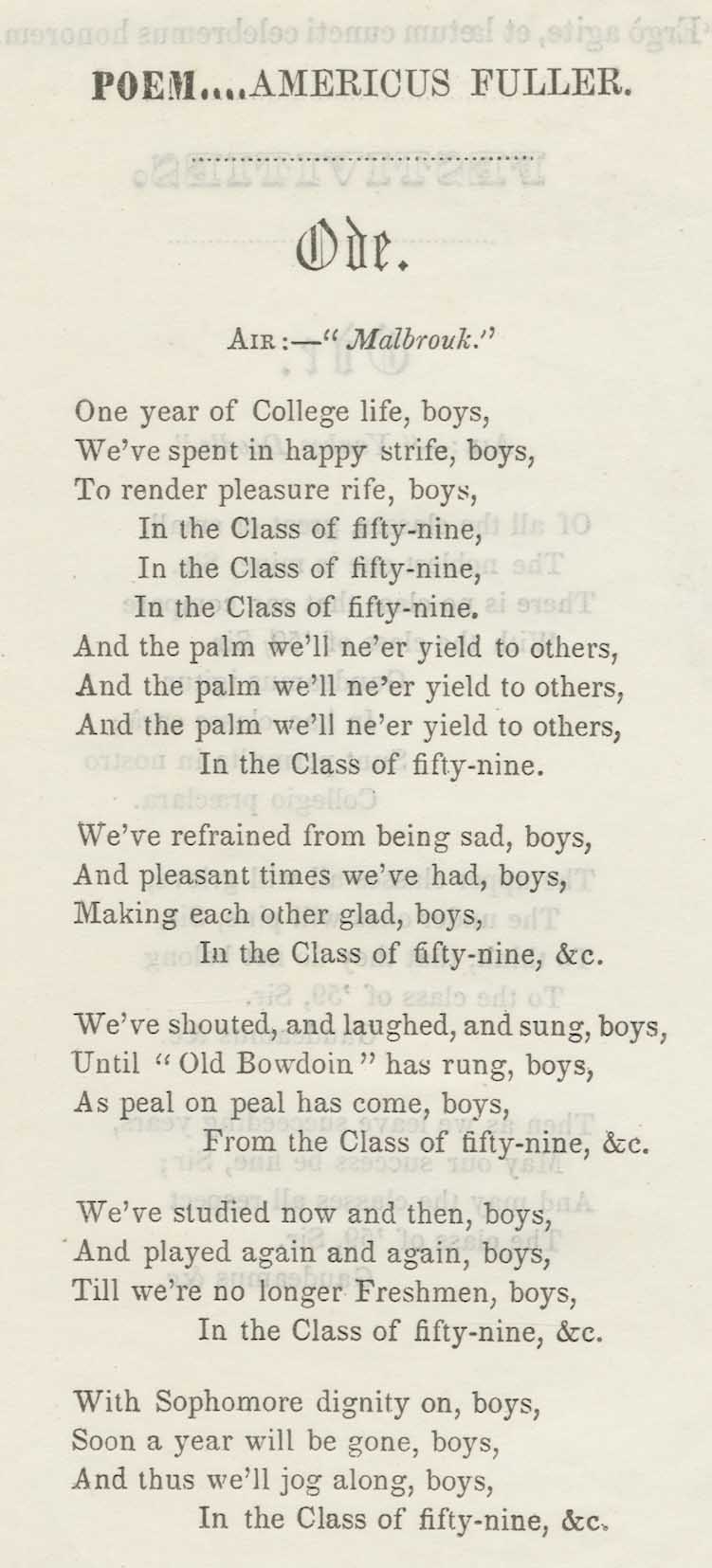
In this Ode, Fuller reflects upon freshman year spent in “happy strife”, and looks ahead to becoming a dignified sophomore. Fuller’s  life story, albeit interesting, is now known and passed. He was a member of the Christian Commission during the Civil War, and served as a pastor in Maine and Minnesota, until his appointment as a missionary, first at Antitab, Turkey, then  Constantinople. In 1880, Fuller became President of the Central Turkey College.

Displayed in my home are 19th-century Turkish textiles, handiwork, and objets d’art collected by Americus and passed down to me. I have now added copies of two odes from Brown University Library’s  Harris Collection of American Poetry and Plays to my collection of Fuller family related items. Yes, archives are full of secrets, and hidden gems are lying dormant in dark stacks waiting to have light shed on them. What a privilege it is to have the type of employment that such genealogical gems can be stumbled upon in the course of daily work.


Bowdoin College Campus, ca. 1860
Digitizing for “The Festive City”

February 1, 2013 by | Comments Off on Digitizing for “The Festive City”

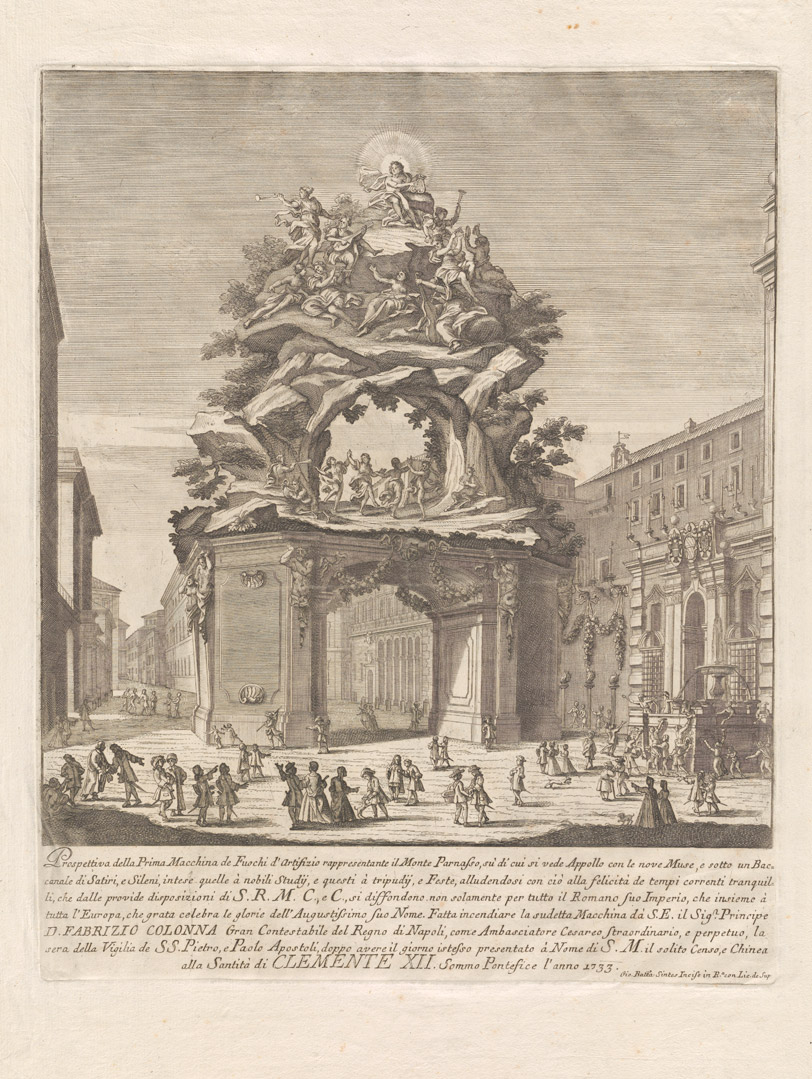
In addition to items from the Brown University Library’s Anne S. K. Brown Military Collection and items from RISD’s collections, “The Festive City” — currently on exhibit at the RISD Museum of Art through July 14, 2013 — features rare 18th-century prints on loan to the RISD Museum from private collector and Brown alumni Vincent J. Buonanno. Many of the prints loaned to the Museum (example), as well as those from Brown University Library collections (example), were recently digitized by Digital Production Services. The reproductions of Buonanno’s loaned prints benefitted from our most recent digital camera reprographic setup (which uses an Aptus-II 12 80-megapixel digital camera back).

Buonanno’s loaned collection of Chinea prints — prints commissioned to document sovereigns offering tributes to the Pope, as yearly Roman festivals — represents the annual festivals in an almost complete set, spanning the 1720s through 1780s. Reviews of the “Festive City” exhibit were recently featured in the Boston Globe and Providence Journal.

Students in Brown Professor Evelyn Lincoln’s Spring 2010 Graduate Practicum in the Department of the History of Art & Architecture curated and produced a collection of related essays, “Reading Ritual: Festival Books from the Anne S. K. Brown Military Collection.”

“Il Parnaso con Apollo e le Muse” (Gori Sassoli title); Giovanni Battista Sintes, 1680-1760 (etcher); Roma: 1733.

Napoleon’s Death Mask

January 23, 2013 by | 4 Comments

While the bulk of my work involves the digitization of two-dimensional documents, or straightforward photographs of pages from books, I also photograph other types of items – like the 360 degree photography, and the interiors that I have posted about. Every once in a while, I get more unusual requests. Since I am usually the person who handles three-dimensional items, I get to photograph some of the most interesting – and unexpected – items from our collections.

Two years before this shoot, I actually photographed a portrait of Napoleon; an oil painting by Vernet in a gold-colored frame with the familiar bee (a symbol of immortality and resurrection) carved onto the front. It’s a part of the William Henry Hoffman Collection on Napoleon I and it’s absolutely stunning. Actually, the entire collection (of approximately 600 items) is fascinating, so I was excited when I was called over to look at an object that needed digitization. I was a little surprised to find it was not exactly a portrait of Napoleon; it was a plaster cast of his death mask. The request had come internally; we have a series of talks on our Special Collections at Brown, and this image was to help publicize and showcase a talk on the mask, given by Peter Harrington, curator of the Anne S.K. Brown Military Collection.

I had to bring it back to my studio at DPS to photograph, as I needed better light than I could get in the room the mask is stored in. I set everything up before bringing the mask out of its box; I was using hot lights, and the less exposure the mask has to the heat and drying nature of the lights, the better. Using a stack of books about the same size and shape of the mask, I set up foam to cushion it on a low table, set up lights equidistant and at the same angle to the object, and utilized the horizontal arm of our tripod so that I could shoot straight down onto the object. I used a color checker card to make sure that my white balance and exposure was correct, I tripled-checked the depth of field and focus, and then was ready to go.

As is often the case when dealing with unique objects, the setup took much longer than the actual photography. I replaced the books very carefully with the mask, took approximately 10 shots at slightly different exposures and focuses at three different angles. I ended up with a high resolution photograph of the death mask, and a great response when people asked me what I was bringing around the library in a box.

Edgar Allan Poe & Sarah Helen Whitman

January 17, 2013 by | 10 Comments

1848 daguerreotype by William Hartshorn

1856(?) daguerreotype attributed to J. White

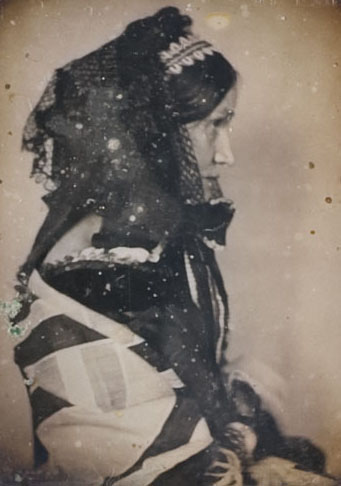
Edgar Allan Poe was born on January 19, 1809, two hundred and four years ago. This anniversary has coincided with my work this week which has involved preparing digitized images of daguerreotypes of Poe and Providence poet Sarah Helen Whitman for publication to the Brown Digital Repository. The daguerreotypes had been found to be suffering some deterioration and were sent to the Northeast Document Conservation Center for treatment. Poe sat for this daguerreotype, known as the Whitman or Hartshorn Daguerreotype, on November 13, 1848 at the Westminster Street studio of Masury and Hartshorn in Providence, Rhode Island, after a tumultuous week which included an overdose of laudanum and a bout of heavy drinking. The daguerreotype was a gift from Poe to Sarah Helen Whitman, given to her after she finally consented to marry him. The engagement did not last long, but Whitman kept the daguerreotype until 1874. In a letter she noted Poe’s “sweet and serene expression” in the image. The daguerreotype was gifted to the Brown University Library in 1905.

Before treatment

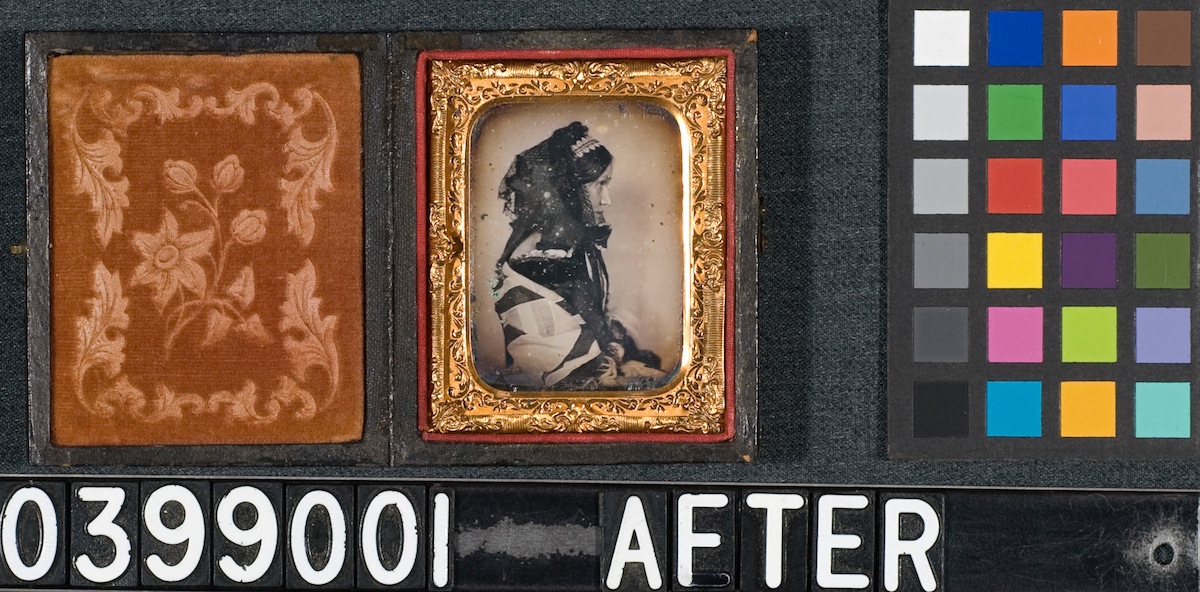
Some of the condition problems with the daguerreotype and its case are apparent in before and after treatment images. The leather spine on the case was broken and cracked along the bottom. The case was scuffed and scratched, and the cover glass was beginning to deteriorate. After disassembling the daguerreotype package, preservationists at NEDCC replaced the cover glass with a more stable borosilicate glass, and used a variety of techniques to repair the case, broken edge, and spine. Of the many materials relating to Poe in the Harris Collection holdings, the daguerreotype is perhaps the best known and most frequently requested. The recent preservation treatment along with its housing in a clamshell presentation box will ensure its longevity for future library patrons.

After treatment

Sarah Helen Whitman

The daguerreotype of Sarah Helen Whitman is attributed to Joseph White, another Providence daguerreotypist, and dates from 1856. The daguerreotype plate and brass mat were enclosed in a paper-covered wooden case. The cloth spine on the case had been broken and previously “repaired” usuing black electrical tape. The tape and residual adhesive were mechanically removed, and the spine was repaired using cloth toned with acrylic color. The glass was replaced with borosilicate, and the package reassembled and sealed with Filmoplast P90 and a sheet of Melinex.


After treatment

After treatment

Before treatment


Sarah Helen Whitman was a poet and essayist and interested in transcendentalism, mesmerism, and spiritualism. She hosted well-known writers at her salon in Providence, and served as vice president of the Rhode Island suffrage association. Poe first set eyes on Whitman as she stood in the rose garden behind her Benefit Street home. The house and garden are much the same as they were nearly two centuries ago.

Rose garden behind Whitman’s house at 88 Benefit Street.
Photo courtesy Will Hart

Digital Production Services in-house photographers recently digitized two photographs of Sarah Helen Whitman, which the author herself inserted into an autographed presentation copy of Whitman’s Hours of Life, and Other Poems. Consult the finding aid for more information on the significant holdings of Sarah Helen Whitman within the Harris Collection of American Poetry and Plays. Brown University also owns a portrait of Whitman painted by John Nelson Arnold in 1869.

Albumen photograph of Sarah Helen Whitman c.1853-78

Albumen photograph of Sarah Helen Whitman as a medium c.1853-78

Professor Smiley and the Mayans

January 9, 2013 by | Comments Off on Professor Smiley and the Mayans

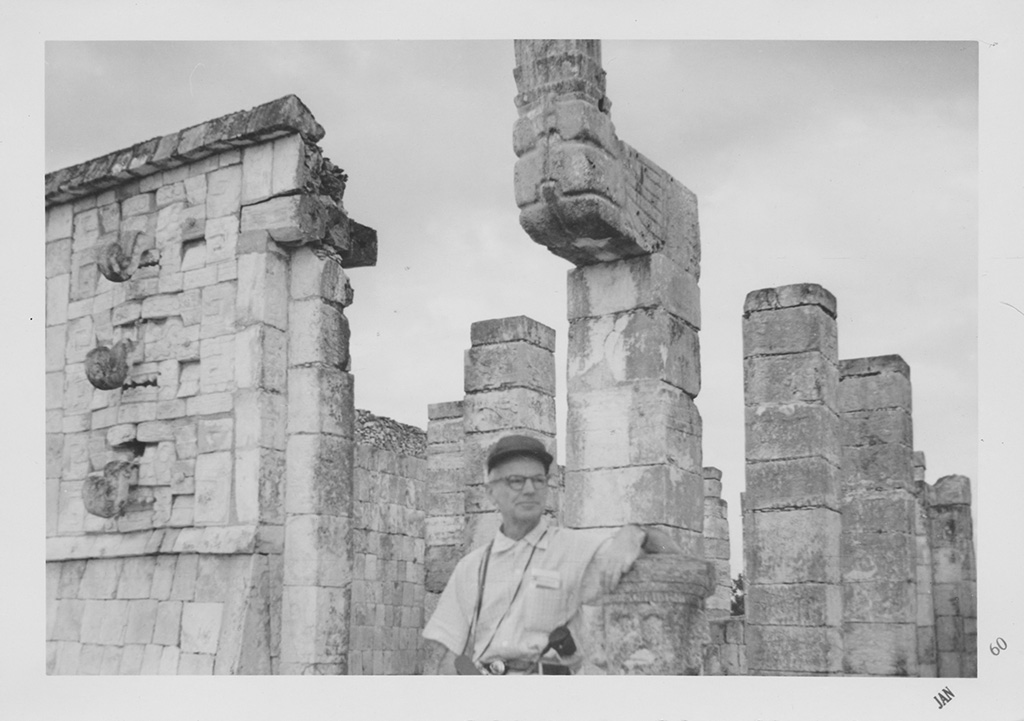
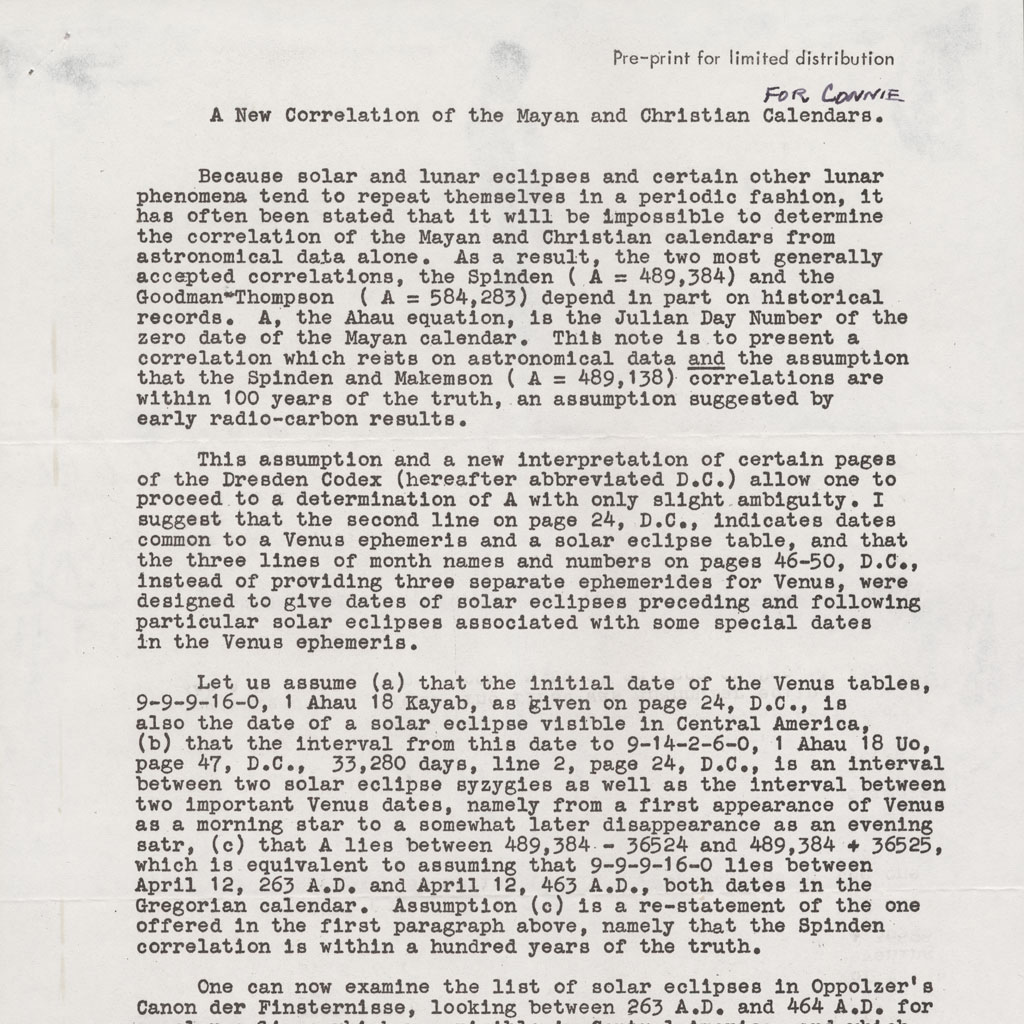
Already noted by Brown anthropology professor Stephen Houston last summer, the long-count Mayan calendar has now also been pragmatically confirmed to be of no grave cataclysmic import. Brown astronomy professor Charles H. Smiley (1903–1977) had contributed detailed work on the Mayan calendar system. He also happened to keep extensive travel scrapbooks throughout his career, several of which have been digitized by the library (as full volumes, per page, and also as individual objects within pages). His scrapbooks preserve miscellaneous travel ephemera — ticket stubs, restaurant menus — as well as personal photographs and letters. Shown below are some items from his winter 1959–1960 visit to Mayan ruins relating to the resulting publication of his cross-calendar correlation research.

Professor Smiley at Mayan site

Mayan hieroglyphs as drawn by Professor Smiley (detail)

Pre-print of Professor Smiley’s calendar research (detail)

Interior Designs

January 4, 2013 by | 1 Comment

Much of the work that we do here at DPS involves objects and items from the Brown Library’s Special Collections. These are housed in the John Hay Library, which just recently celebrated its Centennial. It is a gorgeous building, and many of the simple, white wooden doors belie the beautifully curated spaces beyond.

The Bruhn Memorial Reading Room is one such room. When I was asked for photograph it for Brown’s new version of the History & Guide to Special Collections, I had never actually been in the room before. Home to part of the Special Collections, and featuring warm wood paneling and tall windows that overlook Prospect Street, the Bruhn Room is used for a variety of purposes within the library, from classes and private study, to candidate presentations and meetings, to videotaped interviews with students and visiting scholars.

It’s a beautiful space, to be certain, but it’s difficult to capture all of this photographically. To capture all the elements of the room; from the paneling and windows, to the many books, objects, furniture and chandelier, I had to make many exposures that I could use to blend together to create one single, merged image. I shot a great many images, varying both the exposures (to pick up the detailing under the tables, in the bookcases, and on the ceiling), and the white balance (to correct for the overhead lights as well as the window light from outside). Although I did use a specialized lens (a 24mm tilt-shift lens, like the one in this video) to correct for perspective issues, I also had to make a final perspective correction as well.

The final image came out very strong, and ended up being published in The Manuscript Society News (vol 31, no. 4). Below you will see the progression of images as I compiled the final image, building up exposures and color balance. n.b.: You can click on any image to make it larger, and then click through the images to view one at a time.

Image 1: Overexposure to capture shadow detail under table, in bookcases.

Image 2: A darker exposure to bring out the richness in the wood paneling, floors and walls.


Image 3: A MUCH darker exposure, to bring out the details in the ceiling, washed out in the previous exposures.

Image 4: Image correction in Photoshop to correct the ceiling color and luminance but preserve the detail of the chandelier.


Image 5: An additional, darker layer, to bring in ONLY the detail of the overexposed window.

Image 6: An exposure the same as Image 5, but set to daylight white balance to correct the blue tone.


Image 7: A slight darkening on the ceiling, along the strips of light that outline the arch.

Image 8: A minor contrast adjustment on the same strip of ceiling, to show the detailing and sculptural quality of the ceiling.

The final image, with perspective adjustments to compensate for shooting at a wide angle in an enclosed interior space.

Harlem’s Black and Jewish Music Culture 1890-1930

December 14, 2012 by | 2 Comments

“You can take your trunk and go to Harlem”

Currently on view at the Harlem restaurant, Settepani, is “Harlem’s Black and Jewish Music Culture 1890-1930,” an exhibit of framed sheet music that tells a story of collaborations between the neighboorhood’s black and Jewish composers, performers, and music publishers during the late-19th century into the 1930s. The exhibit illustrates “the rich musical life that was prevalent in Harlem in the late 1800s and early 1900s” and includes music performed by the Jewish singers Sophie Tucker and Belle Baker and written by black composers including Bert Williams, Eubie Blake, W. C. Handy and C. Luckeyth Roberts. The New York Times article “Harlem Music Culture, Black and Jewish” explains that as John T. Reddick, Harlem historian, was amassing his collection of ragtime, jazz, blues and patriotic marches, he was also was conducting research and discovering that many of the performers lived side by side on the streets of Harlem.

“The Darktown Strutters Ball”


Two of Brown University Library’s sheet music collections are incredibly complementary to Reddick’s collection and exhibition. The African-American Sheet Music collection chronicles the rise of African-American musical theater. The works of African-American popular composers, including James Bland, Ernest Hogan, Bob Cole, James Reese Europe, and Will Marion Cook are a prominent feature of the music of this period. The Yiddish Sheet Music collection is focused on the Yiddish-language musical stage from the 1880s through the 1940s. Notable performers and theatrical personalities represented are Molly Picon, Bores Thomashefsky, David Kessler, Jacob Adler, Aaron Lebedeff, Abraham Goldfaden, Mrs. Regina Praeger, and Cantor Gershon Sirota, among many others. The sheet music covers are image-rich in cover art, often including strident racial images which have lost none of their power to shock. The covers often include scarce and otherwise unavailable portraits of African American and Jewish performers who were well-known in their day. The collections include references, on-line resources, and contextual materials, such as a slideshow illustrating “A Century of African American Music.”

“Harlem’s Black and Jewish Music Culture 1890-1930: Selections from the Sheet Music Collection of Harlem Historian John T. Reddick” is on view at Settepani until Febuary 28th. Reddick is guiding a cultural walking tour of historic Harlem which explores connections and highlights sites associated with Harlem’s Black and Jewish music culture until December 30th.

“I’m just wild about Harry”

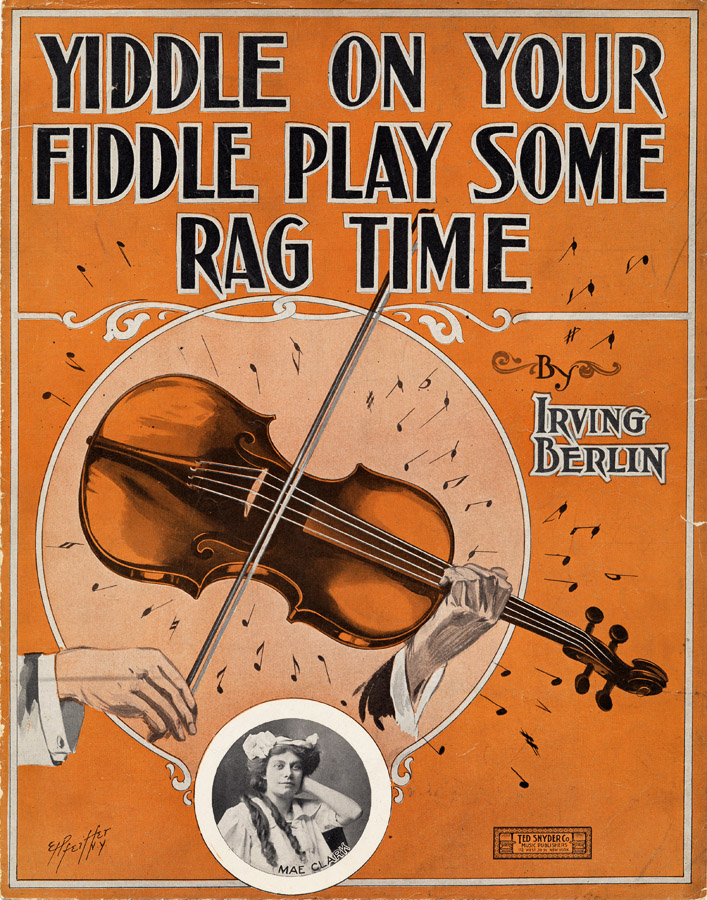
“Yiddle on your fiddle, play some ragtime”