
E-Newsletter
Recent Posts
Latest News
-
New Wellness Audiobook Collection
|
Your Brown University Library is thrilled to announce its new Wellness Audiobook Collection, available to all current Brown ID holders.
Access the collection now on the Libby app:
- On a computer
- On a mobile device or tablet (instructions)
A collaborative effort between the Library and BWell Health Promotion, which contributed recommendations in their areas of expertise, the curated collection includes audiobooks focused on six areas of wellbeing:
- Mental health
- Mindfulness
- Personal growth
- Physical wellness
- Relationships and communication
- Stress management
More Titles, More Privacy
For the past two years, the Library has partnered with BWell to host wellness information tables at the Rockefeller and Sciences libraries that included a small number of books related to a wellness theme. Because of the sensitive nature of the themes, visitors to the tables were often hesitant to browse or borrow the books. Through Libby, we can offer a wider selection of titles that users can browse, borrow, and listen to privately.
More Listening, Less Waiting

We chose Libby, a service from the company OverDrive, to host the collection because its flexible lending model allows multiple people to borrow the same title at the same time for 98% of the audiobooks in the collection. For the small number of single borrower titles, users can place a hold and receive an availability notification.
Questions?
If you have questions about the collection or using the app, see the Wellness Audiobook Collection Guide, email library@brown.edu, or stop by a popup BWell table at the Rockefeller or Sciences libraries.
-
“Stolen Relations” Receives American Studies Association Award
|
Tribally collaborative digital project illuminating enslavement, servitude, and resilience of Indigenous peoples in the Americas wins the ASA’s Digital Project Legacy Award.
The community-engaged digital project Stolen Relations: Recovering Stories of Indigenous Enslavement in the Americas has been awarded the 2026 American Studies Association (ASA) Digital Humanities Caucus Digital Project Legacy Award, given to exemplary projects that have been active for three years or more and which have had measurable positive impact on communities and related disciplinary fields.
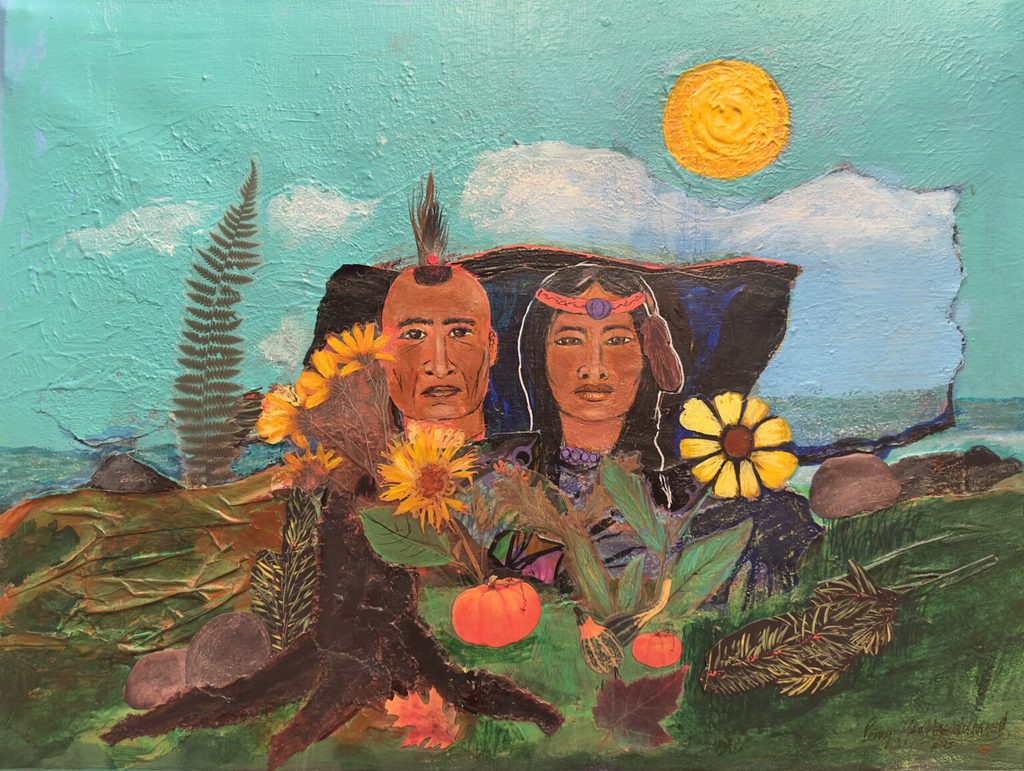
“Guidance from the Ancestors” by Penny Gamble Williams (Chappaquiddick Tribe of the Wampanoag Nation). https://stolenrelations.org/indigenous-voices/guidance-from-the-ancestors-penny-gamble-williams-chappaquiddick-tribe-of-the-wampanoag-nation/ The ongoing database project is the result of a collaboration between the Brown University Library’s Center for Digital Scholarship (CDS); Linford Fisher, Brown University Professor of History and Faculty Director of the Center for Digital Scholarship; and a Tribal Advisory Board made up of Indigenous stakeholders. In addition, the project has been generously supported by a broad list of partners across Brown University who share a commitment to its meaningful purpose. The award will be conferred at the ASA annual conference on October 22, 2026.
Practicing Excellence and Innovation
The Digital Humanities Caucus’ awards celebrate excellence and innovation in digital scholarship and practice. CDS stands at the forefront of digital scholarship, with a pedagogical focus not only on how information is presented within its projects but also on refining and documenting the creation process itself, one founded on a rigorous academic approach and partnership across areas of expertise within and beyond the University. According to Ashley Champagne, Director of the Center for Digital Scholarship, “The project has continuously taught us the importance of transparently articulating our project choices, offering context about our data sources, and seeking to understand the broader impact and story a digital humanities project can have into the future.”
Recovering Stories of Indigenous Enslavement
Projects in the CDS portfolio often confront themes of social import. Stolen Relations seeks to illuminate and understand the role the enslavement of Indigenous peoples played in settler colonialism in the Americas and its impact on the present. By recovering the stories of individuals affected by Indigenous enslavement — a long overlooked, persistent, and destabilizing aspect of settler colonialism — the team is providing information to support honest reflections on the history of the United States that can also help people think more clearly about how to make amends moving forward.
Stolen Relations recognizes that Indigenous enslavement impacts the present, and the powerful stories shared by Indigenous community partners for the project’s oral history collection contemporize the issues confronted in the database and demonstrate the ways in which the legacy of enslavement is still felt today. As such, Indigenous stakeholders were involved in the project early on alongside the digital humanities experts in CDS and historian Linford Fisher. The team rigorously considers different ethical research practices — a tenet of the Legacy Project Award — for all CDS projects; this has been of paramount importance in working with Indigenous community members and artifacts, beginning with the very first discussions about the project in 2015 to its launch in 2025 to the ongoing work today.
Success Through Collaboration
The Indigenous stakeholders that have been involved extend well beyond the members of the Tribal Advisory Board, including contributors from around the world, some as young as high school students. Prof. Fisher explains how the large network has been crucial to the ongoing success of the project:
The Center for Digital Scholarship was involved from the very beginning, with each CDS staff member playing key roles in bringing it to fruition. The dozen or so tribal partners from regional Native nations and communities have played essential roles, providing key feedback and giving direction during our regular meetings with them. The project has partnered with tribal interns, research assistants, and fellows in building the project, including the Tomaquag Museum in Exeter, Rhode Island. And throughout we have been so grateful for more than a hundred research assistants from Brown and also high schools, colleges, and graduate programs from around the country and even internationally. So, in a way, this award is for everyone who has been involved in this project, too — not just the current team and tribal advisors.
The Stolen Relations database can help historians, researchers, students, tribal members, and families use the information to reconstruct histories, chart networks, and make connections in ways that have never before been possible.
As the director of CDS, Ashley Champagne understands how important collaboration is for the success of digital humanities projects like Stolen Relations, which is one of the standouts among the many projects and publications created by CDS over its thirty years of existence at the vanguard of the field. She appreciates the longstanding partnership with Prof. Fisher, who was recently named Faculty Director of CDS, and with the Tribal Advisory Board Members, without whose contributions the project could not have been realized. She explains:
This award is a wonderful recognition of “Stolen Relations” and the innovative digital humanities work that the Center for Digital Scholarship has done for over a decade in working with Prof. Linford Fisher on the project. “Stolen Relations” is an exemplary project in that it is designed and built in direct conversation with our Southern New England tribal partners; everything from its map to contextual information about the data is informed by that community engagement.
Grappling with Urgent Questions
The Digital Project Prize is given to “projects that grapple with urgent questions that are specifically situated in practices of scholarship at the intersection of American Studies and Digital Humanities. This award also recognizes the many kinds of labor — often invisible, gendered, and racialized — that make digital projects possible.” The Stolen Relations team is grateful that the ASA’s Digital Humanities Caucus has bestowed such a significant acknowledgement of the multi-faceted work that has made the project possible, which also helps to raise awareness about the project and the ongoing work to recover the stories of the estimated 2.5 to 6 million Native people who were enslaved in the Americas between 1492 and the late nineteenth century and those who have been affected.
-
DH Salons – Fall 2026
|
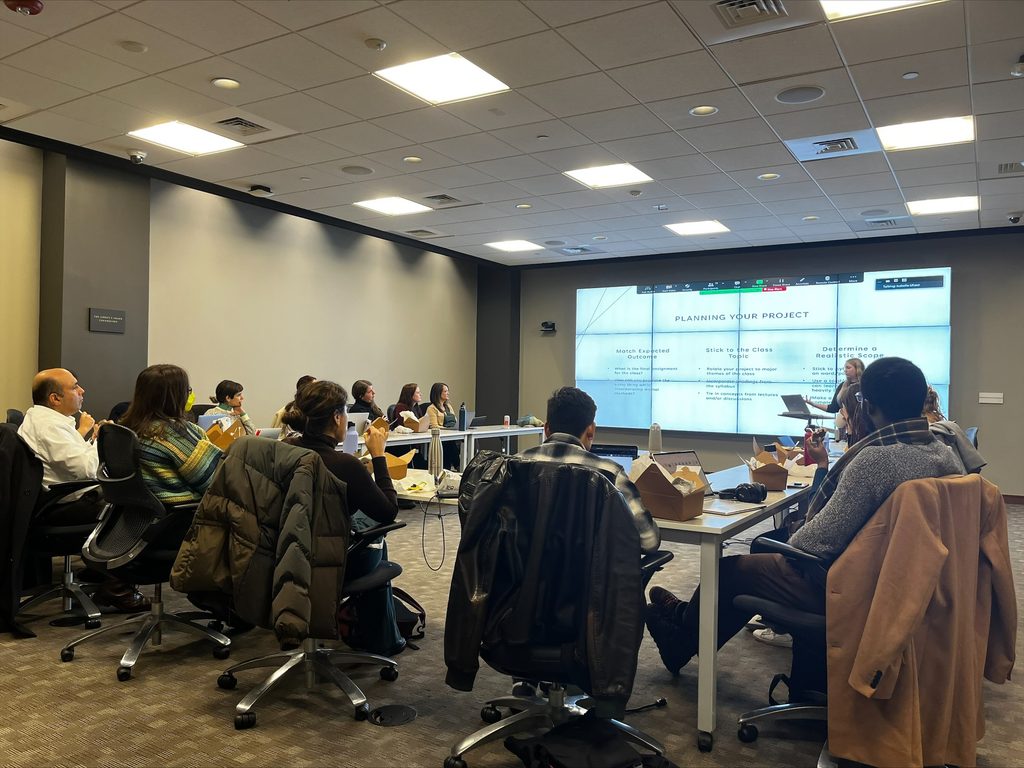
Please join the Library’s Center for Digital Scholarship this fall for the Digital Humanities (DH) Salons! The DH Salon series, hosted by the Center for Digital Scholarship, is a regular, informal presentation series bringing together digital humanities work across the Brown campus. Join us either in the Patrick Ma Digital Scholarship Lab (Room 137) on the first floor of the Rockefeller Library (with lunch!) or on Zoom at https://brown.zoom.us/j/96620916977.
Please register to attend by clicking on the registration links next to the sessions listed below.
Datafied Close Reading a novella with a Live Coding Notebook with John Cayley, Professor of Literary Arts
Thursday, September 24 at noon – Register
- John Cayley, Professor of Literary Arts, “Datafied Close Reading a Novella with a Live Coding Notebook”
For a collaborative, interdisciplinary – literary/CS/Machine Learning – project, the presenter, John Cayley, found himself reading, analysing, and ‘mapping’ Joseph Conrad’s novella, Typhoon. Cayley took Project Gutenberg text, fed it into an online platform for live coding notebooks – Observable <new.observablehq.com> – and set to work. He ended up thinking of what he was doing as ‘datafied close reading’.
Way Outta No Way: Harnessing the Power of Digital Humanities + Design to Connect People to the Impacts of Systemic Racism
Thursday, October 8 at noon – Register
- Victoria Lee Hood, Senior Fellow, JNBC and Director of Strategy and Creative Content, Systemic Racism and Resilience Project (SRRP)
This presentation shares the digital learning platform Way Outta No Way and discusses how digital storytelling that centers human experience uniquely enables discovery learning, narrative complexity, and multi-perspectival thinking.
Processing Archival Images at Scale with Generative AI
Thursday, October 22 at noon – Register
- Daniel Genkins, Director of the Digital Lab, Vanderbilt University
The Slave Societies Digital Archive (SSDA) has spent over two decades preserving more than 750,000 images of ecclesiastical, notarial, and legal documents detailing the lives of people of African descent in the early modern Americas. This talk explores what recent advances in generative AI make possible for collections like SSDA — not as a replacement for archival and historical expertise, but as a force multiplier for it.
Experiments in Digital Humanities and AI
Thursday, November 5 at noon – Register
- Anya Lewis-Meeks, Presidential Postdoctoral Fellow
- Haley Price, PhD History Candidate and CDS I/O Fellow
At Brown University’s Center for Digital Scholarship, we’ve been working on a project to explore how AI can effectively be used (or not) for handwriting transcription with three different researchers here (a faculty member, Laurel Bestock, postdoc, Anya Lewis-Meeks, and graduate student, Haley Price). Our work on handwriting transcription encompasses multilingual corpora from a variety of geographic areas, time periods, and scholarly disciplines.
Spotlight on Design and Development Partners Studio Rainwater and Jake & Co.
Thursday, November 19 at noon – Register
- Jake Camara, Founder, Jake and Co.
- Sarah Rainwater, Founder and Creative Director, Studio Rainwater
- Allison Levy, Director, Brown University Digital Publications
Brown University Digital Publications supports authors whose scholarly imaginations have led them to think beyond the limits of conventional print books. This DH Salon celebrates that group effort, and shines the spotlight on collaborators Studio Rainwater and Jake & Company. Meet the extended BUDP team, see the pathbreaking publications we’ve produced together, and learn how the process unfolds.
Digital Humanities Lightning Talks
Thursday, December 3 at noon – Register (link TBD)
- Ashley Champagne, Director, Center for Digital Scholarship
- Students from the Digital Humanities Capstone course (TBD)
Graduate students in the Digital Humanities Doctoral Certificate program will present informal lightning talks on their digital humanities projects.
Visit Events@Brown to register for all upcoming CDS workshops and DH Salon sessions! Some workshops may offer a hybrid option in addition to the in-person session at Rockefeller Library.