
E-Newsletter
Recent Posts
Latest News
-
Brown University Library Supports Nelson Memo through Ivy Plus Libraries Confederation Letter
|

An open letter from the Ivy Plus Libraries Confederation (IPLC), consisting of the directors from thirteen libraries including the Brown University Library, was sent to the White House Office of Science and Technology Policy (OSTP) in support of the Nelson Memo, which aims to expand equitable access to federally-funded publications and data. The letter also communicates the directors’ concerns about potential journal expense increases for libraries and other stakeholders.
OSTP
The Congressionally-established (OSTP) and its Senate-confirmed Director provide advice to the U.S. President and the Executive Office of the President and Executive branch on all matters related to science and technology. In August of 2022, current OSTP Director Dr. Alondra Nelson released an important memorandum to the directors of federal agencies funding scientific research and development, now referred to as the “Nelson Memo.”
More agencies to require free access
The memo outlines significant updates to policies that provide public access to federally-funded publications and data to be made by 2025. One of the major directives within the memo that impacts faculty is the expansion of the OSTP’s former public access directive to cover more federal agencies, including those with $100 million or more or $100 million or less in scientific research and development expenditures. These agencies will now be required to develop plans for grantees to make the published results of federally-funded research freely available to the public and manage and share the digital data resulting from that research.
Eliminating 12-month embargo
Another of the memo’s groundbreaking advances that will impact faculty is that final peer-reviewed manuscripts will be required to be made immediately available, ending the historical practice of permitting a 12-month embargo. The 12-month embargo, required by many publishers, delayed the public’s access to the final peer-reviewed manuscripts, allowing their journals one year of being the sole venue to disseminate the article to their subscribers.
Faculty impact
In general, libraries, including the Brown University Library, are very much in support of the public’s free, equitable, and immediate access to federally-funded research. We want to emphasize that the Nelson Memo does not require that faculty publish in an open access journal, and it does not require faculty to publish in a journal that requires authors to pay a fee or article processing charge (APC) for immediate access. It is expected that faculty compliance will be facilitated via deposit of final peer-reviewed manuscripts in agencies’ specific public access repositories, such as NIH’s PMC, NSF-PAR, or DOE PAGES, among others.
Concerns about cost
Over the years the increase in the annual costs to the University’s budget for paying for subscriptions to scholarly journals has severely outpaced inflation; today roughly half of the Library’s collection budget is dedicated to the acquisition of journal databases and other resources to support STEM. Thus, there are serious concerns shared by libraries about how publishers might respond and adapt their business models in advance of losing this 12-month embargo, potentially impacting the cost of already expensive subscriptions and limiting and bundling of titles within packages made available to institutions. Libraries also have significant concerns about some publishers’ APC-based publication models and worry that the industry might take advantage of these changes promoted by the Nelson Memo to promote its expansion.
-
Food & Feedback Forums
|
Tell us what you think!

The Brown University Library is hosting two Food & Feedback Forum sessions. Enjoy pizza and snacks and give us your feedback on the Library’s physical spaces.
- Monday, March 6 at 7 to 8 p.m. in the Rockefeller Library, Digital Scholarship Lab (Room 137)
- Wednesday, March 8 at 2 to 3 p.m. in the Sciences Library, Friedman Center (Level A)
During recent Library surveys, students commented on a variety of aspects concerning the Library’s spaces. We’d love to hear more — come and share your views in depth. Tell us what works, what doesn’t work, and what could be improved about library spaces.
This is your Library. We’d love to hear from you!
-
Brown University Library Celebrates National Public Health Week 2023
|
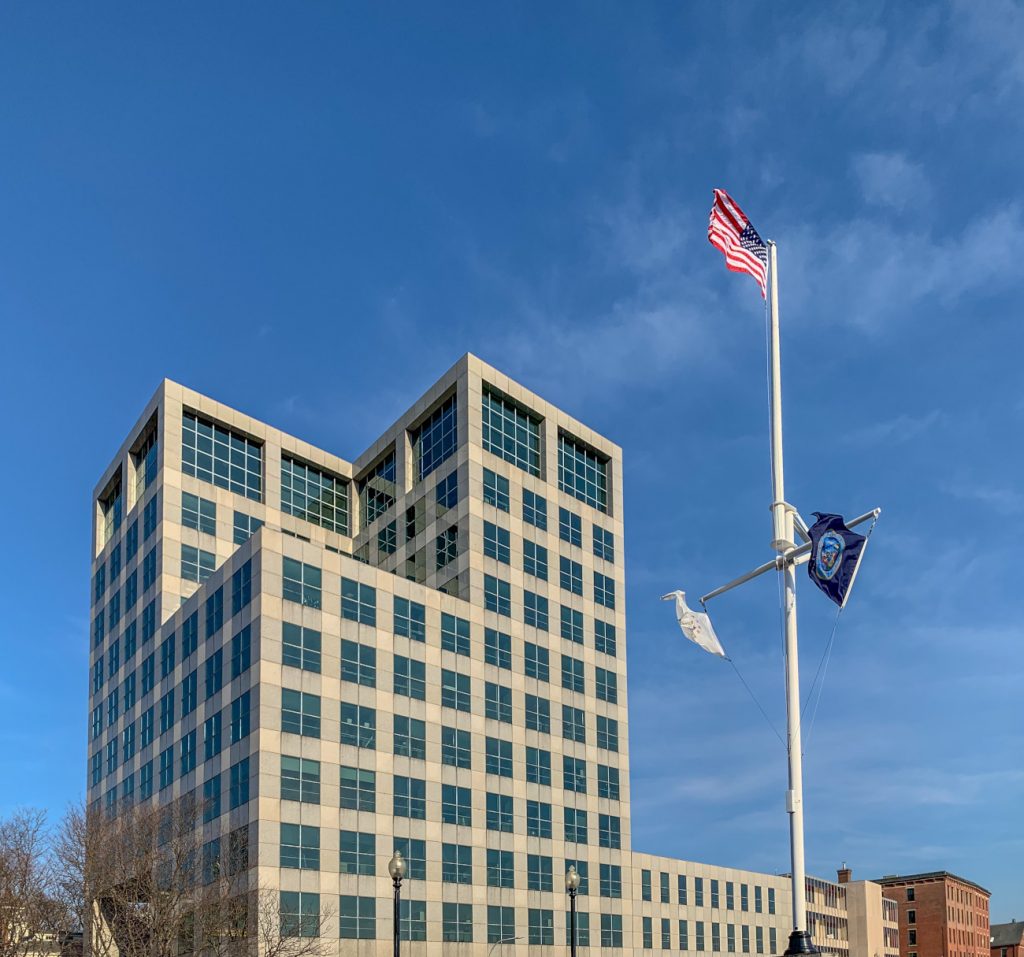
A view of 121South Main Street. Photo by Ken Zirkel. In keeping with the theme of National Public Health Week 2023, Centering and Celebrating Cultures in Health, below are some relevant projects, initiatives, and resources from the Brown University Library.
Subscription resources available via the Library
A search for “public health” as subject retrieves these results in BruKnow, the Library catalog. You may use the filters on the left side to refine results by format, library, language, and more. Sign in with your Brown credentials to access or request any of the results.
Key academic research databases, books, journals, and other resources for Public Health can be found here: libguides.brown.edu/PublicHealth.
Freely-available online resources for reliable health information
KFF (Kaiser Family Foundation)
Nonprofit organization focusing on national health issues, as well as the U.S. role in global health policy. KFF develops and runs its own policy analysis, journalism and communications programs, sometimes in partnership with major news organizations. KFF serves as a nonpartisan source of facts, analysis and journalism for policymakers, the media, the health policy community and the public.
MedlinePlus.gov
Offers high-quality, relevant health and wellness information that is trusted, easy to understand, and free of advertising, in both English and Spanish. It is a service of the National Library of Medicine (NLM), which is the world’s largest medical library and a part of the National Institutes of Health (NIH).
EthnoMed
EthnoMed is Harborview Medical Center’s ethnic medicine website containing medical and cultural information about immigrant and refugee groups. Information is specific to groups in the Seattle area, but much of the cultural and health information is of interest and applicable in other geographic areas.
More freely-available online resources can be found here: libguides.brown.edu/ConsumerHealth
Center for Digital Scholarship projects
Learn more about the Twitter projects on Black Maternal Health and My Body My Choice that the Library’s Center for Digital Scholarship (CDS) staff have collaborated on with faculty. Information about other CDS projects can be viewed on the CDS website.
Special Collections
Request access to special collections materials at the John Hay Library on Alcohol and Addiction Studies, ACT UP Rhode Island, and more! Find information about many special collections holdings and researching and accessing special collections.