
E-Newsletter
Recent Posts
Latest News
-
Research Data Management and Sharing Services
|
Health and Biomedical Library Services (HBLS) offers several services to support Research Data Management (RDM) and sharing. Contact us for assistance with:
- Writing Data Management & Sharing plans (DMPs) for grant proposals (e.g., NIH and NSF grants).
- Depositing research datasets resulting from sponsored research in open access repositories, including sharing anonymized data from clinical trials in Brown’s newest membership repository, Vivli.
- Obtaining digital object identifiers (DOIs) for citing the location of data in publications and funders’ Research Performance Progress Reports (RPPR).
HBLS also assists the Brown community with using LabArchives Electronic Lab Notebooks (ELNs) for both research and teaching.
Learn more about HBLS’ RDM services.
Other data services in the Library
HBLS collaborates with colleagues on the Library’s Center for Library Exploration and Research (CLEAR) Data Services team to help Brown community members with their reference inquiries related to looking for data for their research and scholarship. CLEAR’s Data Services team partners with Brown community members on several types of data science support, including processing and analyzing data (particularly geospatial, census, socio-economic, financial, and environmental). Learn more about about CLEAR Data Services.
-
Gathering and Preparing Your Data with Minimal Computing Workshops
|

Minimal Computing is a digital humanities practice of creating digital scholarship with the fewest resources possible that will still meet the goals of the project. The Center for Digital Scholarship (CDS) is proud to offer a workshop series for fall 2025 around this topic in order to help researchers understand minimal computing, how to gather data, how to prepare that data for text analysis and interoperability, and then how to clean that data with minimal computing in mind. While the focus of the workshop is around digital scholarship, the skills and frameworks proposed will be applicable broadly. The workshops count towards the Digital Tools and Methods requirement of the Digital Humanities Doctoral Certificate program.
All workshops will take place in person in the Patrick Ma Digital Scholarship Lab on the main floor of the Rockefeller Library and/or on Zoom. Registration is required.
Workshops
Intro to Minimal Computing: What is it and how can I use it to design and build my project?
- Date: September 8, 2025
- Time: 10 to 11 a.m.
- Location: Digital Scholarship Lab and on Zoom (hybrid)
- Instructor: Khanh Vo, Digital Humanities Specialist
What is minimal computing? This workshop will introduce fundamental principles and practices of minimal computing with a focus on two key ethical areas: reducing the environmental impacts of computation and ensuring broad, equitable access to digital resources by minimizing technical dependencies. We will explore how to balance those ethical goals with the practical needs of digital humanities scholarship through tools like static site generators and minimal design for accessibility.
Teaching Machines to Read: Making a Machine-Actionable Dataset from Archival Documents: Gathering Data and Using Optical Character Recognition
- Date: September 24
- Time: 10 to 11:30 a.m.
- Location: Zoom (online only)
- Instructor: Cody Carvel, Digital Scholarship Technologist
To make data “machine usable,” often images of text must be converted into machine-readable text. This workshop focuses on making a machine-actionable dataset from archival documents including gathering data and using optical character recognition (OCR). Join us as we introduce the process of converting images of text into machine-readable text. Participants will learn how to use OCR software to make scanned documents or images of text searchable and editable. The workshop will also cover converting images of tabular data to usable tables.
Basic Natural Language Processing with Python
- Date: Oct 6, 2025
- Time: 2 to 3:30 p.m.
- Location: Digital Scholarship Lab (in person only)
- Instructor: Micah Saxton, Humanities Librarian
Meaningful text analysis may require automatically tagging your text according to parts of speech or it may require automatically extracting proper names and locations from your text. Each of these tasks can be accomplished with a little Natural Language Processing (NLP). In this workshop we will discuss the basic principles of NLP and then we will practice using some basic tools for NLP tasks like part of speech tagging and named entity recognition.
Making Your Data Interoperable
- Date: Oct 22, 2025
- Time: 1:30 to 2:30 p.m.
- Location: Digital Scholarship Lab and on Zoom (hybrid)
- Instructor: Patrick Rashleigh, Head of Digital Scholarship Technology Services
Digital scholarship work often involves many different tools and processes and may be integrated with other research initiatives. How does one ensure that one’s data will work throughout? This hourlong workshop will present some guidelines for keeping your data in a form that is as flexible as possible as it moves through the research process from collection to analysis to publication and preservation.
Cleaning Your Data with OpenRefine
- Date: November 4, 2025
- Time: 1 to 2:30 p.m.
- Location: Digital Scholarship Lab (in person only)
- Instructor: Patrick Rashleigh, Head of Digital Scholarship Technology Services
OpenRefine is a powerful tool for cleaning many kinds of data, both numerical and textual. “Data cleaning” sounds like some sort of janitorial activity — a more productive way to describe what we are doing is to say that we are modeling and remodeling information. After this quick introduction to OpenRefine, you will be well-prepared to begin your work and continue your learning from the many tutorials and examples on the web (or you can make a follow-up consultation).
-
Brown University Library Releases New Multimodal Book on Visual Literacy, Extends its Focus on Innovation and Collaboration
|
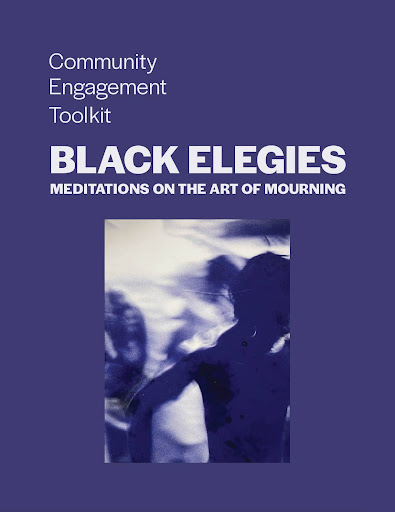
[Providence, RI] Brown University Digital Publications has launched the multimodal edition of Black Elegies: Meditations on the Art of Mourning, the second title in the On Seeing series published by the MIT Press. Authored by Kimberly Juanita Brown, inaugural director of the Institute for Black Intellectual and Cultural Life at Dartmouth College, Black Elegies is a poignant, unflinching study of black grief as a form of elegy found in visual art, music, literature — everywhere, if you know how to see it.
The book, which Michael Boyce Gillespie praises as “stunningly beautiful and rigorous work,” includes analysis of major figures Toni Morrison, Carrie Mae Weems, Audre Lorde, and Marvin Gaye, among others. The multimodal edition offers readers a Community Engagement Toolkit, a guide to having open conversations about antiblackness, visual culture, and death.
Publications in the On Seeing series foreground the political agency, critical insight, and social impact inscribed in visuality and representation. The MIT Press will publish each On Seeing volume as a print book, ebook, and open access multimodal edition created by Brown University Digital Publications.
With Black Elegies, BUDP extends its focus on innovation, and offers a pathway to affordable and sustainable creation of born-digital scholarly monographs. Senior Library Technologist and BUDP staff member Holiday Shapiro developed Black Elegies using an original WordPress theme created by long-term external collaborator Jake Camara of Jake & Co. This cost-effective, in-house approach to scholarly publishing platform development also draws on the expertise of colleagues in the Library’s Digital Technologies unit. Further, the new release carries forward the design work of Crystal Brusch, BUDP Digital Publications Designer, and Yasuyo Iguchi, Design Manager at The MIT Press.

Brown University Digital Publications — generously launched with support from the Mellon Foundation in 2015 with additional support from the National Endowment for the Humanities and the Institute of Museum and Library Services — creates exciting new conditions for the production and sharing of knowledge by advancing scholarly arguments in ways not achievable in a conventional print format, whether through multimedia enhancements or interactive engagement with research materials. Brown partners with leading scholarly presses to bring peer reviewed, open access, multimodal content to global audiences. Widely recognized as accessible, intentional, and inclusive, Brown’s novel, library-based approach to born-digital monograph publishing is helping to set the standards for the future of scholarship in the digital age.