
E-Newsletter
Recent Posts
Latest News
-
dSalon | A Digital Interface for 17th Century Texts in the Aymara Language of Peru
|
Join the Center for Digital Scholarship on Wednesday, January 23, 2018 at 2 p.m. in the Digital Scholarship Lab at the Rockefeller Library for a dSalon discussion on “A digital interface for 17th century texts in the Aymara language of Peru.” Nicholas Emlen, Digital Fellow at the John Carter Brown Library, and Patrick Hall, PhD Candidate in the Department of Linguistics at the University of California, Santa Barbara, will give a short introduction to their collaborative project and then will lead a discussion of some of the technical and conceptual issues involved in this project.
This event is part of the Center for Digital Scholarship’s dSalon series of presentations and discussions around digital scholarship. Free and open to the public.
A Digital Interface for 17th Century Texts in the Aymara Language of Peru
The project creates a digital interface that allows users to explore transcribed, translated, and linguistically analyzed versions of two seventeenth century Peruvian texts in the Aymara language. The first text is a nearly 600-page narrative written by a native Aymara speaker. The second is a dictionary—which is still the most comprehensive source on the Aymara language even today—that was compiled from that narrative text. The two texts are digitized and available online, but they are idiosyncratic and difficult to interpret, and in practice remain quite inaccessible to both scholars and Aymara speakers today.
The interface aims to open up accessibility to the texts and to provide a host of new analytical tools. One innovative aspect of the interface is that it provides integrated access to both texts at the same time. The narrative text and the dictionary fit together naturally, since the latter was compiled from the former. Thus, through the digital interface, users can search for a particular word or grammatical feature and call up examples from both the dictionary and the narrative text written by the 17th century Aymara speaker. This integration of analytical information from the dictionary with a sample of how the language was used by native speakers from the 17th century creates a powerful tool that can be used by historians, anthropologists, linguists, and native speakers alike.

Nicholas Emlen Nicholas Emlen
Nicholas Q. Emlen is a Digital Fellow at the John Carter Brown Library and a Visiting Lecturer in Anthropology at Brown. He is a linguistic anthropologist who has conducted extensive ethnographic research on multilingualism, migration, and coffee production on the Andean-Amazonian agricultural frontier of Southern Peru. He also works on the reconstruction of Quechua-Aymara language contact in the ancient Central Andes, and on multilingualism among Quechua, Aymara, Puquina, and Spanish in the colonial Andes, using texts from the John Carter Brown Library’s collection.

Patrick Hall Patrick Hall
Patrick Hall is a PhD candidate in linguistics at UC Santa Barbara. His work is focused on new approaches to designing and implementing software for language documentation using the standard, ubiquitous technologies of HTML, CSS, and Javascript. His data models and applications are based directly on documentary practice, resulting in tools which are robust, but nonetheless simple enough to be archived alongside the data they are used to produce.
Date: Wednesday, January 23, 2019
Time: 2 – 3:15 p.m.
Location: Patrick Ma Digital Scholarship Lab, Rockefeller Library, 10 Prospect Street, Providence, RI -
Announcement | 50 Year Anniversary of the Black Student Walkout: A Collaboration between Brown University Archives and WGBH
|
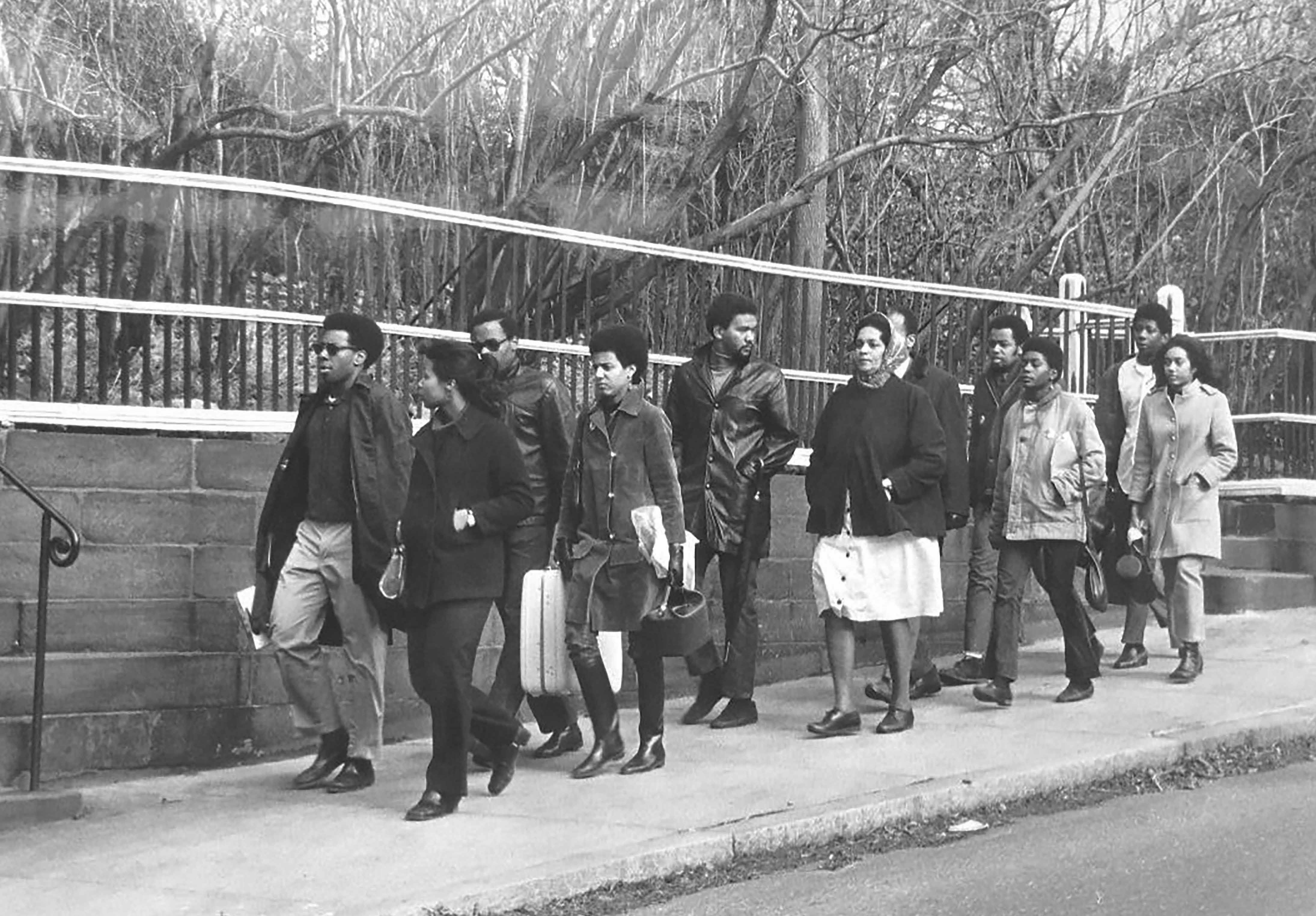 Produced by WGBH and reporter Gabrielle Emanuel, the video, “Fifty Years Ago, Black Students At Brown Walked Out For Change” is available on WGBH online.
Click here to read the WGBH story and see the video.
In addition to the video, the story will be told today during the “All Things Considered” afternoon broadcast, available at 89.3 and 89.7 FM in Rhode Island and Massachusetts.
Ms. Emanuel worked in collaboration with Jennifer Betts, Brown University Archivist and Interim Director of the John Hay Library and Special Collections, on this remarkable video that documents the Black Student Walkout at Brown on December 5, 1968. Today marks the 50th anniversary of this call to action by 65 Brown students of color, who demanded an increase in recruitment and admission of black students to Brown.
1968 Black Student Walkout
Part of a national movement by black college students, the 1968 walkout at Brown stands out for its longevity–students camped out at the Congdon Street Baptist Church for three days–and its success. As a result of this coordinated action and the serious negotiations between Brown administration and the student representatives that took place during the three-day protest, the University agreed to significantly enhance efforts around black student admission practices, with $12 million over three years earmarked for recruitment. According to a letter from President Christina Paxson to the Brown community:
The walkout ended on Dec. 9, when the students secured the University’s agreement to launch an effort to significantly increase the number of black students in each new class. Those students established a foundation for future generations of historically underrepresented students, including other black students, in advocating together for a better Brown.
Protest & Perspectives: Students at Brown 1960s-90s
This fall, the Library presented the exhibit Protest & Perspectives: Students at Brown 1960s–90s, which included the 1968 Black Student Walkout. Installed on the wall outside of the Patric Ma Digital Scholarship Lab, the exhibit was created by the Brown University Archives Fellows during the summer. They are:
- Amyre S. Brandom, Xavier University of Louisiana, Leadership Alliance
- Kayla Smith, Spelman College, Leadership Alliance
- Rachel Souza, Brown University ‘21, Presidential Scholar
Click here to see the online exhibit about the Walkout.
Days of Absence: The 1968 Black Student Walkout at Brown
In addition, the Library hosted the exhibit Days of Absence: The 1968 Black Student Walkout at Brown in the Lownes Room of the John Hay Library in September. The exhibition, curated by Bernicestine and Harold Bailey, was created in conjunction with the Black Alumni Reunion.
Social Justice & Special Collections at the Brown University Library
The Library’s collections contain a vast source of material related to social justice on campus and throughout the world. Open to the public and easily accessible to all Brown students and faculty, the John Hay Library and its knowledgeable staff are available to all researchers interested in working with the unique, fascinating, revelatory, and, in many cases, priceless items waiting to be explored.
Collections of interest in this area of study include (but are not limited to):
- Brown University American Civil Liberties Union records, 1998-2001
- Brown University Archives
- Brown Women Speak Oral History collection, 1907-2014
- Commission on Freedom of the Press Documents and Reports
- Community Organizer Genealogy Project oral history interviews, 2007-2011
- Community Organizing Archive
- Hall-Hoag collection of dissenting and extremist printed propaganda
- James Jackson Bequest
- Louise Lamphere papers, 1925-2013 (bulk 1960-2013)
- Paul R. Dupee Jr. ’65 Mexican History Collection
- Rhode Island Disability Vote Project records (2006-2008)
- Rhode Island Feminist Theatre Records, 1973-1984
- Rhode Island Society for the Collegiate Education of Women records, 1895-1971
- Scott O’Hara Papers
- Vagabond Press Records
-
Event | RavenSpace: A Collaborative Model for Digital Publishing in Indigenous Studies with Darcy Cullen and Beth Fuget
|
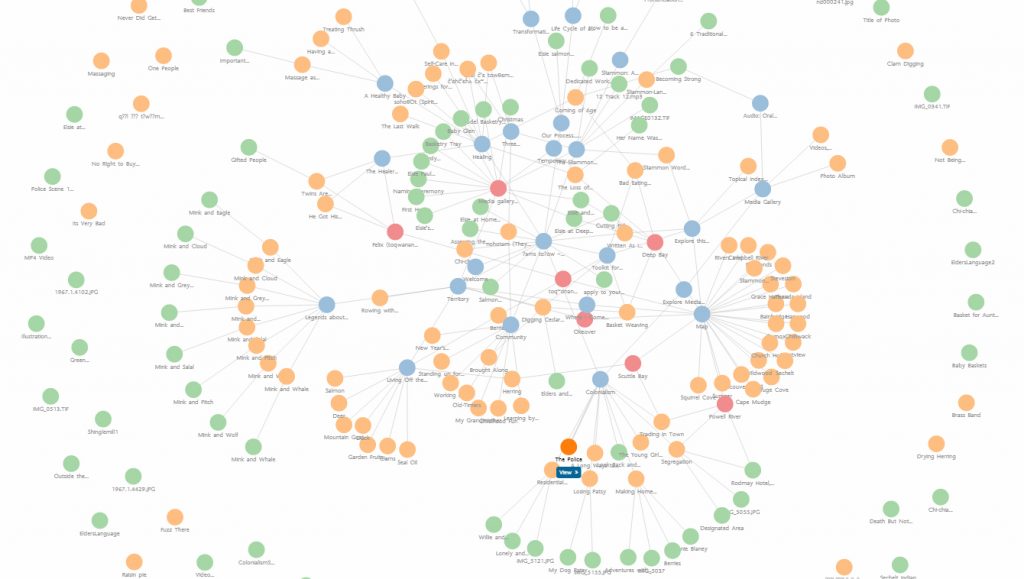 Join the Brown University Library on Friday, November 30, 2018 from 12 – 1:15 p.m. in the Digital Scholarship Lab at the Rockefeller Library for a talk entitled, “RavenSpace: A Collaborative Model for Digital Publishing in Indigenous Studies.” Darcy Cullen, Assistant Director of RavenSpace: Digital Publishing in Indigenous Studies at UBC Press, The University of British Columbia, and Beth Fuget, Grants and Digital Projects, University of Washington Press (Chair), will talk about this collaborative project, funded by the Andrew W. Mellon Foundation.
This event is free and open to the public. A light reception will follow the talk.
RavenSpace: A Collaborative Model for Digital Publishing in Indigenous Studies
As scholarship evolves to take advantage of digital forms and contexts and scholars seek new ways to reach the various audiences they want to engage, the scholarly communications infrastructure is responding and adapting publication practices to meet changing needs. RavenSpace is a new publishing platform for media-rich, networked, interactive books in Indigenous studies that provides a digital space where communities and scholars can work together to share and create knowledge. Based on Scalar and other open-source technologies, and funded by the Andrew W. Mellon Foundation, the platform meets the standards of peer-reviewed academic publishing and respects Indigenous protocols for accessing and using cultural heritage and traditional knowledge. It supports collaborative authorship and offers different paths through the work for different audiences. Darcy Cullen and Beth Fuget will discuss the development and goals of this new model of publishing.
 Darcy Cullen
Darcy Cullen is Assistant Director, Acquisitions, at the University of British Columbia Press and the Principal Investigator for RavenSpace. She has written about the collaborative nature of publishing in Editors, Scholars, and the Social Text, and is an ardent supporter of new modes of book publishing that take account of digital, networked, and collaborative scholarship.
 Beth Fuget
Beth Fuget manages grants and digital projects for the University of Washington Press, where she is currently launching their first open access books. She has also worked as an acquisitions editor at the press and before that, as a writer, editor, translator, and teacher.
Date: November 30, 2018
Time: 12 – 1:15 p.m.
Location: Patrick Ma Digital Scholarship Lab, Rockefeller Library, 10 Prospect Street, Providence, RI