
E-Newsletter
Recent Posts
Latest News
-
Library Stats Quest Week – Fall 2025
|
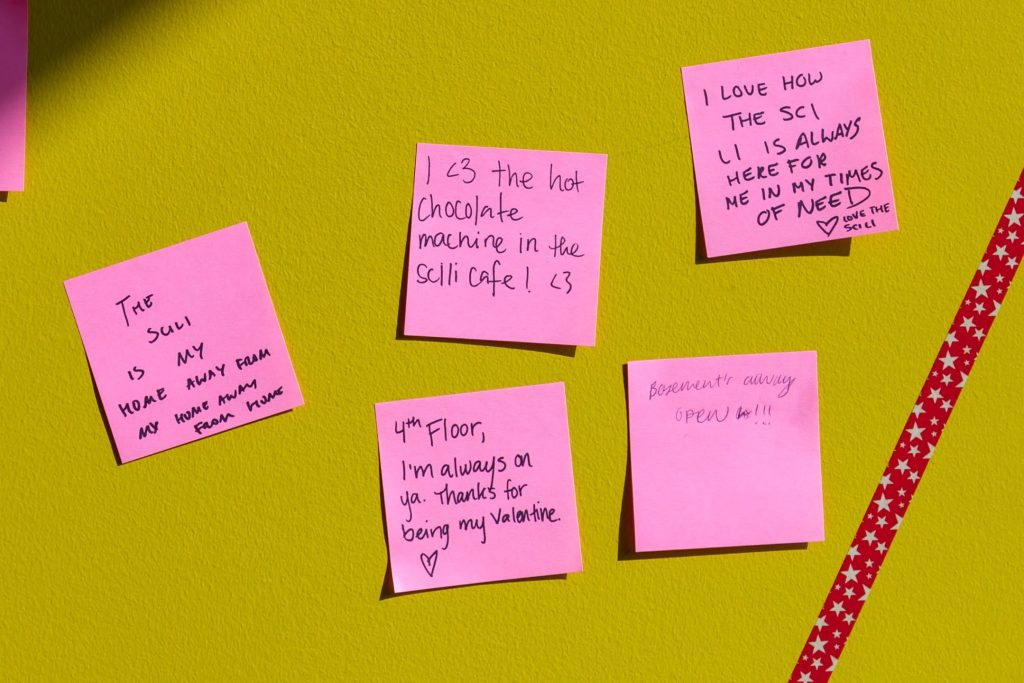
Please tell your Brown University Library about your on-site experience during the week of November 10 to 16, 2025 — Library Stats Quest Week!
Did you know that nearly 20,000 users visit the libraries in-person every week?
We want to know if the experiences you’re having are meeting your needs. After each visit this week to a library location — Rockefeller, Sciences, Orwig Music, John Hay Library, and Champlin Medical Library — please take a few seconds to answer a very brief survey about your experience. Your input will help us better understand why you use the Library and how we can improve our services.
We’ll also be taking a closer look at how people are using the spaces within the libraries. Library staff will do periodic headcounts in various types of spaces throughout the week.
We strive to make every visit for every patron one in which you feel welcome, respected, and supported. This is your Library. You belong here. Your feedback is essential.
Thank you!
-
Journal-Related Challenges Related to Compliance with New NIH Public Access Policy
|
On July 1st, 2025, the new NIH Public Access Policy went into effect. This policy requires author-accepted manuscripts resulting from active NIH awards to be deposited in PubMed Central (PMC) without embargo by the official date of publication.
Since July, some publishers have asked authors to sign publication agreements requiring a 12-month embargo, which conflicts with the NIH policy. In addition, these publishers have informed NIH-funded authors that the only pathway to compliance is to select an open access pathway and pay the associated article processing charge (APC).
While the NIH policy does allow for publication costs to be included in a grant, as either direct or indirect costs, some authors with active awards may not have budgeted for publication fees. If their manuscripts were accepted after July 1st, they must comply with the new policy, but may not have funds available to pay APCs.
In such cases, the Library recommends authors consider these options:
- Reason with the journal publisher. Explain the conflict with the NIH Public Access Policy and request they drop the 12 month embargo from the publication agreement.
- Withdraw the manuscript and resubmit to a journal meeting one of the following criteria:
- Journals that do not require embargoes, such as BMJ.
- Journals on PMC Journal List that currently deposit all their articles into PMC without embargo. Be sure to review the specific journal record to confirm that the Release Delay is 0 months (Immediate Release) and the Agreement Status is Active.
- Journals that have agreements with Brown to waive open-access fees for our researchers.
- Open-access journals that have no fees or may charge comparatively low publication fees, such as society journals with discounts for members.
For more information:
- View HBLS librarian Andrew Creamer’s recent workshop on journal article publishing pathways to comply with this new policy (VPN required for off-campus access).
- Visit the Authors Alliance NIH Public Access Policy FAQ.
- Email HealthSciLibrarians@brown.edu with any further questions.
-
Health and Biomedical Library Services November 2025 News
|
Your HBLS librarians hope your semester is going well! Here are a few resources and tips to support your research and scholarship.
NIH Public Access Policy Compliance
Do you have questions about complying with the new NIH Public Access policy? Are you experiencing challenges with publishers regarding options for complying with requirements? HBLS’ librarian Andrew Creamer offered a recent workshop on journal article publishing pathways to comply with this new policy. View the recording online (VPN required for off-campus access) and take a deeper dive into the challenges some authors are experiencing in his blog post.
Evidence Synthesis Resources and Services

The HBLS Evidence Synthesis Service (ESS) team has created an extensive guide to evidence synthesis methodologies in the health sciences. It offers detailed explanations of essential steps along with links and tutorials. The ESS represents a redesign of our service model to better support the needs of the BioMed and SPH community. Our ESS guide outlines eligibility and service tiers.
New Textbooks and Study Materials in ClinicalKey

ClinicalKey now offers Study Resources, a suite of tools that includes a Bookshelf/StudyTools app for offline use. Study Resources includes dozens of textbooks, multimedia resources, board review materials, and flashcards. The web-based Bookshelf and mobile app let you create customized collections and download materials to read, highlight, and annotate. In addition, for medical students at the Warren Alpert Medical School of Brown University, Study Resources can be integrated with other curricular tools such as Clinical Anatomy and Clinical Pharmacology.
To access ClinicalKey Study Resources, the Bookshelf, and to download the desktop and mobile apps, begin by logging in to ClinicalKey with your single sign-on. Then login to your personal ClinicalKey account (or create one to get started).

Tap the Study Resources Button to explore and add items to your Bookshelf.
Within Study Resources, tap the Launch Bookshelf button to download the apps.
Contact Your HBLS Librarians!
Email us at HealthSciLibrarians@brown.edu.
Access your Brown University Library resources at https://go.brown.edu/HBLS.