
E-Newsletter
Recent Posts
Latest News
-
Fashioning Insurrection Exhibit and Opening
|
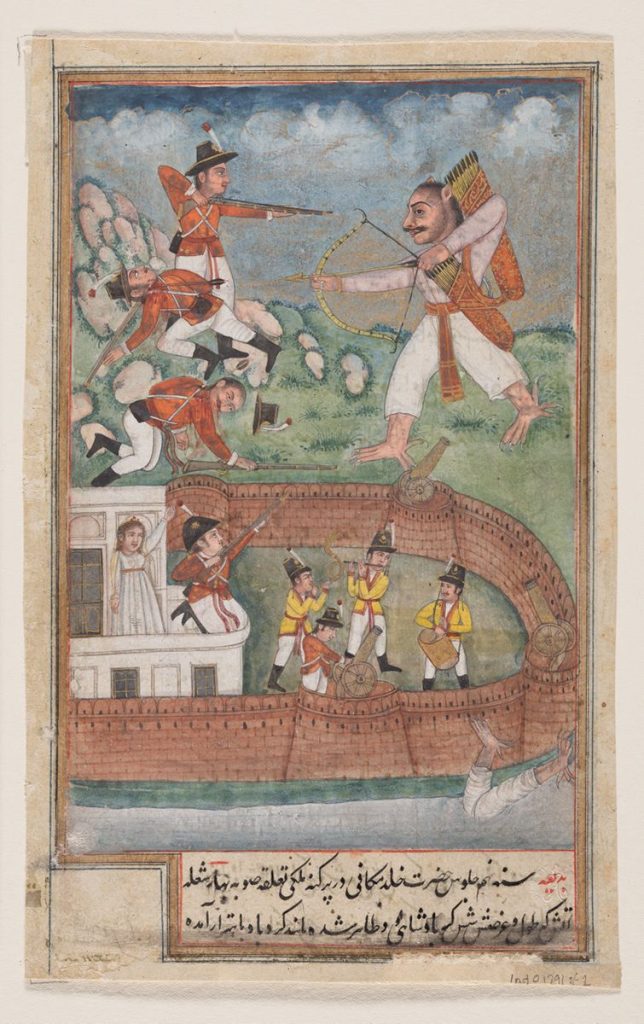
“Indian supernatural being attacking fort defended by British troops” (1791). Fashioning Insurrection: From Imperial Resistance to American Orientalisms, Prints, Drawings and Watercolors from the Anne S.K. Brown Military Collection. Brown Digital Repository. Brown University Library. Fashioning Insurrection: From Imperial Resistance to American Orientalisms
Exhibit
Part of the Islamic-American Exchanges Initiative between the Brown University Library and the Center for Middle Eastern Studies, the exhibit, “Fashioning Insurrection: From Imperial Resistance to American Orientalisms,” will be on view in the Harriette Hemmasi Exhibition Gallery at the John Hay Library during the 2025-26 academic year, opening on August 25, 2025. The John Hay Library is open to the public during normal hours of operation.
Online Exhibit
View the online exhibit, which features additional items.
Opening Reception
The exhibit opening reception will take place at the John Hay Library on Tuesday, September 9, 2025 at 4:30 p.m.
Free and open to the public. Light refreshments will be available.
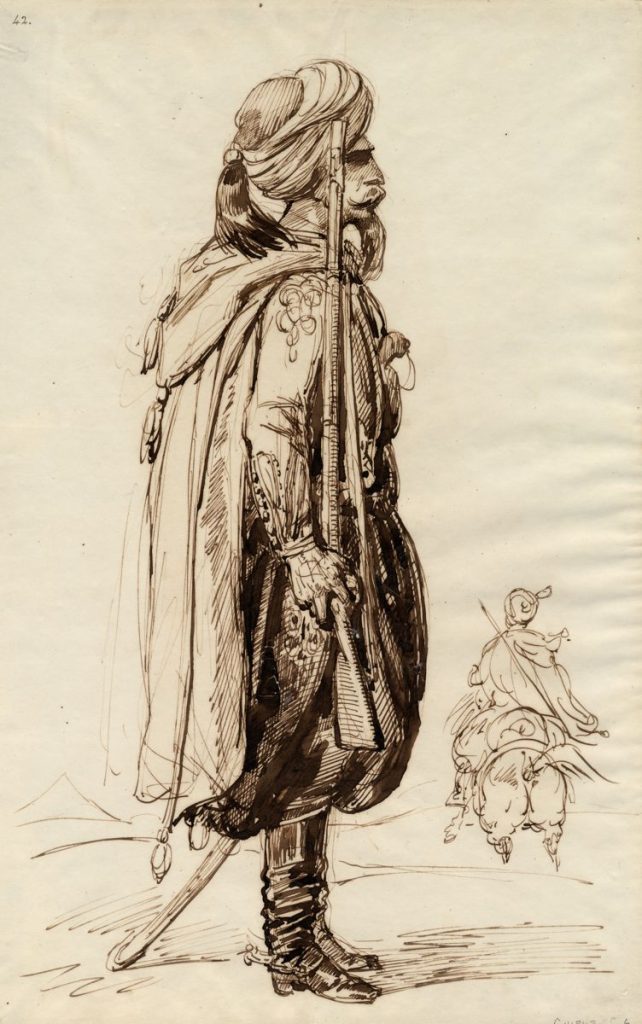
Lalaisse, François-Hippolyte, “Turco, c. 1848” (1848). Brown Digital Repository. Brown University Library. Fashioning Insurrection
Americans have adapted uniforms into costumes since the masquerade balls of colonial days to today’s historical films and battle reenactments. The practice took an unexpected form in the first decades following the American Revolution when the early presses of the United States closely covered imperial insurrections that unfolded across Islamicate societies against the three towering empires of the era: the Greek War of Independence against the Ottomans (1821–29), the Ottoman Algerian resistance to the French (1830–48), and the Indian uprising against the British (1857).
Alongside depictions of these struggles, American popular media paid careful attention to the “national” dress and military uniforms that could potentially unify a revolution or even aid in controlling insurrection. As the young nation navigated its connections to the Islamicate world, some reinterpreted visual and sartorial modes of imperial resistance. The reverberations of these events led to the emergence of orientalist costumes and dress that transformed regional revolutionary garb into American fashion statements of solidarity, fascination, and emulation.
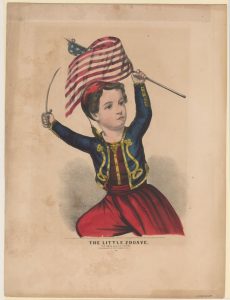
“The little zouave: ‘Up boys and at them‘” (1861). Brown Digital Repository.
Brown University Library.Through these forms of cosmopolitan materialism, Americans announced their political stances on historic movements, sometimes also asserting their country’s imperial ambitions and legacies as it solidified its standing in the world. Such sartorial translations from uniforms to fashion informed America’s evolving relationship with its own revolutionary past. Each medium these costumes inhabited aided Americans in creatively redefining their country’s transforming identity on the international stage while facing resonant issues in their new nation, including foreign trade, slavery, and humanitarianism. Alongside contextualizing documents, the works here vividly illustrate how the U.S. wielded these movements of imperial insurrection to remold its own world image and don it with aplomb.
-
Migrating Your Data to the New EBSCOhost User Interface
|
New EBSCOhost Interface Launching August 5, 2025
EBSCOhost’s user interface (UI) will be changing on August 5, 2025. If you currently have saved searches, folders, or articles in your EBSCOhost account, some, but not all, of this content will migrate automatically.
Essential Deadlines
- August 4, 2025
- Saved searches, search alerts, and persistent links to searches can be preserved manually.
- Articles in custom folders may be exported in RIS format.
- December 31, 2025
- Any data that remained in the classic EBSCOhost UI can be downloaded in the new UI in Excel format.
- Saved search data may be incomplete.
Your EBSCOhost Account
Your EBSCOhost account contains several types of saved content.
My Folder
This is the default location to which articles typically save. Items in the Articles subfolder of My Folder will automatically migrate to the new UI.
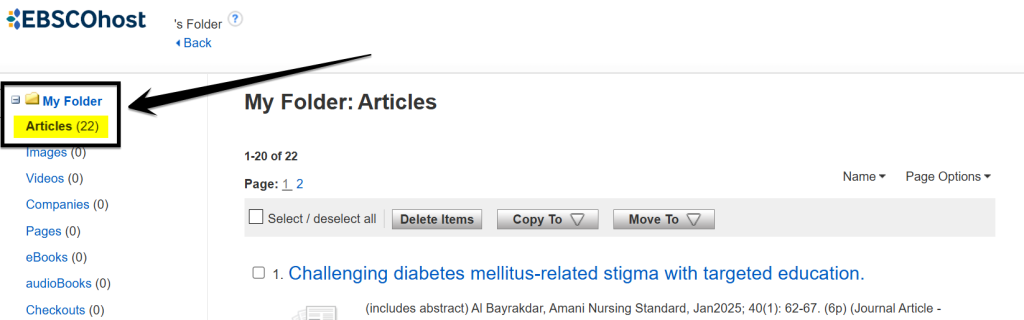
No action is necessary if you only use the Articles subfolder under My Folder.
My Folder also has other subfolders such as Saved Searches, Persistent Links to Searches, and an area called My Custom under which you can create Custom Folders.
You must take action if you use these subfolders or have content in My Custom (Custom Folders).
Saved Searches
Searches in the Saved Searches folder in your EBSCOhost account will automatically be migrated when you access the new UI.
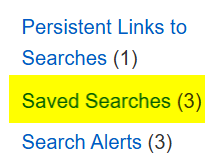
However, there are several limitations to this automatic migration. If you use Saved Searches, we strongly encourage you to look at the detailed instructions and full list of limitations outlined here: How can I access my classic user interfaces MyEBSCO data from EBSCO’s new user interfaces?
Persistent Links to Searches and Saved Alerts
Content in these folders will not be migrated to the new UI. Until August 4, 2025, you can access and preserve persistent links to searches and search alerts using the classic UI.
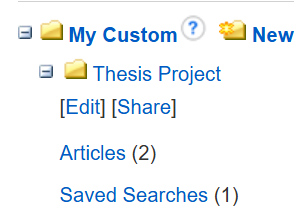
My Custom (Custom Folders)
Articles and searches saved to Custom Folders will not migrate.
Until August 4, 2025
- You can access and preserve the information about searches in Custom Folders using the classic UI.
- You can export references in each Custom Folder as RIS files to import into a citation management tool such as Zotero or EndNote. For assistance with this, email citation-help-group@brown.edu
Between August 5 and December 31, 2025
- All details about references in these folders will be included in the Excel file. Some information about saved searches will be preserved, but they may be difficult to recreate.
- You can download Custom Folder content into an Excel spreadsheet using these instructions: How can I download the data from MyEBSCO custom folders in the classic EBSCO interfaces?
Still have questions?
Please email library@brown.edu for assistance.
- August 4, 2025
-
“Shared Magma” Exhibit Opening & “Ritual” Film Screening
|

Kajsa G. Eriksson. Täkt [Quarry], 2024 Join the Library for the opening reception of Shared Magma: An American and Swedish Collaboration on Sisterhood and Sister Ore, an exhibit, on Wednesday, September 10, 2025 at 4 p.m. EDT at the John Hay Library followed by a screening of the film Ritual at 5 p.m. EDT in the Patrick Ma Digital Scholarship Lab at the Rockefeller Library.
Free and open to the public.
Shared Magma: An American and Swedish Collaboration on Sisterhood and Sister Ore

Robin Wheelwright Ness Iron Rock Hill in Cumberland, RI and Taberg in Småland, Sweden are ancient formations of a rare eruptive rock with shared properties.

Kajsa G. Eriksson The exhibit Shared Magma: An American and Swedish Collaboration on Sisterhood and Sister Ore celebrates the intersection of Late Proterozoic geology and a contemporary friendship between Swedish artist Kajsa G. Eriksson and Robin Wheelwright Ness, Senior Library Technologist in Digital Preservation at the John Hay Library. Featuring original works created from iron-based pigments by Eriksson, Shared Magma explores how deep time, shared lifetimes, and the future entangle.
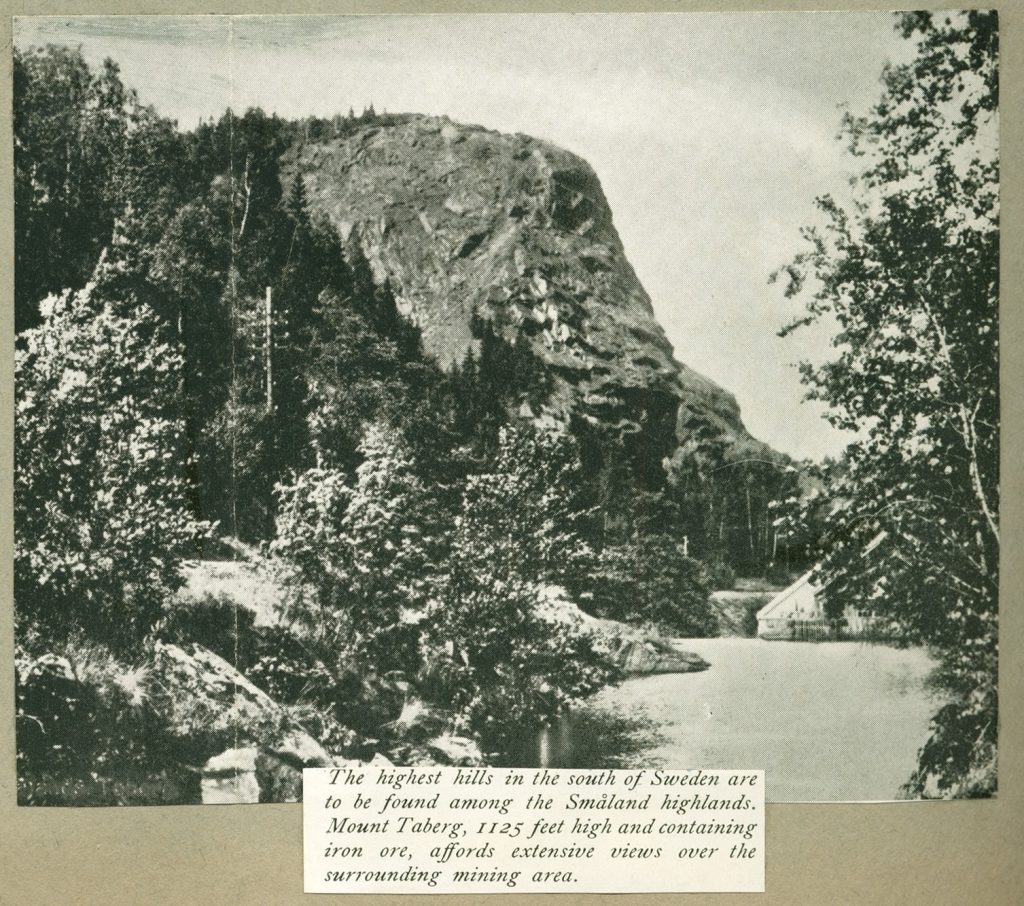
Smiley, Charles H. (Charles Hugh), “Sweden” (1954). Archives of the Ladd Observatory. Brown Digital Repository. Brown University Library. https://repository.library.brown.edu/studio/item/bdr:39055/ Kajsa G. Eriksson’s research and the international exchange of the exhibition Shared Magma was conducted with support of the Swedish Arts Grants Committee.

Ritual
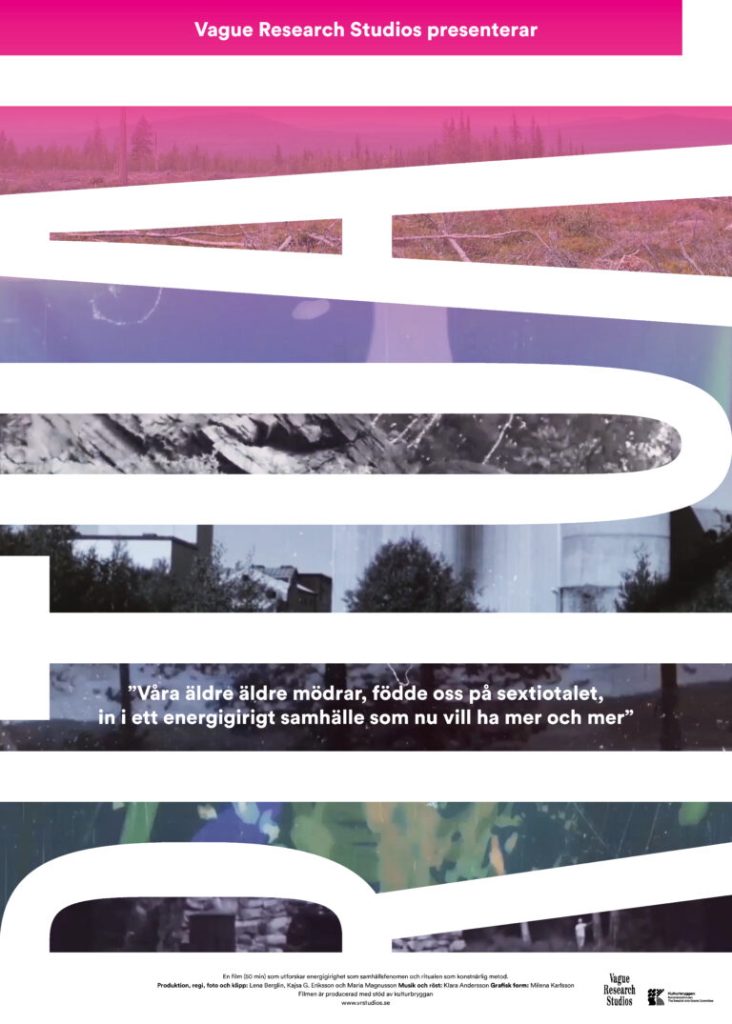
Ritual is a 55-minute long experimental film by Kajsa G. Eriksson, Lena Berglin, and Maria Magnusson that explores the greed for energy as a social, material, and historical phenomenon. The film highlights how life in urban centers is dependent on nature and the people living in sparsely-populated communities in Sweden. Ritual features eleven Swedish sites of extraction juxtaposed against the ever increasing dependence on digital technologies.
Now through the end of the day, Thursday, September 10, you can watch Ritual online for free through this link: filmfreeway.com/Ritual929
Distributor Filmform (SWE)
The screening of Ritual is arranged with support of Kulturbryggan.

Robin and Kajsa’s Alternative 1984 Playlist of Post-punk, Goth, Dark Wave Releases, & live shows