
E-Newsletter
Recent Posts
Latest News
-
Announcement | WBUR Features Library’s Gay Pulp Fiction Archive
|
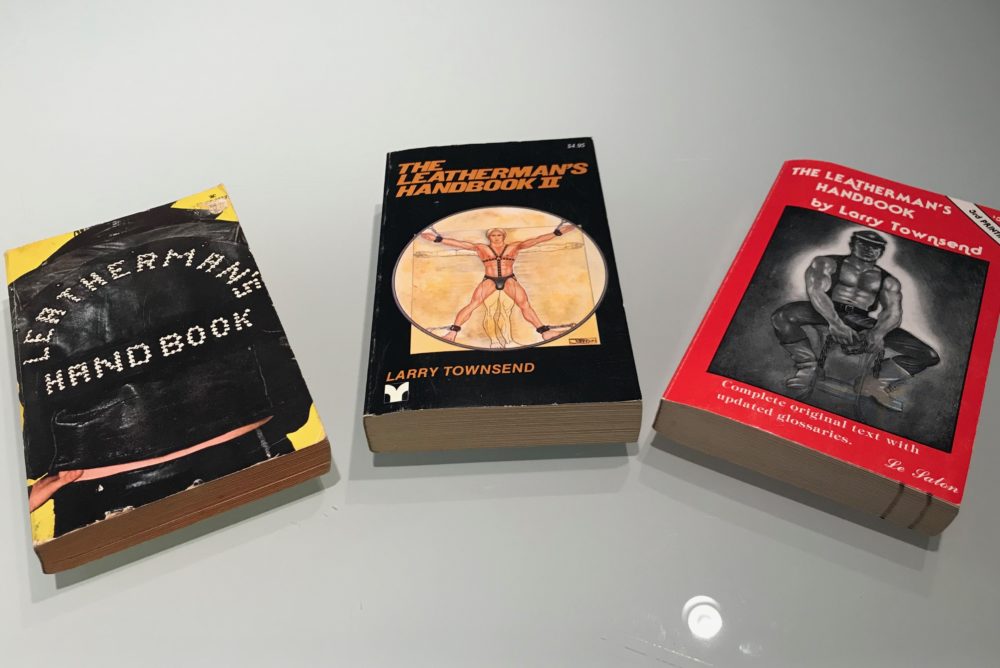
Books from The Leatherman’s Handbook series (Photo by Miranda Suarez for WBUR) WBUR.org has posted an article about the Gay Pulp Fiction collection at the John Hay Library.
“Brown University Is Archiving Gay Pulp Fiction To Preserve A Moment Of LGBTQ History” by Miranda Suarez also features Heather Cole, Curator for Literary & Popular Culture Collections, and Finch Collins, a John Hay Library Undergraduate Fellow.
90.9 WBUR-FM is Boston’s NPR news station and the home of nationally syndicated programs, including On Point, Here & Now, Only A Game and Car Talk, which reach millions of listeners each week on NPR stations across the country and online. More info.
The WBUR article is mentioned on Literary Hub!
-
Announcement | John Hay Library Undergraduate Fellowships
|
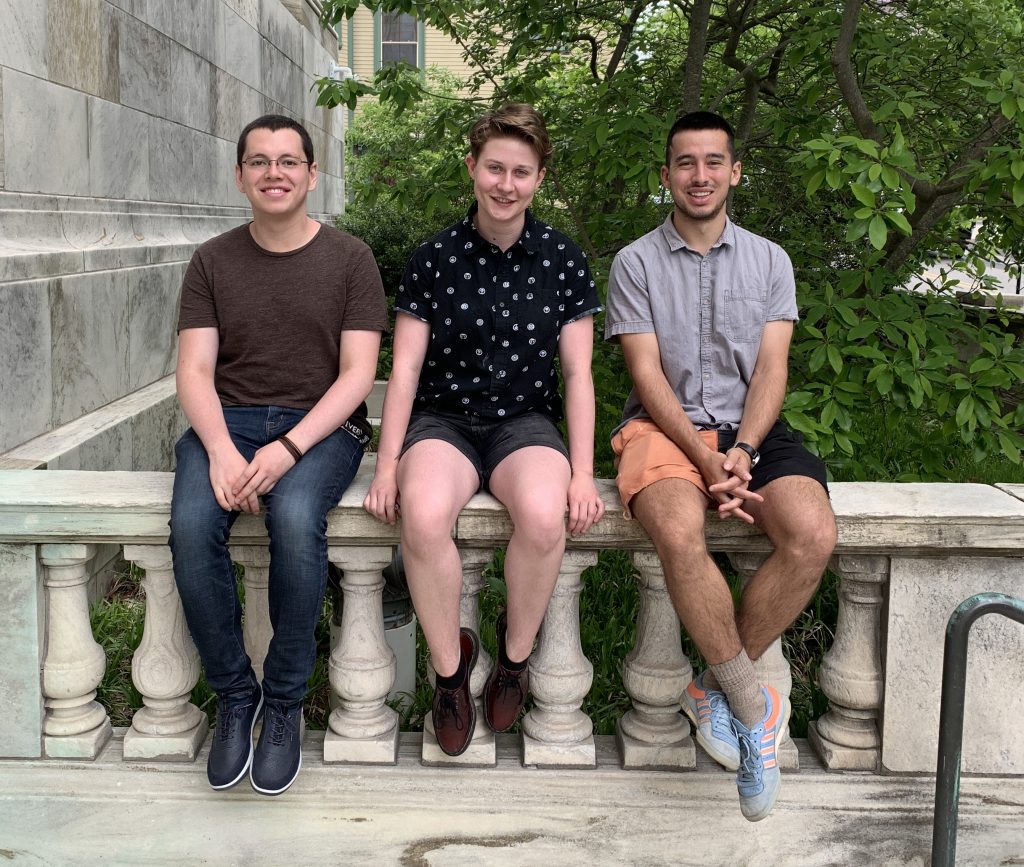
L-R: Alan Mendoza Sosa ’20, Finch Collins ’21, and Evan Kindler ’20, pictured outside the John Hay Library The John Hay Library Undergraduate Fellowship Program serves to assist Brown students with primary source exploration, inviting them to follow their curiosity, questions, and creativity through self-directed projects focused on an area within the vast special collections resources available within the Library. Working closely with Library staff over 10 weeks, the students will each produce an individual research project, to be presented at a symposium on September 19, 2019.
This summer’s inaugural cohort of John Hay Library Undergraduate Fellows includes:
Alan Mendoza Sosa ’20
“Nightsky’s Glitter”
Alan will create an experimental queer poetry chapbook inspired by and incorporating elements from the gay pulp fiction collection, the Scott O’Hara papers, the Katzoff collection, and the Smith magic collection. The book will explore themes of gender, sexuality, embodiment, and language, while questioning queer media representation, the social distinction between “high” and “low” literature, and between “academic” and “popular” culture.

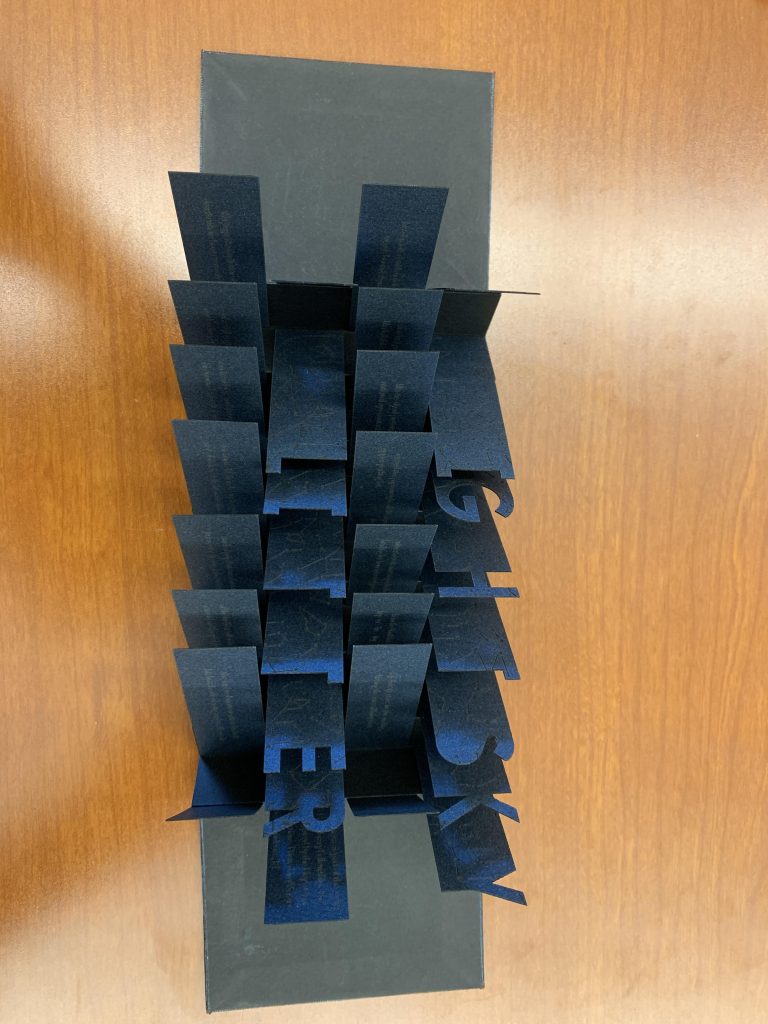
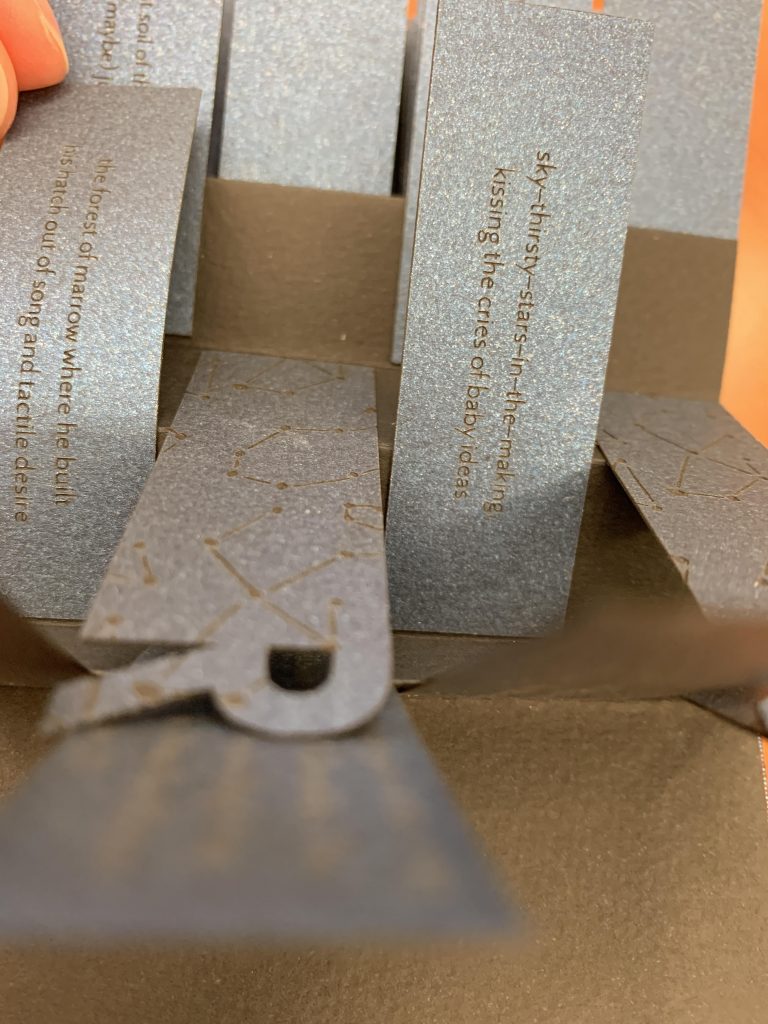
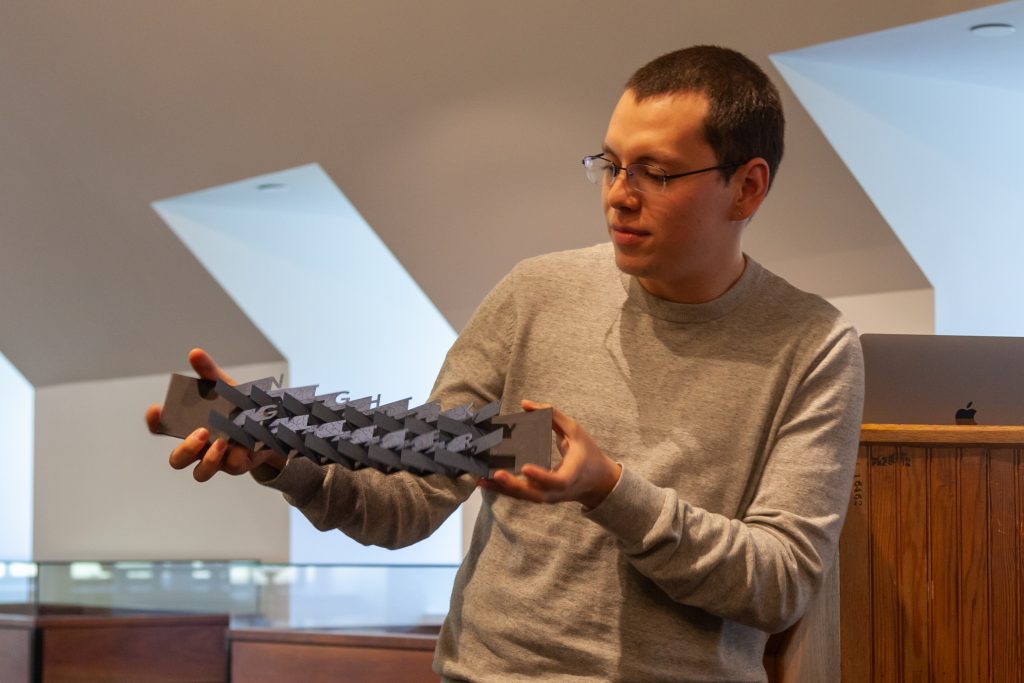
At the symposium on September 19, 2019, Alan displays the book he created as a Hay Undergraduate Fellow
Finch Collins ’21
“(Trans)formative Fandom: Trans Studies, Problematic Authors, and Reclamation”
Working with the Caitlin Kiernan papers and the gay pulp fiction collection, Finch will investigate negotiations of queer identity through fandom, examine the extent that fandom can serve as a site of reclamation and identity creation, and consider how utopian thinking on fandom’s reclamatory value might fall short. He hopes to produce a 40-50 page paper as a first step toward an honors thesis.
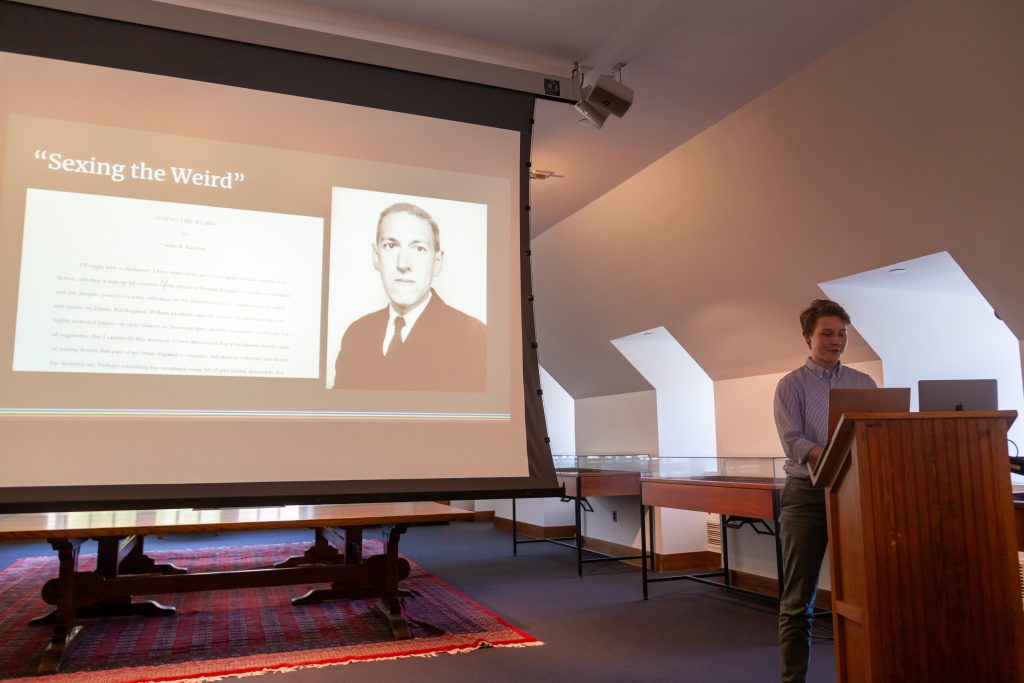
Finch presents in the Lownes Room at the John Hay Library on September 19, 2019 Evan Kindler ’20
“The John Birch Society in the Trump Era”
Evan hopes to examine Trumpism’s roots in Bircherism by looking at how this far-right extremist group’s agenda has been reflected in Trump’s policies and rhetoric. Evan plans to write and submit a paper to an academic journal as well as possibly produce a creative work.
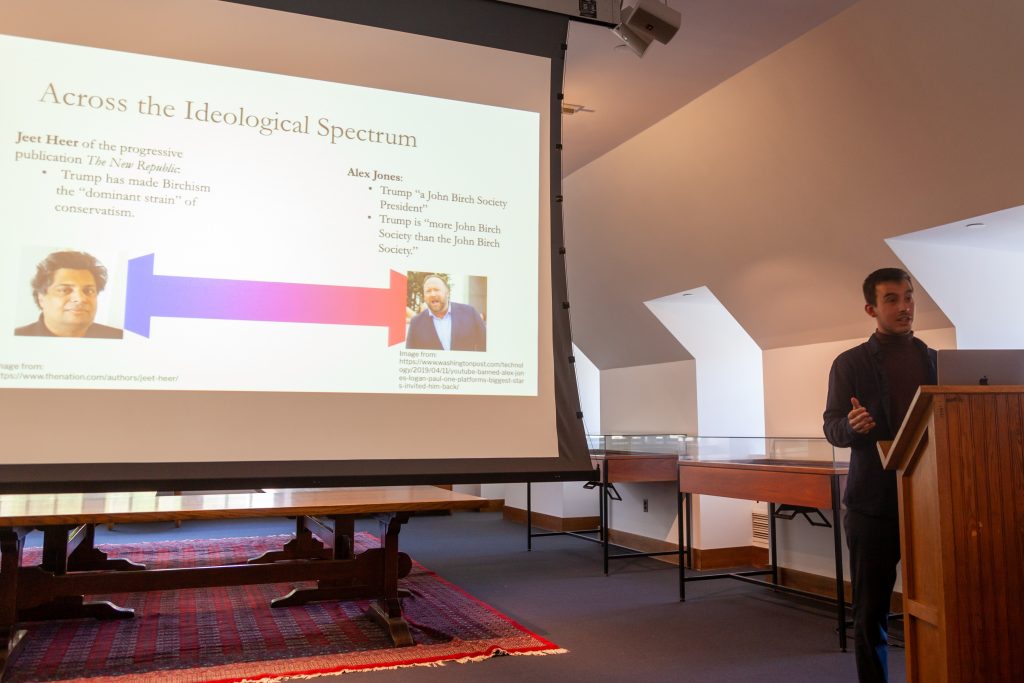
Evan presents in the Lownes Room at the John Hay Library on September 19, 2019 -
Announcement | 70th Anniversary of Orwell’s Nineteen Eighty-Four
|

Pages from the only surviving Orwell manuscript; at the John Hay Library June 8, 2019 marked the 70th anniversary of the publishing of Nineteen Eighty-Four, the best-known work of author George Orwell (the pseudonym of Eric Blair, 1903-1950). He composed the novel between 1946 and 1948 on the Scottish island of Jura while suffering from tuberculosis. The book was published in to critical and popular acclaim; Orwell died six months later.
Orwell’s original manuscript of the novel was presented to Brown University Library in 1992 by Dan Siegel ’57. Containing nearly half of the published text, the document shows countless corrections and revisions in Orwell’s hand. It is the only one of Orwell’s literary manuscripts that survives; the author destroyed all others.
In his preface to his facsimile of the manuscript, Siegel wrote:
The collective survival of the world’s books and manuscripts is a transcendent act. Without books, knowledge becomes arbitrary, truths are disparate and unrelated. Without books, memory fails. Any collection of books which justifies and confirms only the present truth is, in the wrong hands, or in the long run, dangerous. Regardless of how random any collection might be, its very existence is an indication of a society’s political health. Like one of Charrington’s trinkets, the existence of this manuscript is a good sign.
–Dan Siegel ’57The manuscript is frequently consulted by scholars and used in class visits to the Library; visitors marvel over Orwell’s handwritten corrections of the novel’s famous first line, “It was a bright cold day in April, and the clocks were striking thirteen,” for which Orwell originally wrote, “It was a cold day in early April, and a million radios were striking thirteen”; as well as the first instances of “newspeak” and “Big Brother is watching you.”