
E-Newsletter
Recent Posts
Latest News
-
Digitization and Special Collections: Access, Equity, and Preservation
|
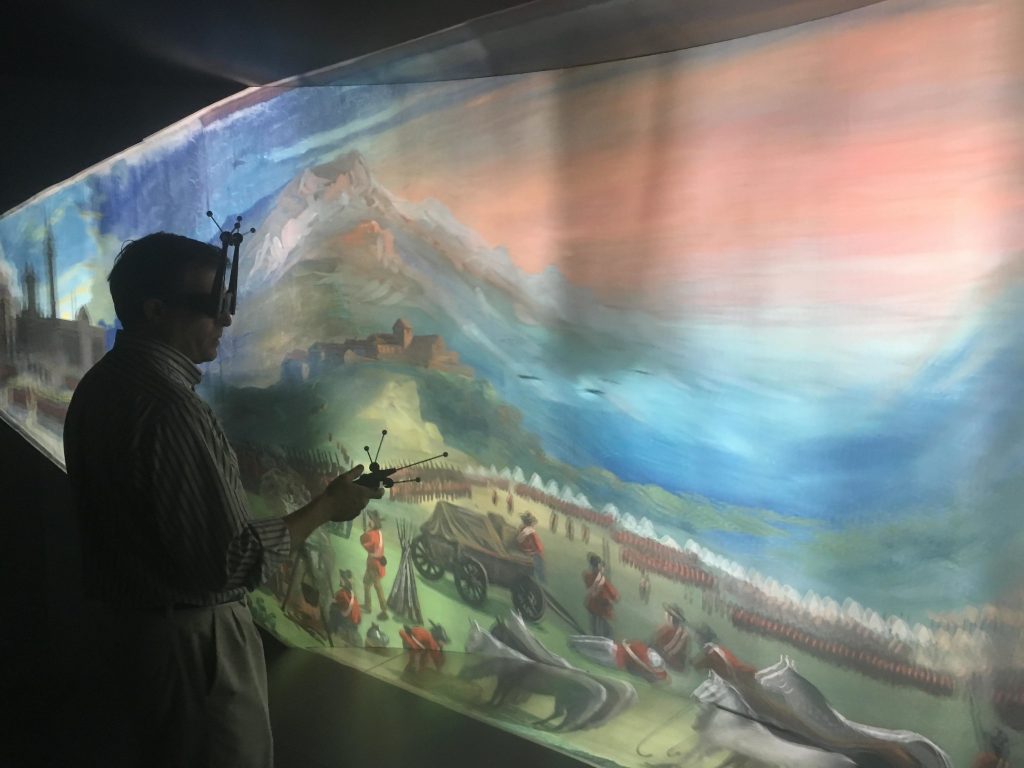
Virtual reality view of the Garibaldi Panorama Providing digital access to distinctive scholarly materials in our collections continues to grow in importance as part of the Library’s mission. For example, as reported previously, recent grants are enabling us to digitize a significant portion of the vast Hall-Hoag Collection of Extremist and Dissenting Propaganda, which provides critical insights for understanding our times. Indeed, this may be the largest digitization project of contemporary Archival materials; when it is finished, we will have scanned around 900,000 pages of materials from 1950 to 1999.
Digitization allows students and scholars working in any location to view rare materials without incurring the financial and other burdens of traveling to consult them on-site. Moreover, where digital access to materials is available, it also helps reduce handling of the original objects and contributes to their preservation. In the last three years, scanning activity at the Hay has generated around a terabyte of data.
Patrons who need scans of particular collection items that are not already digitized may submit requests through the Hay’s Aeon system. (Any researcher can do this — as a Carnegie Library, the Hay is open to the public.) Generally, we try to limit scan requests to a maximum of five folders or 300 to 400 pages so that we can be equitable among patrons. Depending on the material, a consultation with the Library’s Collections Care staff may take place to determine if there are preservation or handling concerns that may limit what is possible.
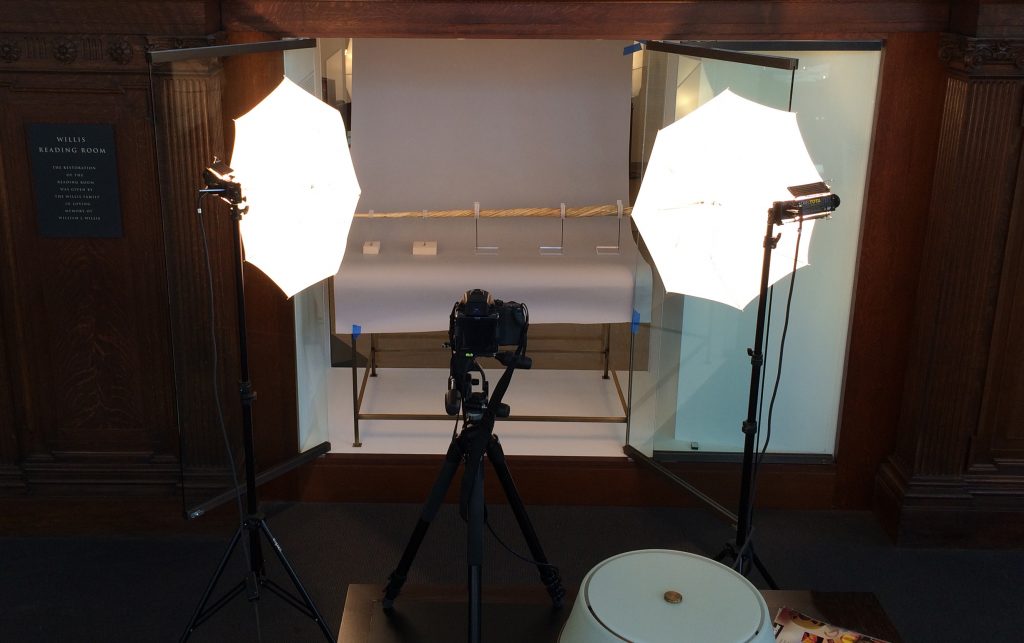
The staff members who complete the image capture of the physical object in order to create the digital files possess a wide range of specialized skills including building custom supports for fragile materials and three dimensional objects as well as operating complex software and equipment in the Library’s camera room and on location. Lindsay Elgin, Senior Library Technologist, wrote “A more typical look at the camera room” about photographing an album of watercolor prints from the Anne S. K. Brown Military Gallery. Lindsay also photographed the narwhal tusk from the 2015 The Unicorn Found: Science, Literature, and the Arts exhibit at the John Hay Library (photo above). You can read more about that shoot in Lindsay’s blog post, “The Unicorn of the Sea Comes to Brown.”
To facilitate greater access to our materials, we have removed any fees associated with digitization or scanning.
We ask patrons to allow four to six weeks for scanning requests to be completed, but we often turn them around quicker than that. Material requested by Brown instructors for their courses are given priority. To facilitate greater access to our materials, we have removed any fees associated with digitization or scanning. This allows researchers of all backgrounds to begin their research without having to incur costs and also allows researchers to start doing preliminary research without needing to travel to Providence. Over the past 12 months, the Hay has scanned over 50,000 pages for patrons. The Martha Dickinson Bianchi papers (Ms. 2010.046) collection and the Hortense J. Spillers papers, 1966-1995 are examples of collections from which numerous researchers have requested a significant amount of scanned material over the past couple of years.
The Hay also digitizes material at high resolution to meet preservation needs or in response to requests for exhibitions. Such requests have generated about 3.5 terabytes of digital files. In both cases, high-quality scans provide substitutes for original materials that are too fragile to be handled directly or displayed.
High resolution scans also serve the needs of scholars creating digital projects requiring the display and study of collection items. For example, Hay staff are currently assisting with the “Sounding Spirit” project being developed at Emory University. Approximately 200 items from the Hay’s collection are being digitized, and the scans will ultimately be hosted on the project’s website and will also be available through Brown’s own digital repository. Scanning is not simply a mechanical process. The Library’s staff experts process and review all of the digital files for quality and edit them to create master files of all of the images.
Indeed, staff members at the John Hay Library are involved at every step of the digitization process, lending their expertise to researchers in need of consultation about the materials to transporting material to be digitized from the Library Annex to photographing fragile materials and non-print objects and scanning print materials to reviewing and delivering digital files to our patrons. We are dedicated to supporting scholarship at Brown and beyond and recognize the importance of extending the reach of Brown’s incredible special collections materials and look forward to continuing our work to make these items digitally available to researchers around the world.
-
Active Community of Learners Engage with the Library’s Center for Digital Scholarship
|
The Library’s Center for Digital Scholarship (CDS) is a busy hub of collaboration, learning, and knowledge generation, attracting students and researchers from all parts of the University who seek partnership and guidance on digital projects and the field of digital scholarship. The staff in CDS know well that digital scholarship work is best done in collaboration with researchers, regardless of their field of study. While researchers possess a high level of expertise in their specific disciplines, they may not know how to create and maintain a field-pushing database project or how to analyze a large dataset necessary to their research. The knowledgeable and experienced staff in CDS will partner with faculty and other researchers to think through their project ideas from a variety of angles, such as how to visualize data, what digital platforms and methodologies could be used, whether there are ethical concerns related to data acquisition and presentation to consider, and more. The staff also works with anyone interested in learning more about digital scholarship — including absolute beginners — through workshops, courses, and other training and learning opportunities, like the regular DH Salon event series and the new Digital Humanities doctoral certification.
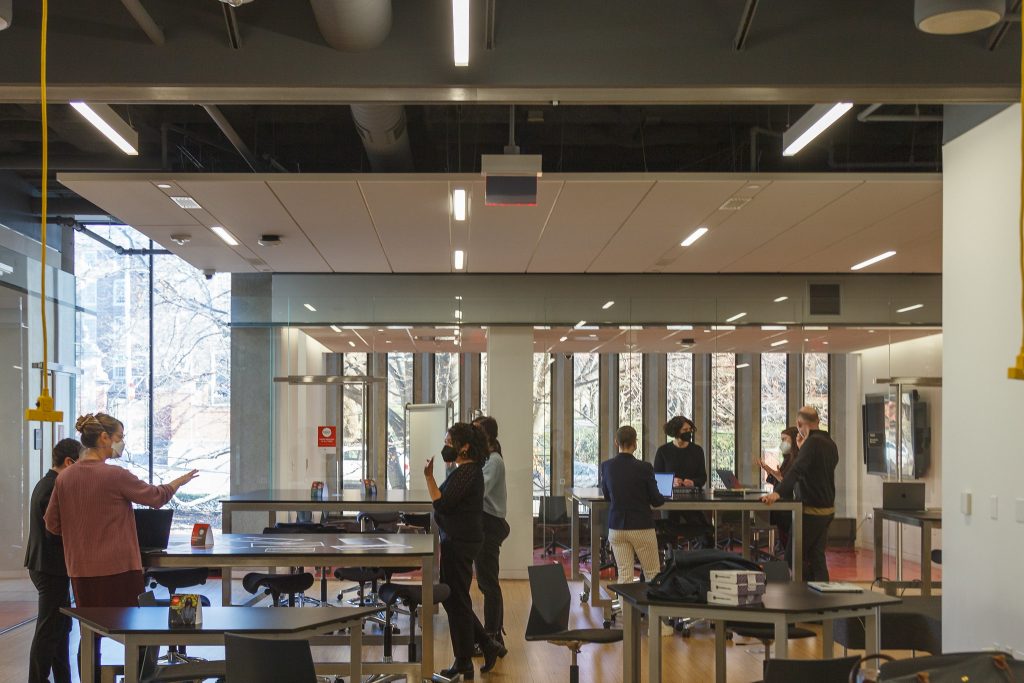
Collaborations in action in the Sidney E. Frank Digital Studio The learning opportunities provided by CDS are directly informed by feedback from workshop, training, and event attendees. The doctoral advanced specialization certificate in Digital Humanities that CDS and the Cogut Institute for the Humanities began offering this fall is a result of calls for such a certificate heard through feedback. The certificate provides a formal framework for students to explore digital humanities and build knowledge and skills in the field. The requirements include taking electives that provide foundational skills useful in digital humanities, such as a programming course in Computer Science or a course on Geographic Information Systems in Anthropology. Another requirement can be fulfilled through CDS’s intensive summer digital humanities workshops. By incorporating both University courses and learning within CDS, the certificate program demonstrates how integral these skills are for work in any discipline studied at Brown. Students interested in the certificate can take Ashley Champagne and Steve Lubar’s Introduction to Digital Humanities course this spring 2023.
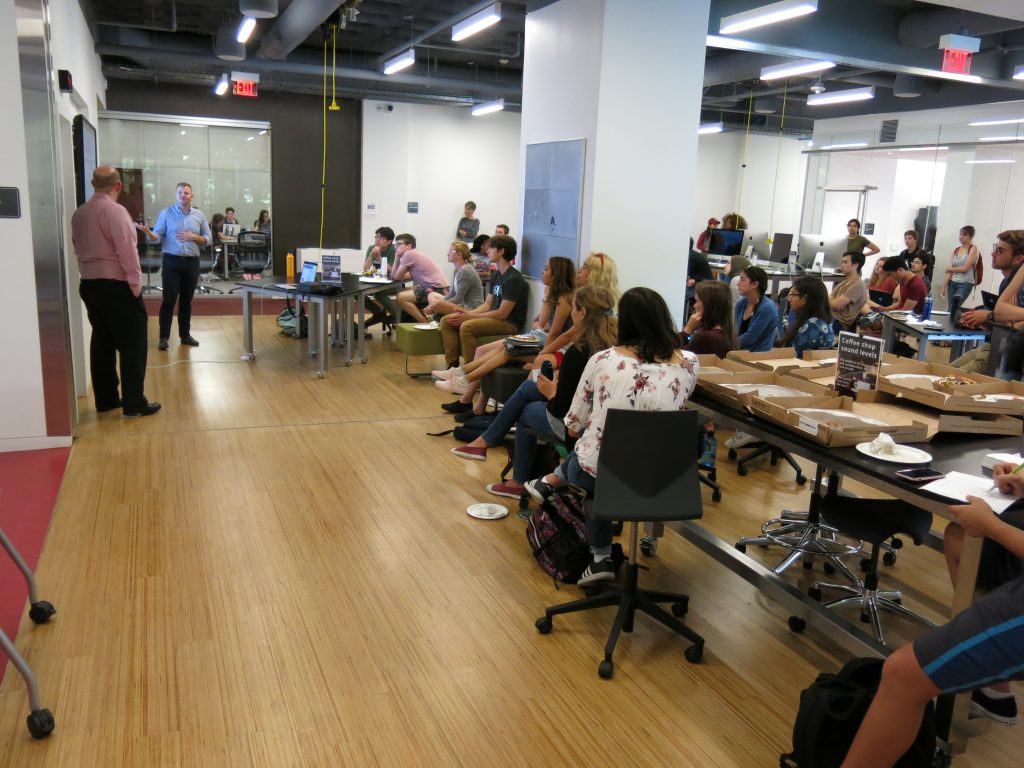
DH Salon The DH Salon series is another way that CDS is building closer linkages with campus teaching and research programs while activating the Sidney E. Frank Digital Studio at the Rockefeller Library. The salons bring together students, faculty, and researchers from all parts of Brown on select Tuesday afternoons to informally discuss their research in digital humanities. The events draw a large audience of highly engaged, enthusiastic attendees and conversation participants eager to discuss the presenter’s and each other’s work. CDS events are well attended in general. One Introduction to Text Analysis workshop taught this semester by Ashley Champagne, Director of CDS, attracted over 50 attendees composed of graduate students and faculty members.
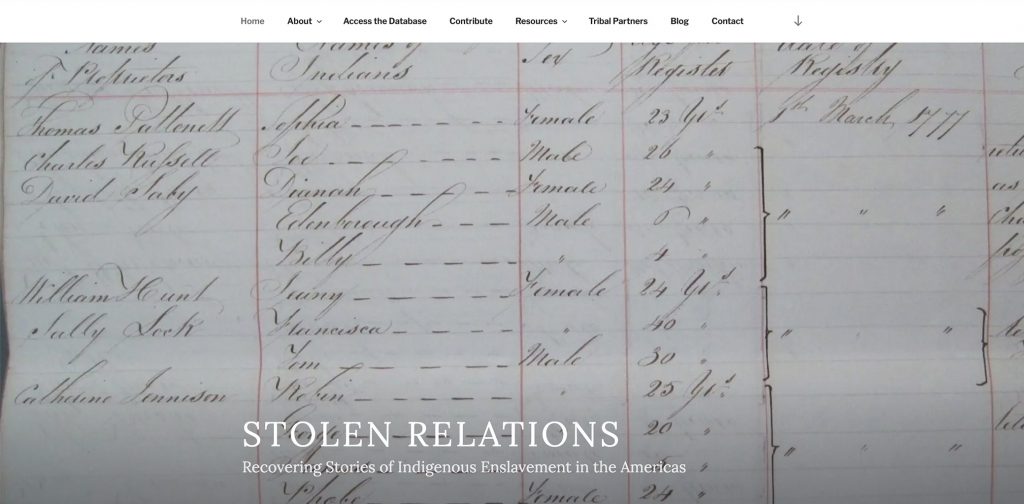
There is much interest in digital humanities work that explores questions of social justice and power and work that includes foundational partnerships with communities and affinity groups. Projects like this excite the CDS staff, which has demonstrated strength in this area. For the past five years, CDS has worked with Associate Professor of History Linford Fisher on Stolen Relations: Recovering Stories of Indigenous Enslavement in the Americas, a community-based database project created and maintained in close partnership with Tribal community members. Including Stolen Relations, CDS is currently actively supporting nine projects this fall, plus the publication projects within Brown University Digital Publications, housed within CDS, which is supporting 13 born-digital scholarly publications with faculty authors.

Data map from Brown University Digital Publications work, A New Vision for Islamic Pasts and Futures by Shahzad Bashir, published through MIT Press There is no shortage of interest in digital humanities and digital scholarship at Brown and within academia. Through CDS and Brown University Digital Publications, Brown is at the vanguard in this field, a fact not lost on the many eager participants who are part of our vibrant community of learners and practitioners. You can learn more about CDS through its recently launched newsletter or by attending a DH Salon, offered both in-person and via Zoom.
-
DH Salons in the Center for Digital Scholarship
|
The Center for Digital Scholarship at the Brown University Library is pleased to host the DH Salons, a regular, informational presentation series that brings together digital humanities work across the Brown University campus on select Tuesdays at 2 p.m.
Offered In-person in the Digital Scholarship Lab (room 137) at the Rockefeller Library or
via Zoom at https://brown.zoom.us/j/98267444083Fall 2022 Schedule
September 27
“Critical Questions and Imperfect Solutions in the Stolen Relations: Recovering Stories of Indigenous Enslavement in the Americas Project”
- Lydia Curliss, PhD student at the iSchool at UMD and member of the Nipmuc Nation (Massachusetts) – Community Outreach Coordinator
- Ashley Champagne, Director of the Center for Digital Scholarship – Project Lead
- Patrick Rashleigh, Head of Digital Scholarship Technology Services – Technical Lead
October 11
“The JCB Library’s New Digital Platform: Welcoming New Voices in Digital Curatorship”
- Pedro Germano Leal, Research Associate in Latin American and Caribbean Studies
October 25
“Memoryscapes of Slavery”
- Renée Ater, Visiting Associate Professor of Africana Studies
November 15
“Introducing In the Wake of George Floyd: Responses to Anti-Black Racism in Rhode Island”
- Patsy Lewis, Director of the Center for Latin American and Caribbean Studies; Senior Fellow in International and Public Affairs at the Watson Institute for International and Public Affairs
December 6
“Gaming with History: A Dissertation as Video Game”
Registration appreciated- Amanda Arceneaux, Graduate Student, History
The talk will focus on the central aspects of developing a video game for Amanda’s history dissertation and will look at why the research lends itself well to an interactive digital format. Amanda will cover the process of integrating and presenting the argument within the design of the video game.