
E-Newsletter
Recent Posts
Latest News
-
Brown University Library Releases New Multimodal Book on Visual Literacy, Extends its Focus on Innovation and Collaboration
|
[Providence, RI] Brown University Digital Publications has launched the multimodal edition of Black Elegies: Meditations on the Art of Mourning, the second title in the On Seeing series published by the MIT Press. Authored by Kimberly Juanita Brown, inaugural director of the Institute for Black Intellectual and Cultural Life at Dartmouth College, Black Elegies is a poignant, unflinching study of black grief as a form of elegy found in visual art, music, literature — everywhere, if you know how to see it.
The book, which Michael Boyce Gillespie praises as “stunningly beautiful and rigorous work,” includes analysis of major figures Toni Morrison, Carrie Mae Weems, Audre Lorde, and Marvin Gaye, among others. The multimodal edition offers readers a Community Engagement Toolkit, a guide to having open conversations about antiblackness, visual culture, and death.
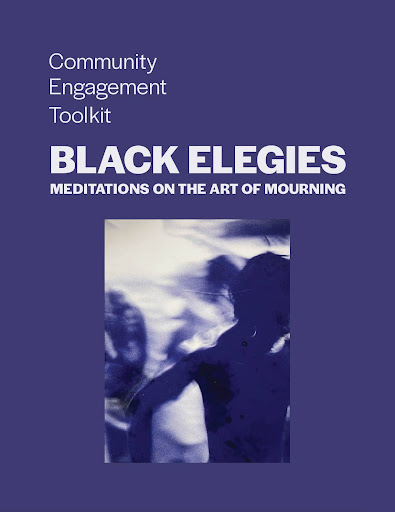
Publications in the On Seeing series foreground the political agency, critical insight, and social impact inscribed in visuality and representation. The MIT Press will publish each On Seeing volume as a print book, ebook, and open access multimodal edition created by Brown University Digital Publications.
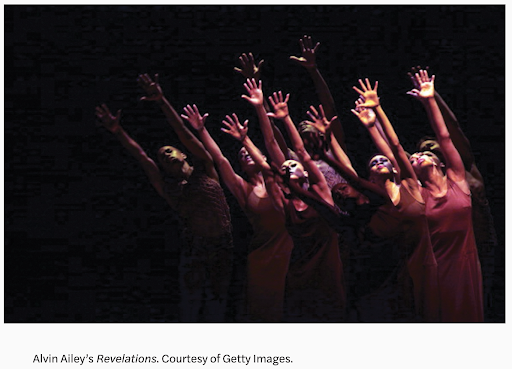
With Black Elegies, BUDP extends its focus on innovation, and offers a pathway to affordable and sustainable creation of born-digital scholarly monographs. Senior Library Technologist and BUDP staff member Holiday Shapiro developed Black Elegies using an original WordPress theme created by long-term external collaborator Jake Camara of Jake & Co. This cost-effective, in-house approach to scholarly publishing platform development also draws on the expertise of colleagues in the Library’s Digital Technologies unit. Further, the new release carries forward the design work of Crystal Brusch, BUDP Digital Publications Designer, and Yasuyo Iguchi, Design Manager at The MIT Press.

Brown University Digital Publications — generously launched with support from the Mellon Foundation in 2015 with additional support from the National Endowment for the Humanities and the Institute of Museum and Library Services — creates exciting new conditions for the production and sharing of knowledge by advancing scholarly arguments in ways not achievable in a conventional print format, whether through multimedia enhancements or interactive engagement with research materials. Brown partners with leading scholarly presses to bring peer reviewed, open access, multimodal content to global audiences. Widely recognized as accessible, intentional, and inclusive, Brown’s novel, library-based approach to born-digital monograph publishing is helping to set the standards for the future of scholarship in the digital age.
-
Fashioning Insurrection Exhibit and Opening
|
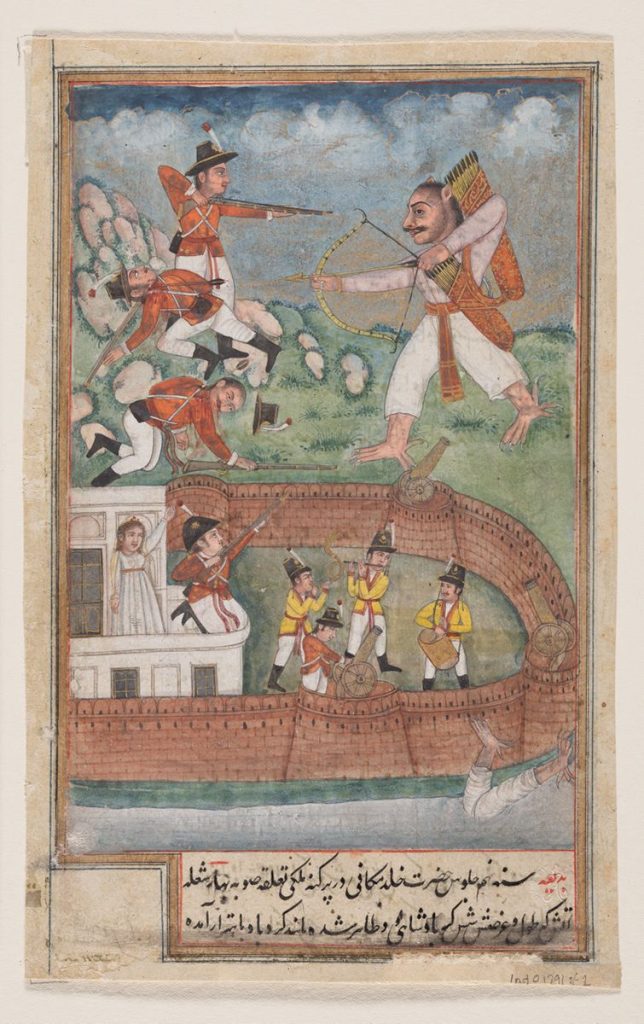
“Indian supernatural being attacking fort defended by British troops” (1791). Fashioning Insurrection: From Imperial Resistance to American Orientalisms, Prints, Drawings and Watercolors from the Anne S.K. Brown Military Collection. Brown Digital Repository. Brown University Library. Fashioning Insurrection: From Imperial Resistance to American Orientalisms
Exhibit
Part of the Islamic-American Exchanges Initiative between the Brown University Library and the Center for Middle Eastern Studies, the exhibit, “Fashioning Insurrection: From Imperial Resistance to American Orientalisms,” will be on view in the Harriette Hemmasi Exhibition Gallery at the John Hay Library during the 2025-26 academic year, opening on August 25, 2025. The John Hay Library is open to the public during normal hours of operation.
Online Exhibit
View the online exhibit, which features additional items.
Opening Reception
The exhibit opening reception will take place at the John Hay Library on Tuesday, September 9, 2025 at 4:30 p.m.
Free and open to the public. Light refreshments will be available.
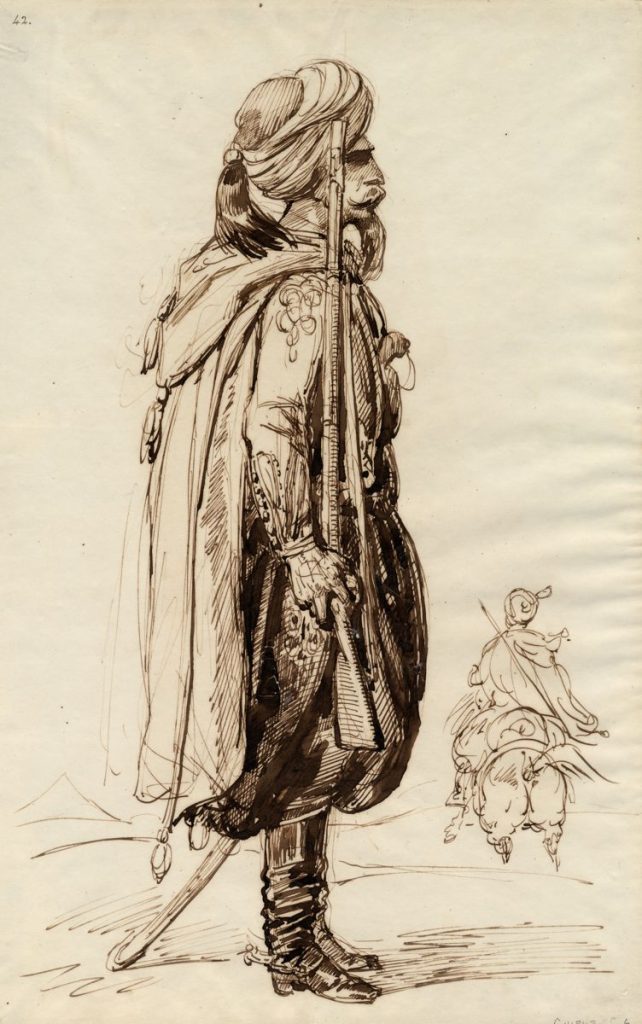
Lalaisse, François-Hippolyte, “Turco, c. 1848” (1848). Brown Digital Repository. Brown University Library. Fashioning Insurrection
Americans have adapted uniforms into costumes since the masquerade balls of colonial days to today’s historical films and battle reenactments. The practice took an unexpected form in the first decades following the American Revolution when the early presses of the United States closely covered imperial insurrections that unfolded across Islamicate societies against the three towering empires of the era: the Greek War of Independence against the Ottomans (1821–29), the Ottoman Algerian resistance to the French (1830–48), and the Indian uprising against the British (1857).
Alongside depictions of these struggles, American popular media paid careful attention to the “national” dress and military uniforms that could potentially unify a revolution or even aid in controlling insurrection. As the young nation navigated its connections to the Islamicate world, some reinterpreted visual and sartorial modes of imperial resistance. The reverberations of these events led to the emergence of orientalist costumes and dress that transformed regional revolutionary garb into American fashion statements of solidarity, fascination, and emulation.
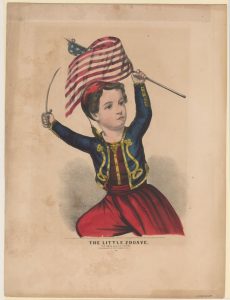
“The little zouave: ‘Up boys and at them‘” (1861). Brown Digital Repository.
Brown University Library.Through these forms of cosmopolitan materialism, Americans announced their political stances on historic movements, sometimes also asserting their country’s imperial ambitions and legacies as it solidified its standing in the world. Such sartorial translations from uniforms to fashion informed America’s evolving relationship with its own revolutionary past. Each medium these costumes inhabited aided Americans in creatively redefining their country’s transforming identity on the international stage while facing resonant issues in their new nation, including foreign trade, slavery, and humanitarianism. Alongside contextualizing documents, the works here vividly illustrate how the U.S. wielded these movements of imperial insurrection to remold its own world image and don it with aplomb.
-
Migrating Your Data to the New EBSCOhost User Interface
|
New EBSCOhost Interface Launching August 5, 2025
EBSCOhost’s user interface (UI) will be changing on August 5, 2025. If you currently have saved searches, folders, or articles in your EBSCOhost account, some, but not all, of this content will migrate automatically.
Essential Deadlines
- August 4, 2025
- Saved searches, search alerts, and persistent links to searches can be preserved manually.
- Articles in custom folders may be exported in RIS format.
- December 31, 2025
- Any data that remained in the classic EBSCOhost UI can be downloaded in the new UI in Excel format.
- Saved search data may be incomplete.
Your EBSCOhost Account
Your EBSCOhost account contains several types of saved content.
My Folder
This is the default location to which articles typically save. Items in the Articles subfolder of My Folder will automatically migrate to the new UI.
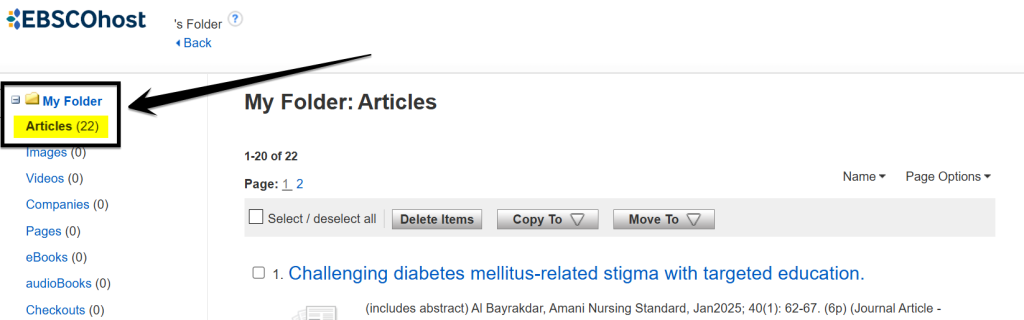
No action is necessary if you only use the Articles subfolder under My Folder.
My Folder also has other subfolders such as Saved Searches, Persistent Links to Searches, and an area called My Custom under which you can create Custom Folders.
You must take action if you use these subfolders or have content in My Custom (Custom Folders).
Saved Searches
Searches in the Saved Searches folder in your EBSCOhost account will automatically be migrated when you access the new UI.
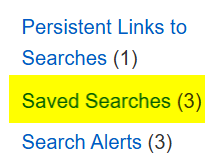
However, there are several limitations to this automatic migration. If you use Saved Searches, we strongly encourage you to look at the detailed instructions and full list of limitations outlined here: How can I access my classic user interfaces MyEBSCO data from EBSCO’s new user interfaces?
Persistent Links to Searches and Saved Alerts
Content in these folders will not be migrated to the new UI. Until August 4, 2025, you can access and preserve persistent links to searches and search alerts using the classic UI.
My Custom (Custom Folders)
Articles and searches saved to Custom Folders will not migrate.
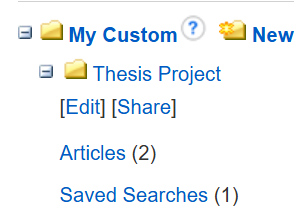
Until August 4, 2025
- You can access and preserve the information about searches in Custom Folders using the classic UI.
- You can export references in each Custom Folder as RIS files to import into a citation management tool such as Zotero or EndNote. For assistance with this, email citation-help-group@brown.edu
Between August 5 and December 31, 2025
- All details about references in these folders will be included in the Excel file. Some information about saved searches will be preserved, but they may be difficult to recreate.
- You can download Custom Folder content into an Excel spreadsheet using these instructions: How can I download the data from MyEBSCO custom folders in the classic EBSCO interfaces?
Still have questions?
Please email library@brown.edu for assistance.
- August 4, 2025