
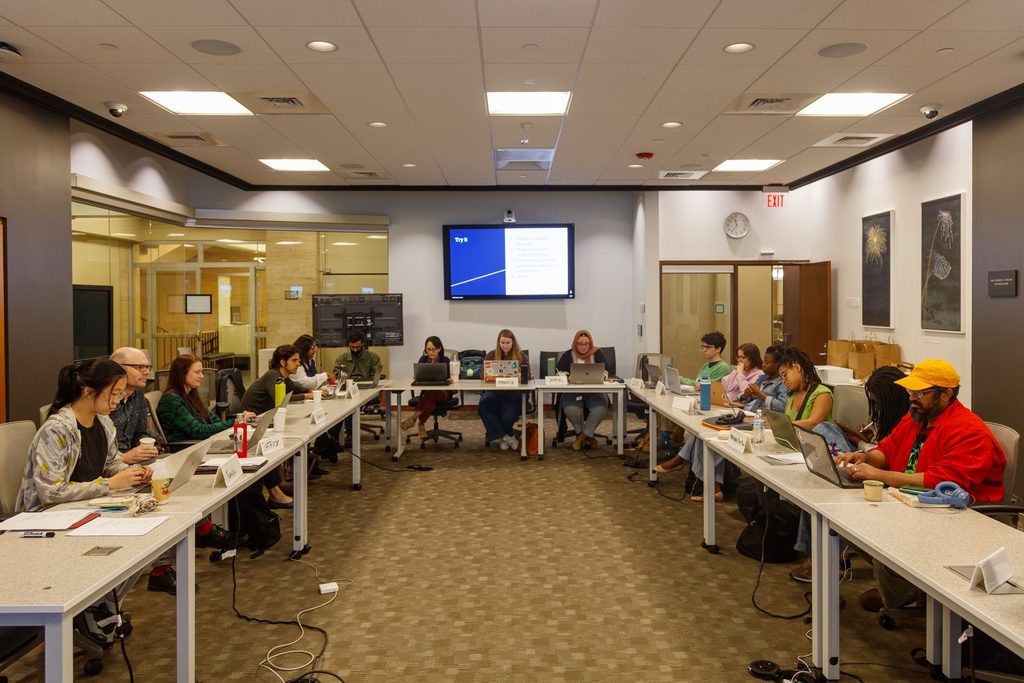
Technology is changing quickly, and especially so in the age of Artificial Intelligence (AI). It can feel overwhelming to learn something new only to have that knowledge quickly become out of date shortly after. This workshop series, presented by the Library’s Center for Digital Scholarship, pauses to take a breath and look at enduring skills and knowledge in the field of digital humanities that remain relevant in the midst of rapid technological change.
Join us to learn about seven core “bread and butter,” or consistently important, foundational forms of knowledge in the field of Digital Humanities:
- Data modeling, or the process of structuring and organizing your data.
- Data cleaning, or taking your data and determining the best ways to organize it for findability
- Natural Language Processing with Python, a branch of AI that has roots in the 1950s that can process “natural language” in order to process documents or other materials for speech recognition and other forms of text classification.
- Introduction to HTML: HyperText Markup Language (HTML) is the standard markup language used to create and structure the foundation of all web pages on the Internet.
- Vibe Coding: AI has made creating computer code easier. Vibe coding uses natural language prompts to tell an AI what to build without the user coding themself. This workshop will share how to read the output and how to think critically while you’re coding with AI.
- GitHub and Git: a popular cloud-based platform and version control system, primarily used for software and code, but also useful for long-form prose and educational resources
- Creating a Digital Archive in Collection Builder: Do you want to make an argument with a collection of images or other files for long-term access? Collection Builder is an open source tool for creating digital collection and exhibit websites that are driven by metadata and powered by static web technology.
Join us for one workshop or all seven! Lunch is provided for all workshops at noon.
Schedule
- September 23 from 12:30 to 1:30 p.m. in the Patrick Ma Digital Scholarship Lab (room 137) and on Zoom, Rockefeller Library: Getting Started in Digital Humanities taught by Tarika Sankar, Digital Humanities Librarian (lunch provided!)
- September 30 from noon to 1:30 p.m. in the Rockefeller Library room 160: Structuring the mess: Turning real-world complexity into computable data taught by Patrick Rashleigh, Head of Digital Scholarship Technology Services (lunch provided!)
- October 16 from noon to 1:30 p.m. in the Hecker Center, room 134, Rockefeller Library: Data Cleaning the “tidy” way: practical skills for messy spreadsheets and unruly documents taught by Cass Wilkinson Saldaña, Social Science Data Librarian (lunch provided!)
- October 23 from noon to 1:30 p.m. in the Patrick Ma Digital Scholarship Lab (room 137), Rockefeller Library and on Zoom: Natural Language Processing with Python taught by Micah Saxton, Humanities Librarian (lunch provided!)
- October 27 from 2 to 3 p.m. on Zoom: Introduction to HTML taught by Elizabeth Yalkut, Front-end Developer
- November 4 from noon to 1:30 p.m. in the Patrick Ma Digital Scholarship Lab (room 137), Rockefeller Library and on Zoom: Using A.I. as an on-ramp to computer programming taught by Patrick Rashleigh, Head of Digital Scholarship Technology Services (lunch provided!)
- November 10 from 2 to 3 p.m. in the Patrick Ma Digital Scholarship Lab (room 137), Rockefeller Library: GitHub and Git for Everyone taught by Cass Wilkinson Saldaña, Social Science Data Librarian, and Elizabeth Yalkut, Front-end Developer
- November 18 from noon to 1:30 p.m. in the Patrick Ma Digital Scholarship Lab (room 137), Rockefeller Library and on Zoom (lunch provided!): Creating a Digital Archive in Collection Builder taught by Tarika Sankar, Digital Humanities Librarian
Learn More and Register
Registration is not required, but strongly encouraged. We look forward to seeing you soon!