
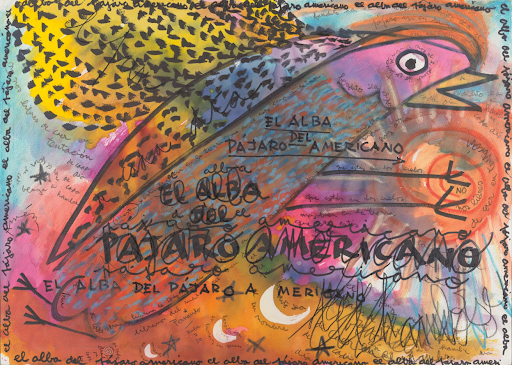
The exhibit A Pictorial Dragon: The Art of Fernando Birri is on view in the Harriette Hemmasi Exhibition Gallery at the John Hay Library at Brown University. The exhibition celebrates the centennial of Fernando Birri (1925–2017), the pioneering Argentine filmmaker, artist, and theorist of the New Latin American Cinema.
Viewing the Exhibit
In-Person
Dates: September 8, 2026 to March 5, 2027
Location: Harriette Hemmasi Exhibition Gallery, 1st floor, John Hay Library, 20 Prospect Street, Providence, RI 02912
Hours: Locations and Hours
Online
In addition to the physical exhibit, a bilingual digital exhibit is also available.
Items on View
Featuring a selection of drawings, paintings, collages, and writings from the personal archive Birri gifted to Brown University Library in 2008, the exhibition reveals how he used art as a means of reflection and reinvention in response to exile, identity, and the cultural and political urgencies of his time. The physical exhibition presents a small selection of materials featured in the accompanying digital exhibition, which is fully accessible in both English and Spanish.
Together, these materials offer new insight into Birri’s expansive artistic practice and his enduring commitment to experimentation, self-discovery, and transformation.
An Archive of Intimate History
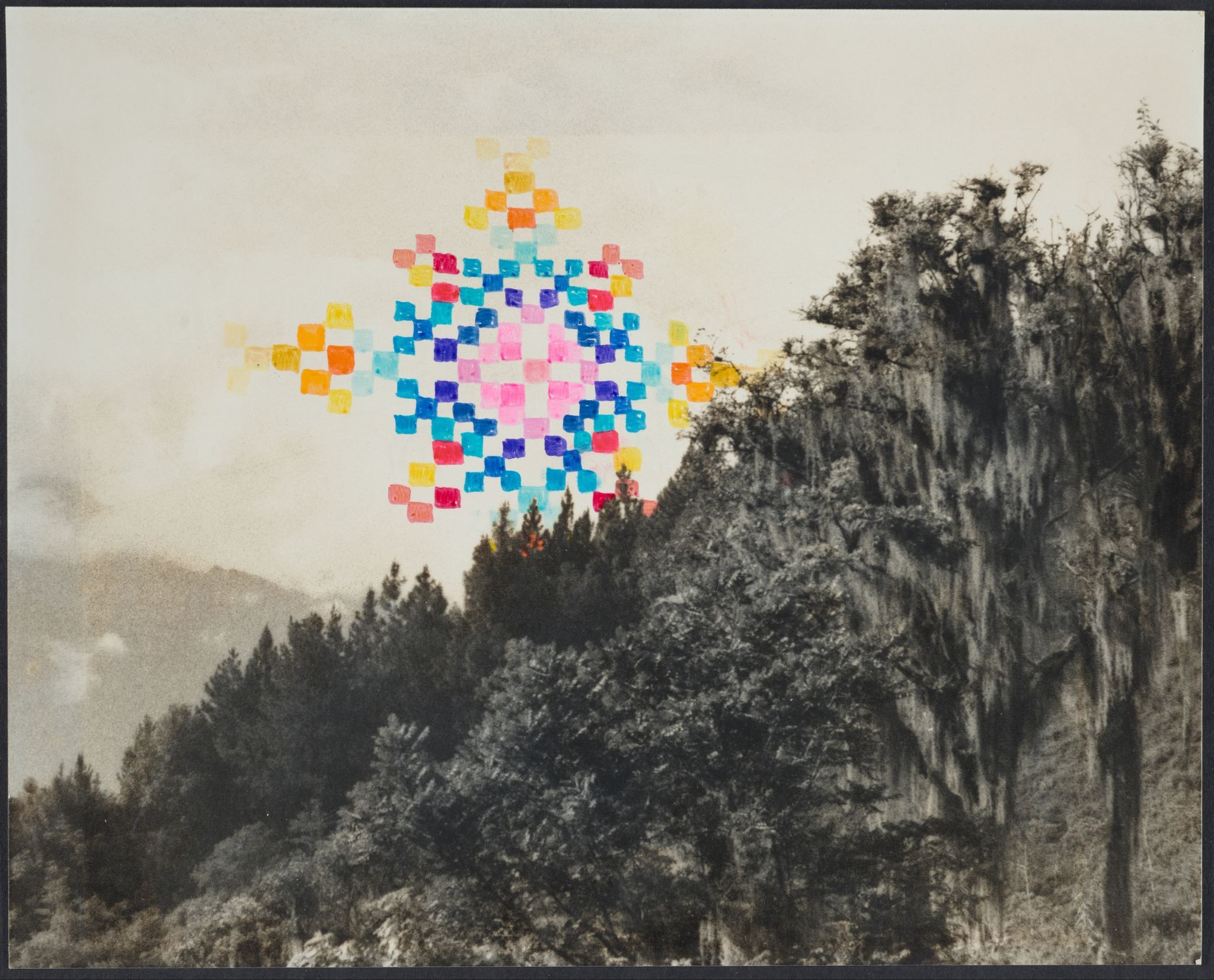
Widely recognized as the father of the New Latin American Cinema, Fernando Birri also produced an extensive body of visual art that has remained largely unknown to the public. Created during some of his most prolific years—spanning the 1960s to his final years in Cuba and Italy—his archive contains hundreds of paintings, drawings and collages in addition to films and written materials. These works appear both as independent pieces and as sketches on documents, napkins or travel notebooks. They reveal an artist driven by a persistent impulse to create images—what he called a dragón pictórico (pictorial dragon)—a practice that reached beyond what language or cinema could express.
Developed alongside his filmmaking, Birri’s visual practice offers insight into a broader intellectual framework concerned with critical reflection, inner exploration and the processing of personal and historical turmoil. Considered together, these works offer a more expansive understanding of Birri’s artistic and intellectual contributions, extending beyond the boundaries of the cinematic form.
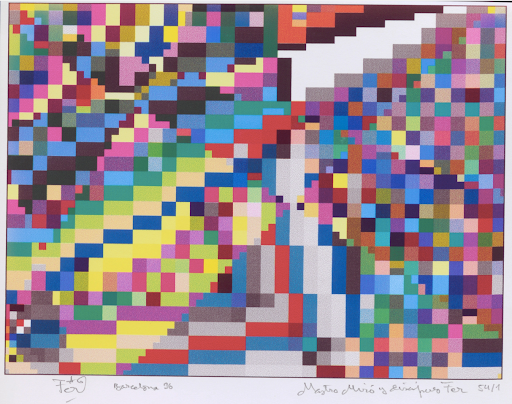
The selection of works featured in this exhibit is drawn from the Fernando Birri Archive of Multimedia Arts 1925–2010, donated by the artist to Brown University Library in 2008 and accessible at the John Hay Library. It features pieces that Birri occasionally exhibited during his lifetime in Cuba, Italy and Germany and is organized around four key themes that reflect different facets of his pictorial practice. The first explores the intersection of the archive, exile, trauma and image-making. The second highlights his production during the 1970s, notably in Grottarossa outside Rome, his Studiolo in the Roman neighborhood of Trastevere, and during his travels to India. The third examines the relationship between painting and cinema, in particular in relation to his experimental film ORG, developed by Birri from 1968 to 1978 and released in 1979. The final section showcases his Caribbean work and two of his most significant series: the fotoglifos, paintings intended to be photographed and projected, and the glifotronics, developed using computer-based processes. Together, these sections offer insight into Birri’s visual language and the ways in which his art extended his ongoing engagement with experimentation, pedagogy and political imagination.
Sponsors
A Pictorial Dragon: The Work of Fernando Birri was made possible through the generous support of the Center for Latin American and Caribbean Studies (CLACS), in partnership with the Brown University Library, whose combined funding and staff contributions were essential to the project.
Curators and Editor
- Co-Curator: Agustín Díez-Fischer, CLACS Visiting Professor 2023-2024, Senior Manager of Research and Archives at the Institute for Studies on Latin American Art (ISLAA)
- Co-Curator: Patricia Figueroa, Curator of Iberian and Latin American Collections, Brown University Library
- Researcher and Editor: Irene Rihuete-Varea, Ph.D .Hispanic Studies, Brown University