The Unicorn of the Land
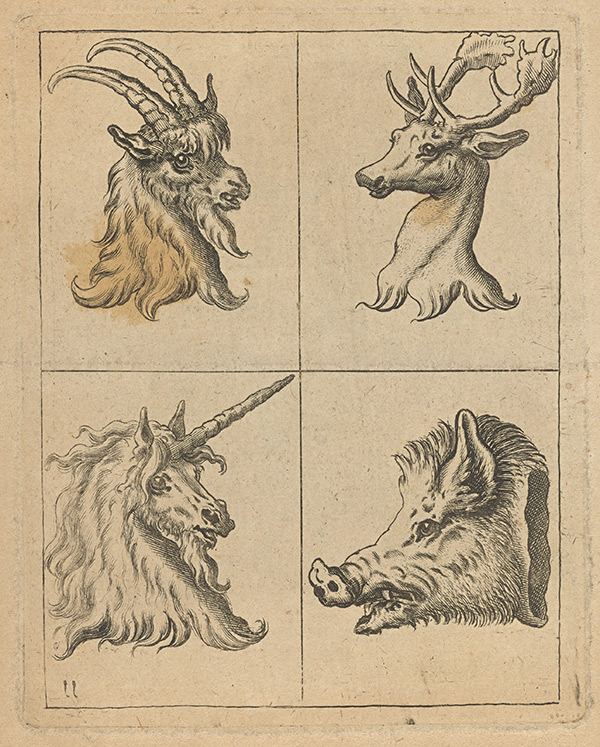
A majestic white horse with a sleek golden horn, galloping through a fantastic wilderness – this is the popular image of a unicorn. Sought after long before the sea unicorn’s discovery, the four-footed unicorn has been the subject of varying depictions in voyage accounts, art, literature, and science. Some of these depictions reflect the animal’s resplendent popular image, while others present a composite creature. Unicorns are referenced multiple times in the Hebrew Bible, identifying a horned animal with goatlike features. The Hebrew name assigned to this mysterious being was רֶאֵם , transliterated as re’em. Italian explorer, Marco Polo records sightings of ugly and brutish unicorns during his voyages in the 14th century. The East Asian qilin or kirin is often called a Chinese unicorn, possessing a singular horn and hoofed feet along with characteristics of a lion, goat, and serpent. Fit for the pages of a medieval bestiary, the stories of the terrestrial unicorn not only merge traits of multiple animals, but they also fuse fact with fiction. The re’em is now often translated as an ox, and it is widely accepted that Polo’s unicorn was an Indonesian rhinoceros.
Behold, a he-goat came from the west over the face of the whole earth, and touched not the ground: and the goat had a notable horn between his eyes.
—Daniel 8:5
God himself must needs be traduced, if there is no Unicorn in the world.
—The Historie of Four Footed Beastes, Edward Topsell, 1607