
E-Newsletter
Recent Posts
Latest News
-
Doctoral Certificate Program in Digital Humanities – Spring 2023 Workshops
|
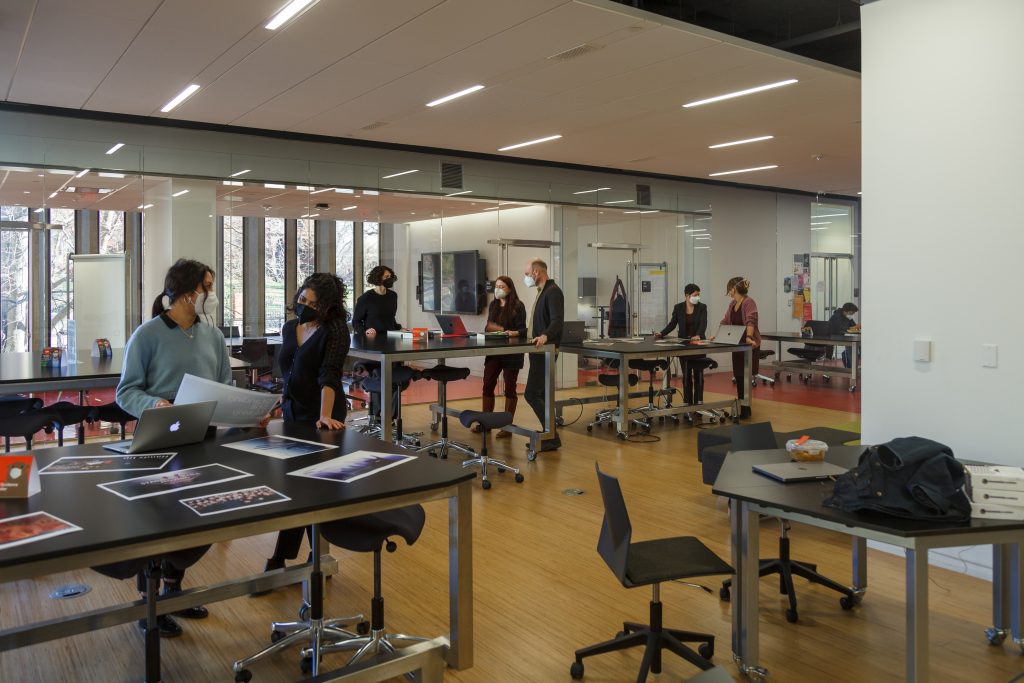
The Doctoral Certificate Program in Digital Humanities offers an opportunity to currently enrolled Ph.D. students interested in adding expertise in digital methodologies and techniques to their research portfolio.
Brown University Library’s Center for Digital Scholarship and the Cogut Institute for the Humanities are pleased to partner together to offer the doctoral certificate, which will provide students with a foundation in digital methods and skills for their research, as well as an understanding of the broader theoretical questions that digital approaches to scholarship offer. The certificate is aimed at Ph.D. students in the humanities and humanistic social sciences though Ph.D. students from all disciplines are welcome to apply. Visit the Center for Digital Scholarship’s Doctoral Certificate page for complete information including how to apply.
Spring 2023 workshops that count towards the doctoral certificate:
Copyright and Image Use
When:
- Wednesday, February 8 at 4 p.m. REGISTER
- Tuesday, March 14 at 12 p.m. REGISTER
- Thursday, April 13 at 10 a.m. REGISTER
Where: Online via Zoom
Instructor: Karen Bouchard, Scholarly Resources Librarian, Art & Architecture
Description:
This class will focus on the use of copyrighted images in an academic setting, including teaching, presentations, and publication. We will also discuss how to locate Creative Commons and public domain images and how to obtain permission to publish. Attention will be paid to such topics as dissertations and image use, how to track down copyright owners, and how to make judgement calls based on the principle of fair use.Intro to GIS with QGIS
REGISTER
When: Saturday, February 25 at 10:15 a.m. – 5:30 p.m.
Where: Digital Scholarship Lab, Rockefeller Library
Instructor: Frank Donnelly, Head of the GIS and Data Program
Description:
This day-long, hands-on workshop provides a thorough introduction to geographic information systems (GIS) using the free and open source software QGIS. You will learn how to navigate a GIS interface, perform geographic analyses, and create thematic maps. Participants must bring a laptop and install the software prior to the workshop day. More details.Recording, Editing, and Publishing Podcasts
REGISTER
When: Tuesday, March 28 at 1 – 2:30 p.m.
Where: Digital Studio, Rockefeller Library
Instructor: Patrick Rashleigh, Head of Digital Scholarship Technology Services
Description:
Come to the Library’s digital studio to get an introduction to recording, editing, and publishing a podcast in the Library’s own recording room (which you are free to book for your own projects). It’s not hard to get started, and in 90 minutes we’ll get you up and running, even if (ESPECIALLY if) you are a complete beginner.Wikidata for Digital Humanities
REGISTER
When: Wednesday, April 5 at 1 – 2 p.m.
Where: Online via Zoom
Instructor: Mairelys Lemus-Rojas, Head of Open Metadata Production and Initiatives
Description:
The Wikidata for Digital Humanities workshop will offer attendees an opportunity to learn about Wikidata — an open platform of structured linked data. This crowdsourced, language-independent knowledge base stores a wide range of subjects and releases its data under an open license, allowing their reuse. The low barrier for interacting with the Wikidata platform makes it a great candidate for linked open data (LOD) representation and facilitates collaboration from the global community of users. This session will provide an overview of Wikidata as well as selected tools and services that can be used to explore, contribute, and export data.Gathering and Analyzing Social Media Data for Research
REGISTER
When: Wednesday, May 3 at 3 p.m.
Where: Online via Zoom
Instructor: Ashley Champagne, Director of the Center for Digital Scholarship and Lecturer in Humanities
Description:
This workshop will offer attendees an overview of scraping social media posts on Twitter and Facebook, as well as how to download the information in csv format, clean it, and do basic analysis such as word frequency.Applying
Please apply to the Digital Humanities Doctoral Certificate Program using UFunds. To access the application, log in to UFunds, and select Doctoral Certificates, then Digital Humanities. Applications are accepted and reviewed on a rolling basis throughout the year. (Deadlines in UFunds are administrative: a new application cycle will open as soon as the previous one comes to end.)
The applicant’s home department DGS approval is required. Please note that the program is open only to Ph.D. students currently enrolled at Brown University. For more information, please contact Professor Steven Lubar.
-
Digital HISTORY AND THEORY, an open conversation on the future of digital scholarship
|

This illustration featured in the poster above is by Khyati Trehan, an Indian graphic designer and 3D visual artist based in New York. As part of Trehan’s “Digital Biology” series, the illustration “uses scaffolding as a metaphor for AI’s quest in unearthing the underlying logic and structure of complex organic matter” (via Unsplash). For more about this image and to see Trehan’s other work, visit Trehan’s page on the Visualising AI website and Trehan’s website. Zoom link to join symposium: https://brown.zoom.us/j/96716984347
On March 3 – 4, 2023, History and Theory, partnering with Brown University Library, will bring the contributors to the December 2022 theme issue, “Digital History and Theory: Changing Narratives, Changing Methods, Changing Narrators,” together for an open exchange inspired by their contributions but focused on the ways to make that change happen now. Digital history has provided us with an incredible array of tools for acquiring and processing data, but critical theoretical reflections have been few and widespread imaginative historical innovations are scarce. The tools have changed, and the possibilities have changed, but the discipline of history is in danger of using them to simply replicate its old ways. Of course, in the end, it is not the tools that will lead to a change; it is ideas and imagination.
At #DigitalHT2023, our contributors will reflect on their past work and offer concrete suggestions as to how the digital can change the way we research, write, and teach about the past—that is, the way we do history.
Registration – In-person and Zoom options
The in-person event will be held at the Patrick Ma Digital Scholarship Lab (DSL), Rockefeller Library, Brown University (1st floor, 10 Prospect St, Providence, RI 02910).
Registration for in-person attendance required. We kindly request a courtesy registration for online attendance. Register here.Presented by History and Theory and Brown University Library, with support from Brown University’s Department of History and Cogut Institute for the Humanities.
Full event details at History and Theory.
PROGRAM
Friday, March 3
1:45 p.m. – Symposium Opening Welcome: Ethan Kleinberg, Editor-in-Chief History and Theory, Wesleyan University
2:15 – 3:15 p.m. – Panel 1
Chair: Ethan Kleinberg, Editor-in-Chief, History and Theory
- Stefan Tanaka, “History as Communication, Part 2”
- Stephen Robertson, “History Unbound: From Book Discipline to Digital Discipline”
3:30 – 4:30 p.m. – Panel 2
Chair: Courtney Weiss Smith, Associate Editor, History and Theory
- Marnie Hughes-Warrington, “Machine Historians and Selection” (virtual)
- David Gary Shaw, “Beyond Digital History”
Dinner: Independent
Saturday, March 4
8:30 a.m. – Continental Breakfast
9:15 a.m. – Welcome: Joseph S. Meisel, Joukowsky Family University Librarian
9:30 – 11 a.m. – Panel 3
Chair: Courtney Weiss Smith, Associate Editor, History and Theory
- Shahzad Bashir, “Theorizing History beyond the Codex Form”
- Christian Wachter, TBD (virtual)
- Laura K. Morreale, “Finding Stories: The Radical Promise of Digital History”
11:15 am–12:15 pm, Panel 4
Chair: Valeria López Fadul, Assistant Editor, History and Theory
- Jesse W. Torgerson, “Historical Data: Publish (It) or Perish”
- Silke Schwandt, “Going Virtual: How Does the Potential of Interactive Scenarios Influence the Way We Do History in the 21st Century?” (virtual)
12:15 – 1:30 p.m. – Lunch Break
1:30 – 2:30 p.m. – Panel 5
Chair: Matthew Specter, Associate Editor, History and Theory
- Wulf Kansteiner, TBD (virtual)
- Esther Wright, “Video Games and the Margins of Digital History” (virtual)
3 – 4 p.m. – Wrap-Up Session
Chair: Ethan Kleinberg, Editor-in-Chief, History and Theory
4 – 5:30 p.m. – Reception (on-site)
6:30 p.m. – Dinner (offsite, for participants)
-
Library Services – Spring 2023
|
Welcome back to your Brown University Library!

John Hay Library Health and Safety
Operations are founded on the most up-to-date, reliable safety protocols to ensure a healthy environment for our patrons and staff. Please follow all Healthy Brown steps to keep yourself and our community well. If you aren’t feeling well, please make use of the Library’s robust slate of digital resources.
Masking is optional in all Library spaces unless requested by class instructor or meeting host. Wearing masks is strongly recommended for all Brown community members when indoors with large numbers of people, regardless of vaccination status, including on the Brown University shuttle. For information on when masking may be required, see “Return to Campus: Health Precautions and Resources,” a message to returning students from Koren Bakkegard, Associate Vice President for Campus Life and Dean of Students, and Vanessa Britto, Associate Vice President for Campus Life and Executive Director for Health & Wellness.
Locations, Hours, and Access
Visit Library Hours for the full, updated list of locations and hours.
A Carnegie Library, the John Hay Library is open to the public Monday through Friday. Please note that reservations are required for the Gildor Family Special Collections Reading Room. Email hay@brown.edu to make a reservation. You must also request materials through Aeon one week (5 full business days) in advance of your reservation. See Visiting the John Hay Library for more information.
Alumni and Other Visitors
Individuals who are not current Brown ID holders or current RISD students but who are affiliated with Brown University and would like to enter a University physical location, including all Library facilities, are considered visitors. Please visit Library Visitor Guidelines for complete information before heading to a library location.
The John Hay Library is open to the public. See Visiting the John Hay Library for complete information.
Obtaining a Library Card
Visitors who anticipate using the Rockefeller, Sciences, or Orwig Libraries on an ongoing basis must obtain a Brown University Library card. Alumni can use their alumni card to access the libraries.
Library Support
In-person
Patrons can schedule in-person (and online) consultation appointments with a Library expert by contacting the relevant expert directly. Not sure who to contact? Email rock@brown.edu for general inquiries and hay@brown.edu for Special Collections inquiries.
Online
Please continue to request materials online through BruKnow. Requested materials will be held at the service desks. Patrons will be notified when the item is available and where it should be picked up. The Library is providing document delivery through the ILLiad system.
Self-checkout
Self-checkout of circulating materials is available at the Rockefeller Library and Sciences Library!
Graduate and Medical Student Carrels
Study carrels are available to graduate and medical students. Interested persons should inquire at the Rockefeller Library service desk.
Graduate Teaching Assistant Rooms
Graduate TAs may also access a limited number of small study/collaboration rooms to conduct online sections. Registration is required through 25Live.
Library Tutorials
Guides and videos with information about how to use the Library, conduct various aspects of research, and more are available online.
Feedback
Your Brown University Library is committed to providing all patrons with the best possible academic library experience. Throughout your engagement with Library collections, physical spaces, patron services, instruction, and web-based tools and content, you should be welcomed, valued, and respected, and be provided with equal opportunities to pursue scholarship in a spirit of free and open inquiry.
We encourage your feedback about any aspect of Library services, resources, and facilities. Feedback can be made through this anonymous form, which has an option for inputting your contact information, or you can email WelcomeToYourLibrary@brown.edu.
This Is Your Library
You belong here.