-

Official Photograph of Getúlio Vargas, Courtesy of the Government of Brazil
Getúlio Vargas (1882 – 1954) After a long political career including positions as State Deputy, Federal Deputy, Minister of Finances, and Governor of Rio Grande do Sol, Getulio Vagas (b. April 19th, 1883) brought end to the Brazilian Old Republic in 1930 with his election as President. He arrived at the presidency only because a conflict within the national political elite had turned into armed warfare, concluding with the military deposing then president Washington Luis and installing Vargas. He immediately replaced all the state governors (except one, Minais Gerais), bringing end to an era where political scenery was dominated by the states. The realignment of political forces riled the traditional elite in São Paulo (paulistas) who demanded that Vargas write a new constitution. In 1932, the paulista frustration erupted in armed revolt in the Constitutionalist Revolution. São Paulo was surrounded after thousands died. A Constitutent assembly was finally convened in 1934, which reduced the power of the states further. In 1937, Vargas used a failed communist revolution to revoke normal constitutional guarantees as Brazil descended into dictatorship after years of political violence between leftists, integralists, and communists. The Estado Novo (New State) consolidated rule in the Presidency with congress dissolved, furnished a centralized apparatus through which Vargas and his aides could pursue economic development and organizational change, and also saw Brazil develop industry, as Vargas declared war on Germany in a deal that required the allies to install steel and metal works in Brazil. Vargas ruled until October of 1945, leaving peacefully at the end of the war as democratic ideals swept through Brazil and forced change. He returned to power by popular vote in 1950, and during that time nationalized oil and increased the minimum wage by 100%. This latter decision spurred political crisis amidst an economic crisis and claims that Vargas had ties to an assassination attempt on one of his most outspoken critics, Carlos Lacerda. With military demands that he resign, Vargas committed suicide on August 24th, 1964. He left a letter of will which concluded with the line, “…I leave life to enter History.”
-
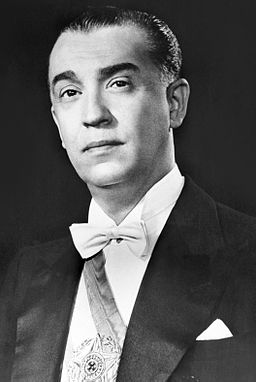
Official Photograph of Juscelino Kubitschek, Courtesy of the Government of Brazil
Juscelino Kubitschek (1902 – 1976) Caretaker regimes oversaw Brazil until the election of Juscelino Kubitschek in 1956. A former governor of Minas Gerais, he won with only 36% of the vote. However, he shrewdly gained the support of the military and the business-industrial community through targeted investments in weapons and a radical, nationalist, development program coined “Fifty Years in Five.” Kubitschek spent lavishly on the construction of a new, ultra-modern capital in the heart of Brazil (Brasilia) and promoted rapid development of the hydroelectric, steel, and other heavy industries. However, the price of his ambitious program was rapid and inflation persisted and ultimately a military government forced him into exile in 1961.
-
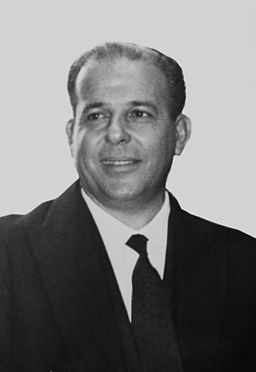
João Goulart (1962), Courtesy of the U.S. Library of Congress
João Goulart (1919 – 1976) A protégé of Vargas who served as his minister of labor, industry and commerce, João Goulart became president in 1961 after serving as vice president to the idiosyncratic Jânio Quadros. He immediately faced the challenge of a military hoping to limit his authority. Congress created a parliamentary system in which Goulart was president but the cabinet was accountable to Congress. Goulart consented, but immediately set about reversing the program—a feat he achieved in 1963 when a plebiscite restored full presidential authority. He then undertook a program of radical reforms, including one which limited the profits that foreign companies could export. He embarked on a painful stabilization program to fight rampant inflation and the balance-of-payments deficit. A tough wage policy, austerity measures, and riled labor unions fueled a heated political scene. Military officers, radical nationalists, rural unions, and communists sought Goulart’s ouster, which was achieved on April 31, 1964 with United States support.
-

President Cardoso (1994), Courtesy of Agência Brasil
Fernando Henrique Cardoso (1931 – ) A former senator from the Brazillian Social Democratic Party and finance minister, Henrique Cardoso inherited an economy in 1993 that faced an annual inflation rate of 2,490 percent. Brazil was known widely as the “sick man” of South America. Taking office in 1995 with the support of both liberals and conservatives, he immediately brought inflation under control, privatized telecommunications and mining, cultivated strong relations with leaders such as Bill Clinton, and created a powerful framework for the promotion of human rights. Towards this end, he created a national secretariat for human rights and demanded the disclosure of some classified military files concerning Operation Condor, a network of South American military dictatorships in the 1960s and 1970s.
-
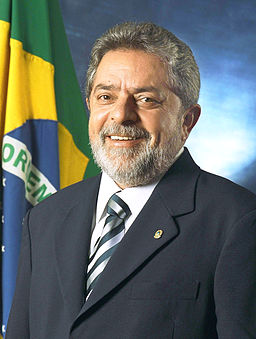
Luiz Inácio Lula da Silva (2003), Courtesy of Agência Brasil
Luiz Inácio Lula da Silva (1945 – ) Luis Ináacio “Lula” da Silva, entered politics as a charismatic union leader, serving as president of the Steel Workers’ Union of São Bernado do Campo and Diadama (both homes to Brazil’s automobile manufacturing facilities). He led and was later jailed for a series of strikes against government wage policies. Lula had little formal education, having quit school after the fourth grade to earn income as a shoe shiner. His charisma, however, garnered him the support of the masses. In February 1980, Lula founded the Workers’ Party (PT – Partido dos Trabelhadores), a left-wing party with progressive ideas created in the midst of the military dictatorship. He organized and directed the popular Direta Já campaign (Direct [Elections] Now!) which demanded direct popular vote for the next Brazilian president. By 1989, this campaign had achieved its goal of electing the first popular president in 29 years. Lula ran for president first in 1989, and again in 1994 and 1998 before winning the presidency in 2002. He inherited a faltering economy, but managed to regain market confidence with favorable export earnings, a new “Growth Acceleration” investment program, and strict monetary policies to restrain inflation. During his term, Brazil became the world’s eight-largest economy and more than 20 million people rose out of poverty—a product of his poverty reduction plans. One of his most popular programs was Bolsa Familia (Family grant) which offered direct transfers of small funds to low-income families who commit to keeping their children in school and to taking them to regular check ups. The first truly working class president in Brazil, Lula is often regarded as the most popular politician in the nation’s history. He played a prominent role in global warming debates and was even involved in recent discussions concerning Iran’s Nuclear programs. In October 2011, he was diagnosed with throat cancer, but remains active in politics.
-
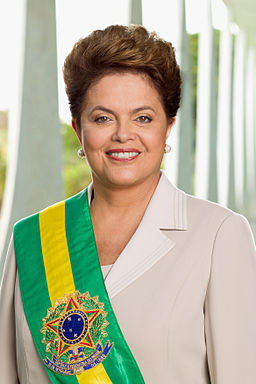
President Dilma Rousseff (2011), Courtesy of Agência Brasil
Dilma Rousseff (1947 – ) The first woman to hold the position of Chief of Staff in the da Silva administration, Dilma Rouseff became the first women elected to the presidency in 2011. Her election spurred controversy as she was among those who were arrested (and tortured) for participating in the militant activities of the Comando de Libertação Nacional —COLINA (English: National Liberation Command.) She participated in the most profitable action of the armed struggle: the theft of a safe belonging to a former governor of São Paulo, Ademar de Barros, in 1969 which netted 2.5 million U.S. dollars. As president, Dilma has pursued energy independence and development, pushing for the development of hydroelectric dam’s throughout the Amazon River Basin to power the country. The projects have not been met without controversy, however, as international human rights organizations have vigorously protested against the flooding of indigenous lands and labor abuses.
★ This website is an archive of content that is retained exclusively for reference and research. Contact accessibility@brown.libanswers.com to request accessible content.
Modern Latin America
