
Nicaragua:
- General Augusto César Sandino (1895-1934): Augusto César Sandino was born in 1895 in Nicaragua. In 1921, Sandino was accused of attempted murder and fled the country, eventually settling in Mexico. There, Sandino was exposed to the spirit of the Mexican Revolution and became involved with anti-imperialist, anti-clericalist, and communist groups. Five years later, Sandino returned to Nicaragua amidst the Constitutionalist War between Liberal forces and the U.S-backed Conservative government. Sandino led a series of guerrilla operations against the Conservative government but failed to gain the trust or cooperation of the Liberal leaders. On May 4, 1928, the Conservatives and Liberals signed a peace treaty negotiated by the United States and both sides agreed to disarm. Sandino rejected the treaty as evidence of U.S. imperialism and domination of Latin Americans. For the next year, Sandino led an armed revolt against the Nicaraguan government and supporting U.S. forces. Although suffering defeat after defeat, Sandino always succeeded in evading capture. Throughout this time, Sandino wrote often to other Latin American leaders asking for support, but his efforts were for the most part futile. In 1929, he fled to Mexico where he was granted asylum. By 1931, the U.S. government had announced that it would pull all American soldiers out of Nicaragua and would leave the task of maintaining order to the Nicaraguan National Guard. Sandino returned to his home country and relaunched his guerrilla campaign against the National Guard. In 1934, Sandino agreed to meet with President Juan Bautista Sacasa to discuss disarmament. After the meeting, Sandino was ambushed by National Guard troops operating under the orders of future dictator Anastasio Somoza García and executed. In death, Sandino became a legend in Nicaragua, representing social reform, nationalism, and anti-imperialism. The leftist front that would bring down the Somoza regime in the 1970s was named the Sandinista National Liberation Front in honor of Augusto Sandino.
Guatemala:
- Jacobo Árbenz (1913-1971): Jacobo Árbenz was born into a wealthy Guatemalan family. When the family business went bankrupt, Árbenz was forced to enter the
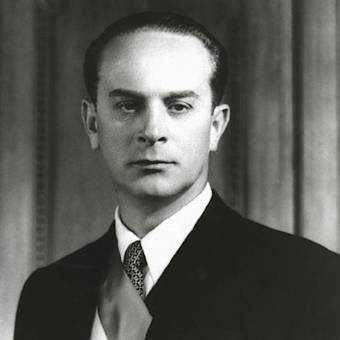
Jacobo Árbenz
military academy, where he excelled in all fields. In 1938, Árbenz married Maria Vilanova, and it was through his wife that he was first exposed to Marxist ideology. His ideology and skill earned him the admiration of leftist President Juan José Arévalo, who appointed Árbenz as Minister of Defense. As the 1950 election neared, Árbenz emerged as the front-runner for the presidency. The mysterious death of his chief competitor, Francisco Javier Arana, left Árbenz clear to win the election, which he did easily. The U.S. State Department immediately issued a warning that the Árbenz regime would turn Guatemala sharply to the left. Árbenz did not, however, usher in the socialist revolution that the U.S. had predicted. Focused on reducing the dependence of Guatemala on foreign economies, Árbenz proposed an agrarian reform program that would expropriate large, uncultivated land holdings and turn over that land to Guatemalan families. The owners of the land were to be compensated based on the taxes they had paid in 1952. The act outraged the United Fruit Company, an American multinational that owned much land in Guatemala and had close ties to the U.S. government. The United Fruit Co. began to rally for U.S. military action against the Árbenz regime. In 1954, it was revealed that Guatemala had purchased weapons from Czechoslovakia, a move the U.S. government interpreted as a threat to the West. President Eisenhower authorized the CIA to launch Operation PBSUCCESS to overthrow Árbenz. An exile army trained by the U.S. invaded Guatemala and forced Árbenz to resign on June 27, 1954. In his place the U.S. installed Colonel Carlos Castillo Armas. Árbenz fled to Mexico and later relocated to Europe. In 1957, he returned to Latin America but never found further political success. He died in 1971 in Mexico
-
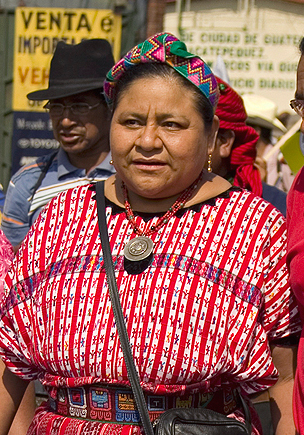
Rigoberta Menchu, Courtesy of Users Surizar and Jen
Rigoberta Menchú (1959 – ): Rigoberta Menchú was born to a peasant family of Quiche ancestry in 1959. Even at a young age, she had an affinity for social justice and acted as a women’s rights advocate. Because of her work, and that of her father and brother, her family was accused of sympathizing with the guerrilla soldiers fighting against the army in the Guatemalan Civil War. In 1979, Menchú’s brother was tortured and killed by the army. The following year, her father took part in an indigenous occupation of the Spanish Embassy in Guatemala City. The police raided the building and it eventually caught fire, killing her father and 35 other people. Rigoberta Menchú fled Guatemala to avoid further prosecution by the army. Over the next few years, Menchú continued to call for greater international attention to the Guatemalan Civil War and the plight of the indigenous peoples of Guatemala. In 1983, she recited her story to Venezuelan author Elisabeth Burgos Debray, who helped Menchú publish the memoir I, Rigoberta Menchú. The book was an instant international success. In 1992, Menchú received the Nobel Peace Prize for her work. Four years later, the Guatemalan Civil War finally drew to a close, but Menchú continued to advocate for peace, justice, and equality. Her memoir came under controversy in 1999 when anthropologist David Stoll suggested that some of the events in the book were fabricated or altered. Most of Stoll’s argument has since been proven untrue. Recently, Menchú has entered national politics representing the indigenous Encuentro por Guatemala party and the Winaq party. In both 2007 and 2011, she was defeated in the first round of voting. There is perhaps no other single Latin American leader who has fought so valiantly and generated so much international attention for the plight of the masses as Rigoberta Menchú.
El Salvador:
- Farabundo Martí (1893-1932): Agustín Farabundo Martí Rodríguez was born to a mestizo father in Teotepeque, El Salvador, in 1893. He attended the University of El Salvador where he studied Political Science. While in university, Martí read Marx and Lenin and was deeply influenced by their ideologies. He later decided to drop out of
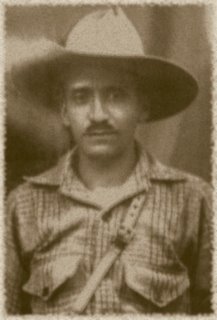
Farabundo Martí – 1929
school and dedicate himself to fighting the exploitation of the poor. In 1920, he was exiled from El Salvador for his participation in a protest against the ruling Meléndez-Quiñonez dynasty. While in exile he helped found the Central American Socialist Party. He returned to El Salvador in 1925 but was arrested and exiled for a second time. In 1928, he traveled to New York where he worked for International Red Aid, the alternative to the Red Cross created by the Communist International in 1922. Later that year, he served under Augusto Sandino in Nicaragua. Martí returned to El Salvador but was exiled again after it was rumored he would be nominated for president in the upcoming elections. Returning in 1931, Martí now turned to military means to help the poor. He coordinated a rebellion of indigenous farmers against the dictator Maximiliano Hernández Martínez. Despite some initial successes, the revolt was unable to overthrow Hernández Martínez. The Salvadoran army responded by massacring around 30,000 indigenous people in what came to be known as La Matanza. Martí was captured and promptly executed for his part in the revolt. He became synonymous with the leftist movement in El Salvador, and the Farabundo Martí National Liberation Front (FMLN) that later waged the Salvadoran Civil War against the army was named in his honor.