
Bolivia:
-
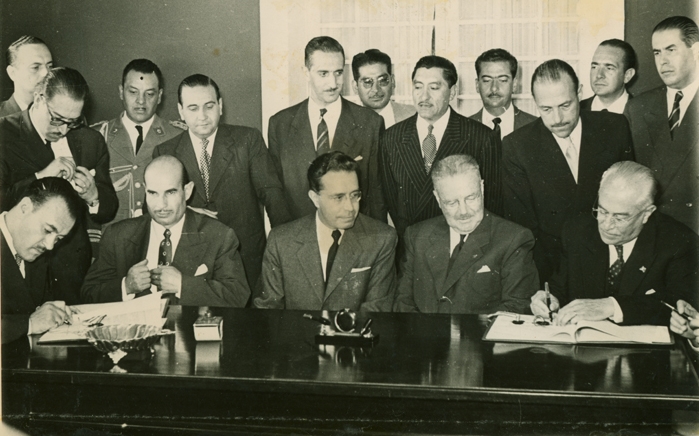
Paz Estenssoro (center), Courtesy of the Ministerio de Relaciones Exteriores de Chile
Víctor Paz Estenssoro (1907-2001): Víctor Paz Estenssoro was a Bolivian politician who played a key role in the Bolivian Revolution. In 1941, Paz Estenssoro helped found the Revolutionary Nationalist Movement (MNR), a leftist political party that called for sweeping economic and social reforms. Paz Estenssoro ran for President in 1947 as the candidate for the MNR but did finished in third place. Undeterred, he ran again in 1951. In a stunning election, the MNR and Paz Estenssoro received 53% of the vote. The military immediately announced that it would not allow Paz Estenssoro to take office. The people of Bolivia responded with an armed uprising that forced the army to accept the election results. In April of 1952, Paz Estenssoro became President of Bolivia, a title he would hold three more times throughout his life. During the first Paz Estenssoro government, Bolivia underwent a series of changes that came to be known as the Revolution of 1952. The most important of these changes included enfranchisement of indigenous peoples, nationalization of the mines, reduction of the military, and comprehensive agrarian reform. Unable to run for a consecutive second term, Paz Estenssoro handed over power to Vice President Hernán Siles Zuazo in 1956. In 1960, Paz Estenssoro was elected to a second term, this time with Juan Lechín as his running mate. The second Paz Estenssoro government was marked by internal conflict as the President and Vice President disagreed over the pace of reforms and the proper methods by which to ensure economic growth. Lechín resigned and denounced the MNR. At the same time, Siles Zuazo also broke away from the party. With little support from the left, Paz Estenssoro, who announced he would run for a third term in 1964 after a constitutional amendment allowed for consecutive term-presidencies, sought the assistance of General René Barrientos. The Paz Estenssoro/Barrientos ticket was successful in the 1964 election, but only three months after the victory, Barrientos orchestrated a coup against Paz Estenssoro and declared himself co-President along with Alfredo Ovando. Military rule continued under a number of different dictatorial figures until 1978, when elections resumed. Paz Estenssoro ran once again in 1978 but lost to Siles Zuazo, who was extremely popular among the left. Elections were held again in 1979 and 1980 as the military resisted handing over power to Siles Zuazo, but each time Paz Estenssoro came short of the necessary number of votes. The military finally allowed Siles Zuazo to become President after the 1980 elections, but the MNR under the authority of Paz Estenssoro blocked any serious efforts at reform. In 1985, Paz Estenssoro ran for President for a final time and won. Unlike his governments of the past, the fourth Paz Estenssoro presidency did not pursue leftist reform of any type. In fact, Paz Estenssoro called for a neoliberal reform program that shrunk the size of government and opened Bolivia to free trade. Upon leaving office in 1989, Paz Estenssoro formally retired from politics. He died in 2001.
-
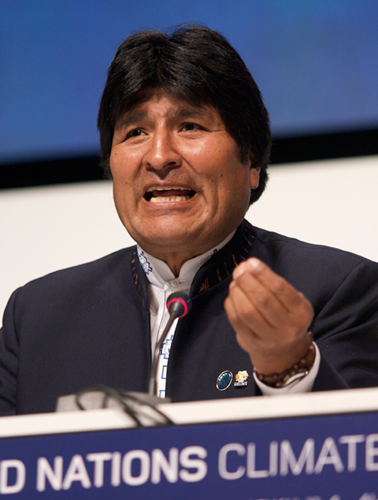
Evo Morales, Courtesy of Simon Wedge
Evo Morales (1959- ): Juan Evo Morales Ayma was born in a small rural community in western Bolivia in 1959. Evo’s parents were subsistence farmers and from a young age Evo worked with his parents in the fields. After serving his mandatory time in the military, Evo Morales returned to his family and continued work as a farmer. Several years later, the family relocated to the El Chapare province where they began to cultivate coca. Morales joined the cocalero trade union and it was through this organization that he was first introduced to political activism. In the 1980s, the United States declared the War on Drugs and increased efforts to eradicate coca production in Bolivia. Evo was one of several individuals who led the counter-campaign on behalf of coca farmers, arguing that coca was an integral part of Andean culture. By 1989, Morales recognized the need for a political organization to represent the coca farmers and indigenous peoples of Bolivia. He and his allies founded the Assembly for the Sovereignty of the Peoples (ASP), but the Bolivian government refused to let candidates run for office from the ASP. Morales turned to the United Left (UP), a coalition of left-leaning parties, and was elected to Congress on the UP ticket in the 1997 elections. Evo later left the ASP and helped found the Movement for Socialism (MAS). In 2002, Morales generated controversy when he argued that peasants had the right to armed revolt against the Bolivian military, which was accused of committing human rights abuses. The Congress responded by voting to expel Evo Morales. On March 5, Morales petitioned the Constitutional Tribunal to review his expulsion. That same day, the MAS chose Morales as its candidate for the 2002 presidential election, in which Morales would place second. Morales ran for President again in 2005, this time winning with nearly 54% of the vote. During his first term, Evo appointed a cabinet of mainly leftist intellectuals and indigenous activists that focused primarily on reducing poverty and nationalizing the economy. In 2009, a new constitution was approved that established a mixed economy and recognized the multicultural nature of Bolivian society. That year, Morales ran for a second term and won the election with 64% of the vote. Evo Morales’s leftist policies and strong resistance to U.S. intervention have made him one of the leading figures of the so-called Pink Revolution in Latin America.
Ecuador:
-
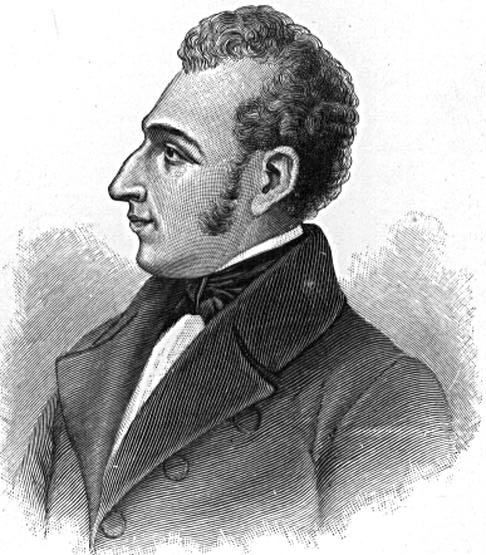
Antonio Jose de Sucre, Courtesy of the University of Texas Libraries, The University of Texas at Austin
Antonio José de Sucre (1795-1830): Antonio José de Sucre is considered to be the liberator of Ecuador and Peru, but he began his military career fighting for the independence of his home country of Venezuela. When he was fifteen, Sucre joined Simón Bolívar’s revolutionary army. In 1820, Bolívar appointed him Chief of Staff. That same year Bolívar gave Sucre the task of liberating southern Gran Colombia (present-day Ecuador) from Spanish control. Sucre marched his army into Quito and, on May 24, 1822, defeated a large royalist deployment at the Battle of Pichincha. His victory secured independence for Ecuador. Sucre then joined up with Bolívar’s army and led the revolutionary forces in the Battle of Ayacucho, where he was once again successful. The Battle of Ayacucho, Sucre’s most important military achievement, won Peru its freedom from Spanish control and is considered to be the final major battle of the Wars of Independence. With the fighting finished, Sucre became President of the newly created Republic of Bolivia. His presidency was marked by considerable reforms, including the creation of a public secondary school system. By 1828, however, Sucre was forced to resign amidst strong opposition by the Bolivian elites. The following year Sucre fought for Gran Colombia in its war with Peru. In 1830, Sucre was asked to preside over the “Admirable Congress,” a final attempt to sort out the problems in Gran Colombia’s provinces and keep the federation together. On his way home from the Congress, Sucre was assassinated. Although it was widely believed that he had been murdered by political opponents of Bolívar, the true details of his death were never uncovered.
-
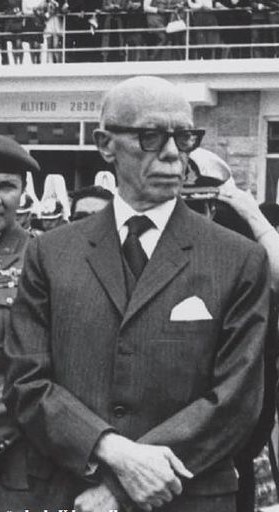
Velasco Ibarra, Courtesy of Biblioteca del Congreso Nacional de Chile
José María Velasco Ibarra (1893-1979): José María Velasco Ibarra rose to political prominence as President of the Chamber of Deputies of the Republic of Ecuador. In 1933, Velasco Ibarra ran for President and received nearly 80% of the total votes cast. Several months into his first term, Velasco Ibarra turned dictatorial when he attempted to shut down Congress and suppress his opposition. The army responded by ousting him in 1935. Velasco Ibarra attempted to run for President again in 1939 but lost to Carlos Arroyo del Río. During del Río’s term, Ecuador fought Peru over control of disputed territories and was defeated. The spark of nationalism generated by the war allowed Velasco Ibarra to be elevated to the role of President again in 1944. Velasco Ibarra quickly lost the support of the military and was deposed again in 1947. Never one to give up, Velasco Ibarra ran for President again in 1952 and won. In his third term, he was careful to maintain widespread public support by initiating a series of large public works projects focused on infrastructure and education. As a result, he was able to serve the full length of the term and left office in 1956. Elected to a fourth term in 1960, Velasco Ibarra was ousted for a third time in 1961 when he poorly responded to a general strike. In 1968, Velasco Ibarra was elected for his fifth and final term as President. As economic problems and political opposition mounted, Velasco Ibarra gained the support of the military in assuming dictatorial powers and jailing his most outspoken opponents. The shaky alliance was not to last. In 1972, the military turned against Velasco Ibarra and forced him out of office for the fourth time in his career. This coup resulted in seven years of military rule. In 1979, Velasco Ibarra died in Quito. His five terms and thirteen years in office make him the longest-serving President in Ecuadorian history.
-

Rafael Correa, Courtesy of Agencia Brasil
Rafael Correa (1963- ): Rafael Correa was born in Guayaquil, Ecuador, in 1963. After graduating from the Catholic University of Santiago de Guayaquil with a degree in economics, Correa traveled to Europe and the United States to continue his studies. He received his PhD in economics from the University of Illinois at Urbana-Champaign. In 2005, Correa served as the Economy and Finance Minister in the Palacio government, but resigned after disagreements with the administration and international oversight organizations. The following year, Correa founded the Alianza PAIS, a political movement that called for sovereignty, poverty reduction, and regional cooperation. Alianza PAIS allied itself with a number of other leftist political groups, including the Communist Party of Ecuador and the Ecuadorian Socialist Party. Correa ran for President as the candidate for the Alianza PAIS in 2006 and won in the runoff election with nearly 57% of the vote. During his first term, Correa rejected many of the neoliberal policies that had been proposed by previous presidents and instead set Ecuador on an independent, socialist economic path. In 2008, Correa declared the national debt illegitimate because it had been accumulated by corrupt dictatorial regimes. He also took measures to distance Ecuadorian foreign policy from that of the United States while strengthening ties with Venezuela. In 2009, Correa joined the Bolivarian Alternative for the Americas, an international organization created by Hugo Chávez. Correa also oversaw the writing and adoption of a new constitution that was the first in the world to recognize ecosystem rights. Correa was re-elected in 2009. In 2010, the National Police briefly took Correa hostage during a strike and violent protest against a new law that would end bonuses for promotion. Nearly 300 people were wounded in the crisis, but Correa was rescued unharmed. Correa also served as President Pro Tempore of the Union of South American Nations during his second term. Correa’s political ideology and policies as President of Ecuador have established him as a leading member of the Pink Tide movement in Latin America.
Peru:
-
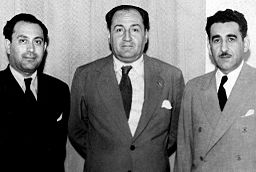
Haya de la Torre (center) with Bernardo Ibanez and Manuel Mandujano, Courtesy of Biblioteca del Congreso Nacional de Chile
Víctor Rául Haya de la Torre (1895-1979): Víctor Rául Haya de la Torre was born in the city of Trujillo in northern Peru in 1895. As a young man, he founded the Universidades Populares Gonzalez Prada, a system of night schools designed for the education of Peru’s working class. In 1923, he was exiled to Mexico by the Leguía government, and in the following year he founded the American Revolutionary Popular Alliance (APRA), a political party based on the platform of anti-imperialism and government support for the underprivileged classes of society. He returned to Peru in 1931 to run for President on the APRA ticket. The official election results claimed that Haya de la Torre won 35% of the vote, not enough to beat his opponent Sánchez Cerro. The apristas argued that the election was fraudulent and attempted a revolt, but the military easily defeated it and placed Haya de la Torre in jail for fifteen months. In 1933, a radical aprista assassinated Cerro and Haya de la Torre went into hiding. Although it lost its political leader, APRA continued to build support throughout the 1930s and 1940s and was instrumental in electing José Luís Bustamante y Rivero as Peru’s President in 1945. With the arrival of a military coup and new restrictions on APRA in 1949, Haya de la Torre sought asylum in the Colombian Embassy in Lima. He remained there for five years and then returned to Peruvian politics after APRA was re-legalized in 1956. Haya de la Torre ran for President again in 1962 and won a plurality of votes, but the military annulled the elections and Fernando Belaúnde Terry won the second round of voting in 1963. Haya de la Torre’s last major political act was to serve as President of the Constituent Assembly charged with drafting a new constitution in 1978-1979. He died on July 12, 1979.
-
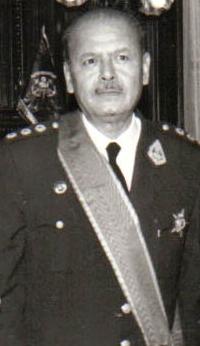
Juan Velasco Alvarado, Courtesy of the Romanian Communism Online Photo Collection
Juan Francisco Velasco Alvarado (1910-1977): In 1929, a young Juan Francisco Velasco Alvarado joined the Peruvian Army. A shining military student, he received the highest score on the entrance exam for the Chorrillos Military School. He graduated from Chorrillos in 1934 at the top of his class. He went on to an illustrious military career and was appointed Commander General of the Army and President of the Joint Command of the Peruvian Armed Forces. In 1968, Velasco led a bloodless coup against the Belaúnde administration that installed a military junta as the new government. Under his leadership, this junta implemented a reform-oriented program that tried to reduce Peruvian dependency on foreign markets and improve the quality of life for marginalized groups. One of the most important policies of the regime was the creation of the National System for Support of Social Mobilization (SINAMOS), a political institution tasked with facilitating interaction between the regime and the peasants and workers. Velasco also spent a tremendous amount of money building up Peru’s armed forces, purportedly in order to attack Chile and recover land lost by Peru during the War of the Pacific. At home, public opinion turned against the military regime and Velasco as the economy was beset by inflation and high unemployment. Velasco also fell seriously ill in the early 1970s. Combined, these factors opened the door for a new military coup, which replaced Velasco with Francisco Morales Bermúdez in 1975. After being deposed, he quietly exited politics and died in 1977.
-
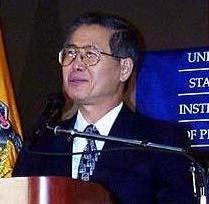
Alberto Fujimori, Courtesy of the U.S. Institute of Peace
Alberto Fujimori (1938- ): Alberto Fujimori was born in 1938 to parents who had immigrated to Peru from Japan. Fujimori studied engineering, physics, and mathematics both in Peru and the United States. Despite having no prior political experience, he ran for President of Peru in 1990 as the candidate for the newly formed Cambio-90, a right-wing party that relied on grassroots mobilization to build support for its platform. Fujimori campaigned on the promise of using the government institutions to improve economic conditions for the masses. In a surprising election, Fujimori defeated the favorite Mario Vargas Llosa, one of Peru’s most celebrated authors, and ascended to the Presidency. Immediately after taking office, he scrapped his previous platform and adopted a series of far-reaching neoliberal reforms. In 1992, in an effort to weaken his opposition, Fujimori shut down congress and restructured the judiciary in what has been called an auto-coup (auto-golpe). The following year, Fujimori succeeded in getting a new constitution ratified. At the same time, Fujimori waged a successful counter-insurgency campaign against the Maoist revolutionary group Shining Path (Sendero Luminoso). With this success, he was easily elected to a second term in 1995. In 1998, he announced he would seek a third term, and the Supreme Court ruled that this would be permissible as it was only his first re-election under the 1993 Constitution. Fujimori’s main opponent was Alejandro Toledo, who managed to win 40% of the vote and force a second round of voting. Suddenly, Toledo withdrew from the race citing fraudulent practices by Fujimori’s supporters. As Fujimori started his third term, a tape leaked to the press showed one of his leading advisors bribing a congressman to support Fujimori. Disgraced, the President fled to Japan, where he resigned. In 2001, the Peruvian Congress charged Fujimori with orchestrating death-squad killings as part of his counter-insurgency program. Over the next several years, a series of new charges of human rights abuses were placed on Fujimori as the investigation into his security policies continued. In 2005, Fujimori announced from Japan his intention to run in the Peruvian presidential election the following year. Then, Fujimori traveled to Chile, where he was promptly arrested. After a long process of extradition, Fujimori arrived in custody in Peru. Facing trial for violations of human rights, he sentenced in 2009 to 25 years in prison, which he is currently serving.
-
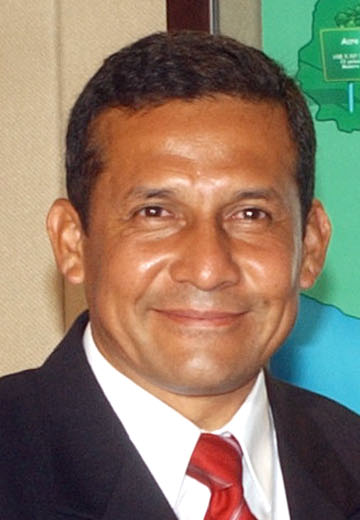
Ollanta Humala, Courtesy of Agencia Brasil
Ollanta Humala (1962- ): Ollanta Humala is the current President of Peru. His father was an indigenous member of the Communist Party of Peru – Red Fatherland. In 1982, Ollanta Humala entered the Chorrillos Military School. He went on to serve in the counter-insurgency campaign against the Shining Path and the Cenepa War against Ecuador. In 2000, Humala organized a revolt against the Fujimori administration in response to the leaking of a video showing a top official bribing a member of Congress. After Fujimori resigned from office, the Congress pardoned Humala and he returned to military service. In 2005, Humala announced his bid for the presidency as a member of the Peruvian Nationalist Party. He also received the support of the Union for Peru. In the 2006 election, he won the first round of voting with more than 30% of the vote, but lost to opponent Alan García in the second round. Not deterred, Humala ran again in 2011 on a center-left platform promising redistribution of wealth to the poorest sectors of society and steady economic growth. He defeated Keiko Fujimori, daughter of the disgraced former President, and was elected President with 51.5% of the vote. Immediately after the announcement of his victory, the stock exchange plummeted in response to business interests fear of a radical new government. Since the start of his term, Humalla has been challenged with a growing indigenous movement opposing further exploitation of Peru’s natural resources. He has also faced a great deal of criticism from within his own family, specifically from his father and brothers, one of whom is currently serving a 25 year prison sentence for kidnapping and killing several police officers in 2005.
-
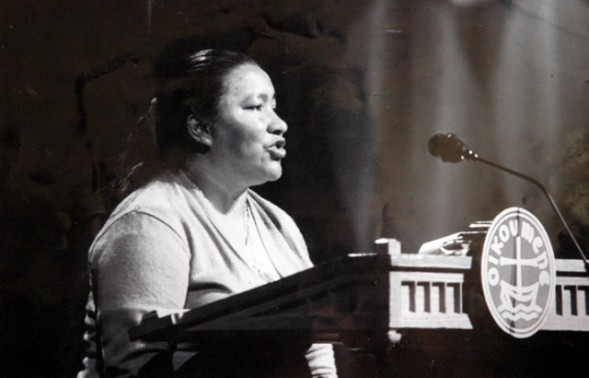
Domitilla Chungara
Domitila Barrios de Chungara (1937-2012): Domitila Barrios de Chungara was born in 1937 in Pulacayo, Bolivia, an area whose economy was dominated by mining. In 1952, she helped found along with her husband a committee designed to promote the interest of the miners vis-à-vis the government. During the Barrientos dictatorship in the late 1960s, she was arrested and tortured due to her activism on behalf of the miners. In 1975, she participated in the Tribunal of the International Year of the Woman, created by the United Nations, as the only woman of a working class background. For the next several years, she campaigned actively but peacefully against the dictatorship of Hugo Banzer, often through hunger strikes. Her work throughout the 20th century in the pursuit of women’s rights and working class interests, as well as democratic politics, were presented to the world in the book Si me permiten hablar… Testimonio de Domitila, una mujer de las minas de Bolivia. Chungara died in 2012 after a battle with cancer. She was posthumously awarded the Order of the Condor of the Andes by the Peruvian government.